


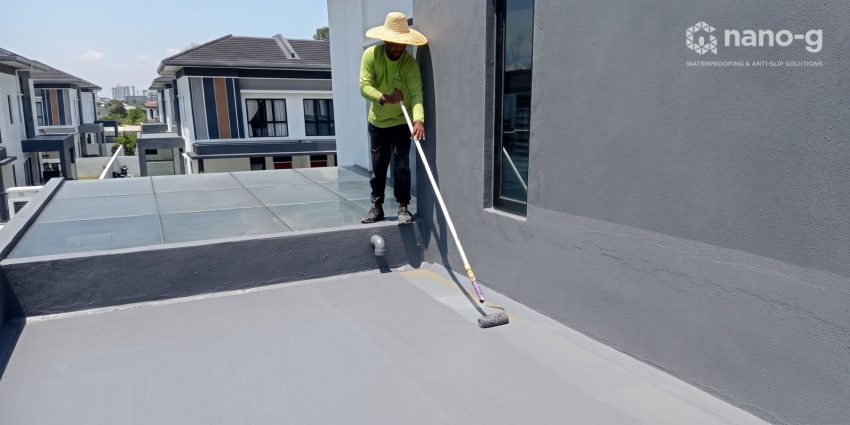
Water leakage is one of those home problems that can start small. A faint mark on the ceiling, a patch of peeling paint or a slightly damp wall may not seem urgent at first. But if water continues to enter the property, the problem can spread beneath tiles, behind walls or through concrete surfaces before becoming more noticeable.
For homeowners looking for a waterproofing solution in Johor Bahru, it is important to understand that leakage can affect different types of properties, from landed homes and older residential neighbourhoods to apartments and condominiums.
The tricky part is that the place where you see the water is not necessarily where the leak started. A ceiling stain could be coming from the roof, an upstairs bathroom or another nearby water-prone area.
That is why finding the source should come before deciding how to waterproof it.
Key Takeaways
- Water leakage in homes can affect roofs, walls, bathrooms and areas between floors.
- Heavy rainfall can expose existing weak points and make leakage problems more noticeable
- Visible signs such as peeling paint, mould and ceiling stains may appear away from the actual source of the leak.
- Finding the source first is important before deciding on the right waterproofing solution.
- Nanotechnology waterproofing can provide a less disruptive, no-hacking option for suitable leakage conditions.
- Addressing leakage early can help prevent moisture from spreading and causing further damage
Table of Contents
- Why Waterproofing Matters in a Growing Property Market
- Common Areas That Experience Water Leakage
- Signs Your Property May Need Waterproofing
- What Is Nanotechnology Waterproofing?
- Why Homeowners Should Choose Nanotechnology Waterproofing
- How to Choose the Best Waterproofing Contractor in Johor Bahru
- Looking for Waterproofing in Johor Bahru
- FAQs
Why Waterproofing Matters for Johor Bahru Properties
Johor Bahru is home to a major residential and urban centre, hosting around 1.8 million people in 2025, according to the Department of Statistics Malaysia.
With a mix of landed homes, apartments, condominiums and newer residential developments, water leakage can appear differently from one property to another.
For landed homes, flat roofs, roofing areas, and exterior walls are directly exposed to rain and sunlight. In high-rise properties, bathrooms, balconies and other wet areas can create a different concern because water may seep through the floor and affect the unit below.
The age and condition of the property also matter. Cracks, aging joints, weakened waterproofing and drainage issues can all provide paths for water to enter.
This is why choosing a suitable waterproofing solution in Johor Bahru should begin with identifying the actual source of the leak rather than simply covering the visible stain. The first question should be: where is the water actually coming from?
Common Areas That Experience Water Leakage
Different parts of a home can develop leakage depending on the property’s age, design, exposure to rain, moisture and drainage conditions. This can range from roof and exterior wall leakage in landed homes to bathroom, balcony and inter-floor leakage in high-rise developments.
1. Roofing and Flat Roof Leakage
Roof leakage, including flat roof leakage, is especially relevant to landed homes where pitched roofs, concrete rooftops, awnings and car porch areas are directly exposed to rain and heat.
Repeated exposure to rain and sunlight can gradually reveal weaknesses in roofing and concrete surfaces. During wetter periods, particularly in eastern areas affected by the Northeast Monsoon, cracks, damaged joints or drainage problems may become more noticeable as rainwater finds a path into the building.
Common signs include:
- Water stains on ceilings
- Damp patches around upper-floor walls
- Peeling ceiling paint
- Mould developing around roof or ceiling corners
Finding the actual source of the roof leakage is important, as the point where water appears indoors may not always be where it first entered the property. Proper roof waterproofing can help protect vulnerable areas from water seepage and reduce the risk of recurring leaks.
2. Floor Leakage
Bathrooms, kitchens, balconies and other wet areas are regularly exposed to water, making them more vulnerable to floor leakage. This is especially important in high-rise homes, where water leakage (inter-floor leakage) from one unit can affect the unit below.
Over time, weaknesses in the waterproofing beneath tiles may allow water to seep into the concrete slab. The moisture can then spread to nearby walls, connected rooms or the ceiling of the floor below (inter-floor leakage).
In wet areas such as bathrooms, proper bathroom waterproofing helps prevent water from seeping beneath the tiles and causing leakage beyond the bathroom itself.
Signs of possible floor leakage include:
- Damp ceilings on the lower floor
- Cracked or loose tiles
- Persistent damp or musty smells
- Watermarks appearing around adjoining walls
Here’s a closer look at inter-floor leakage and how to handle it.
3. Wall Leakage
Exterior walls are regularly exposed to rain, heat and moisture. For homes with walls facing frequent rain, repeated wetting can make small cracks, gaps around openings or aged surface areas more vulnerable to water entry.
Once rainwater enters these openings, moisture can gradually spread through the wall and become visible on the interior surface.
Some common signs of failed wall waterproofing include
- Peeling or bubbling paint
- Damp patches
- Mould spots
- Powdery (efflorescence) or crumbling wall surfaces
Treating only the visible interior damage may not solve the problem if water is still entering from outside.
Signs Your Property May Need Waterproofing
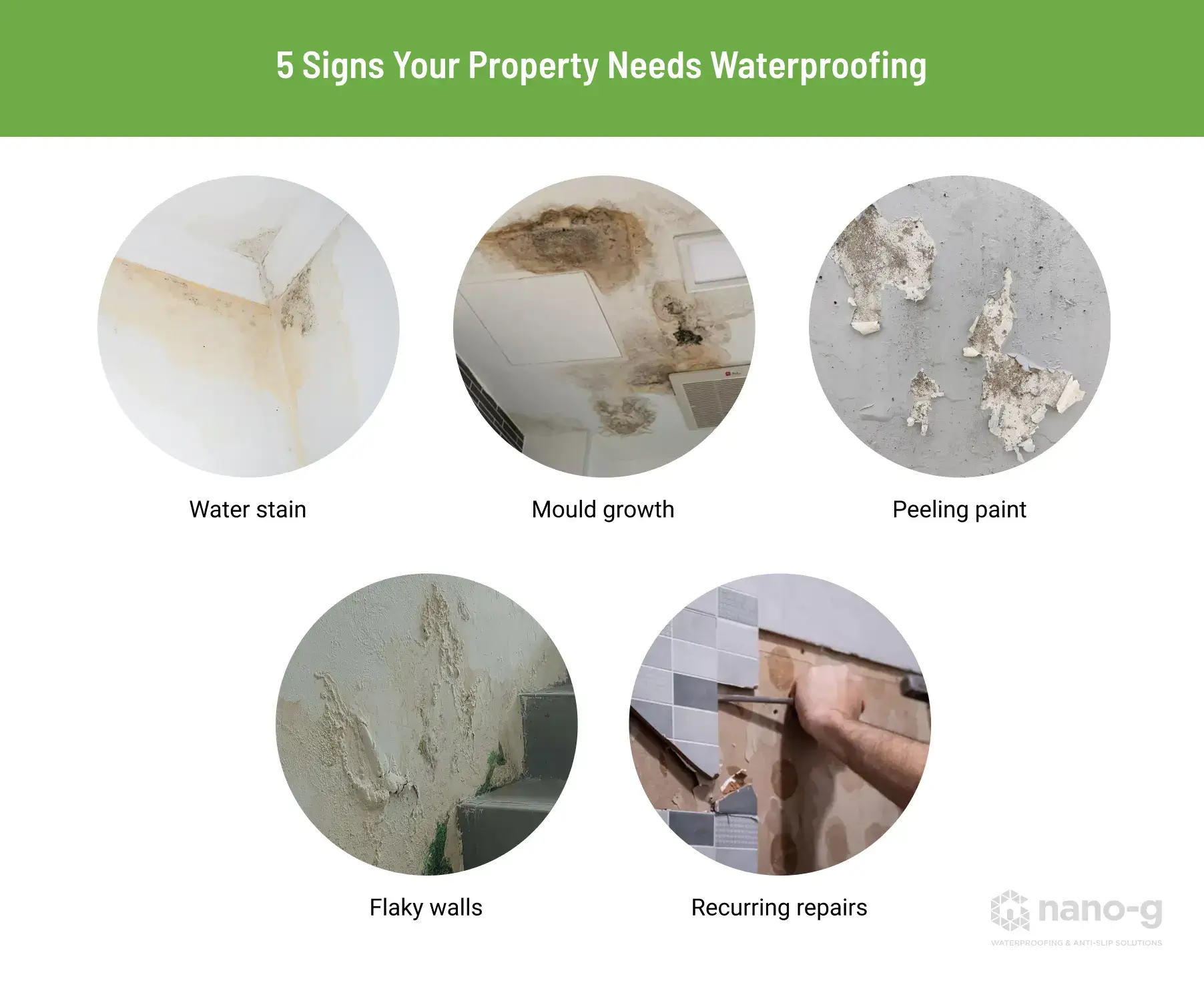
Water leakage is not always immediately obvious. Some problems develop gradually behind walls, ceilings or flooring before becoming noticeable.
Homeowners should pay attention to several common warning signs.
1. Persistent Water Stains
Brown or yellowish marks on ceilings and walls may indicate moisture entering from another part of the property. Even a small stain can be worth checking if it continues to return.
2. Musty Smells and Mould Growth
A persistent damp smell may indicate moisture trapped behind walls, ceilings or flooring. Mould appearing repeatedly in the same area can also point to an unresolved moisture problem.
3. Peeling Paint or Bubbling Surfaces
When moisture becomes trapped beneath a painted surface, the paint may begin to bubble, peel or crack.
4. Powdery (Efflorescence) or Flaky Walls
Walls affected by prolonged moisture can develop chalky, powdery or flaky surfaces as the underlying material deteriorates.
5. Recurring Leakage
If the same area continues leaking after repeated patching or repairs, the original source of the water may not have been properly identified.
What Is Nanotechnology Waterproofing?
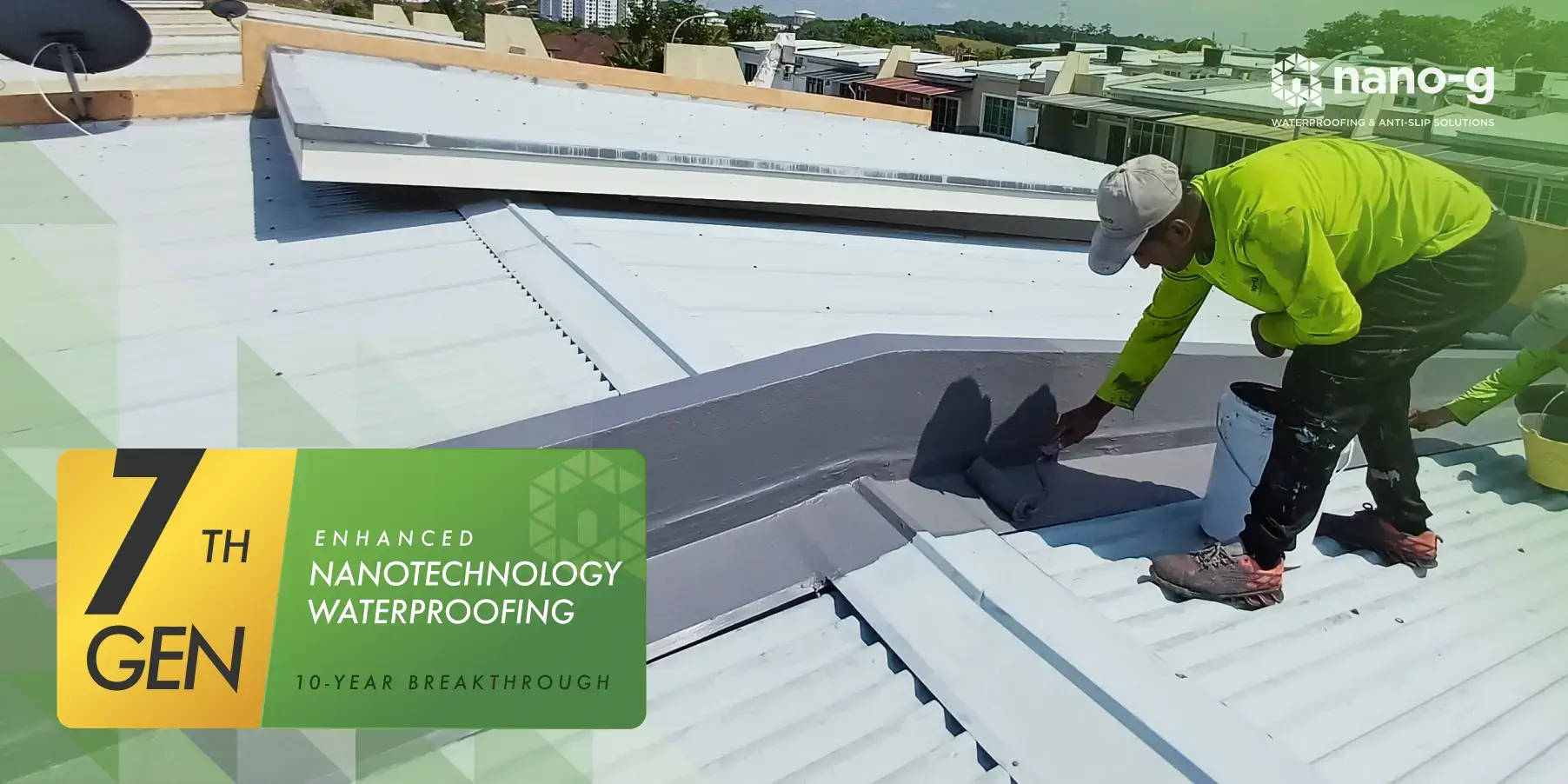
Nanotechnology waterproofing uses microscopic particles that penetrate porous materials such as concrete and cement.
Instead of relying only on a protective layer sitting on top of the surface, nanotechnology treatments are designed to penetrate the pores within the material and help form a water-resistant barrier.
Depending on the affected surface and source of leakage, a suitable waterproofing coating or nanotechnology treatment may be used to reduce water penetration:
- Deep penetration into porous surfaces
- Minimal changes to the appearance of the existing surface
- Breathable protection that allows moisture vapour to escape
- Reduced need for disruptive renovation work
However, the right waterproofing method should always depend on the actual cause and condition of the affected area, which is why a proper inspection is important before treatment begins.
Why Homeowners Should Choose Nanotechnology Waterproofing
1. No Hacking Method
One of the biggest concerns homeowners have about waterproofing is whether existing tiles or surfaces will need to be removed.
For suitable leakage conditions, nanotechnology waterproofing can be applied without hacking. This can mean:
- Less dust and mess
- Less disruption to the household
- Reduced need for major renovation
- Less restoration work after waterproofing
This can be particularly useful for occupied homes where homeowners want to address leakage without turning the affected area into a major renovation project.
2. Faster Application With Less Disruption
Traditional leakage repairs can sometimes involve removing tiles, repairing the waterproofing layer and reinstalling the affected finishes.
Nanotechnology waterproofing offers a less disruptive solution, with suitable applications potentially completed within 24 hours without extensive renovation.
This makes it worth considering for residential properties, commercial properties and other occupied buildings.
3. Protection Against Rain and Moisture
Properties have to deal with a tropical combination of rain, humidity and strong sunlight, while eastern areas can also receive particularly heavy rain during the Northeast Monsoon.
A suitable waterproofing solution can help reduce water penetration and protect vulnerable surfaces against prolonged exposure to moisture.
Rather than repeatedly repairing visible signs such as peeling paint or damp patches, identifying and treating the source of the water intrusion can provide a more effective long-term solution.
How to Choose the Best Waterproofing Contractor in Johor Bahru
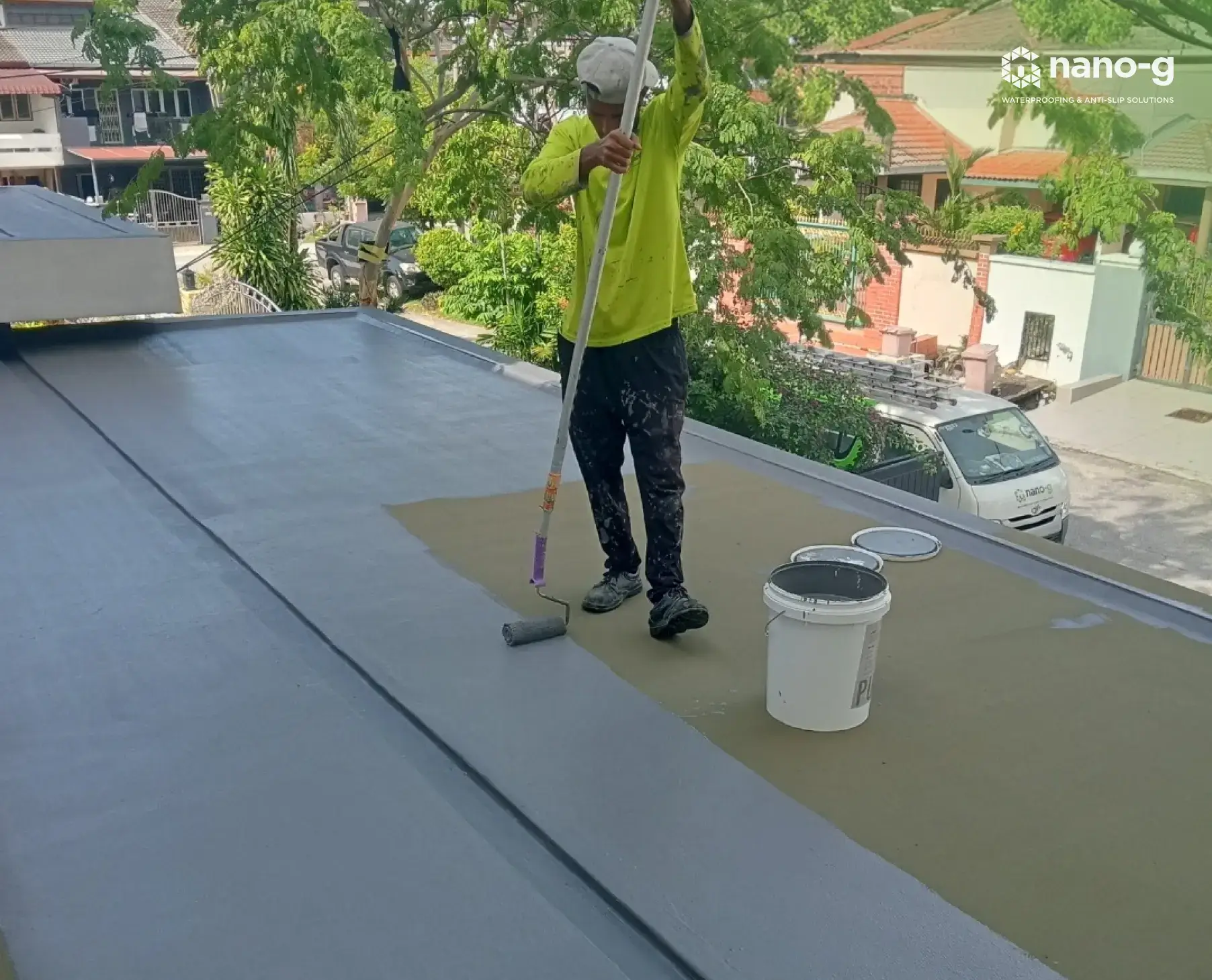
Choosing the right contractor or specialist for a waterproofing solution in Johor Bahru starts with finding someone who can properly assess the source and condition of the leakage rather than immediately recommending a standard treatment.
Here are several factors homeowners should consider:
1. Experience With Different Types of Leakage
Different leakage problems require different approaches. Look for a waterproofing specialist that can assess roof, floor, bathroom and wall leakage and determine where the water is actually entering.
2. Proper Inspection Before Treatment
A visible damp patch does not necessarily reveal the source of a leak. A proper inspection can help determine the affected area and suitable repair method before work begins.
3. Waterproofing Method and Materials
Ask what type of waterproofing treatment will be used, how it works and whether it is suitable for the affected surface.
4. Customer Reviews and Past Projects
Reviews and previous waterproofing projects can provide homeowners with a better understanding of the contractor’s workmanship and approach.
5. Specialisation in Nanotechnology Waterproofing
For homeowners specifically considering nanotechnology waterproofing in Johor Bahru, choosing a specialist familiar with this type of treatment is equally important.
Nano-G provides nanotechnology waterproofing services for different water leakage problems, including suitable roof, floor, bathroom and wall applications. Its approach focuses on identifying the leakage problem before recommending an appropriate waterproofing treatment.
Looking for Waterproofing Solution in Johor Bahru?
A small ceiling stain or damp wall can be easy to ignore, especially when it only appears occasionally.
But if the same problem keeps returning, repeatedly repainting, sealing or patching the visible area may not solve what is happening underneath.
Whether you are dealing with roof leakage in a landed home, a damp exterior wall, bathroom leakage or water affecting the floor below, finding the source is the first step towards choosing the right solution.
If you are experiencing recurring water leakage in Johor Bahru, speak to the Nano-G team for a free inspection to identify the source of the problem and explore a suitable waterproofing solution for your property.
FAQs
1. What are the common causes of water leakage in most homes?
Water leakage can come from damaged waterproofing, cracked surfaces, ageing sealants, leaking pipes, roof problems or gaps around joints and fittings. Heavy and frequent rainfall can also expose existing weak points, especially around roofs and exterior walls.
2. How do I know where a water leak is coming from?
The visible wet spot may not be the actual source of the leak, as water can travel beneath tiles, through concrete or behind walls before appearing elsewhere. A proper inspection can help identify where the water is entering before deciding on the right repair method.
3. Can waterproofing stop water leakage without hacking the tiles?
In suitable cases, yes. Nanotechnology waterproofing can be applied to certain existing surfaces without removing the tiles or carrying out extensive renovation work. However, the right solution depends on the source of the leakage and the condition of the affected area.
4. How long does nanotechnology waterproofing take?
For suitable leakage conditions and surfaces, the waterproofing application can potentially be completed within 24 hours. The actual time required will depend on factors such as the size of the area, surface condition and type of leakage.
5. Can waterproofing help with inter-floor leakage?
Yes, depending on the cause. Inter-floor leakage can happen when water passes through bathroom floors, balconies, tiled areas or other wet areas and affects the unit below. The source should first be identified to determine whether waterproofing is the appropriate solution.
Related Articles