



A damp patch on the ceiling may seem minor, but when it appears below an upstairs bathroom, it could signal a water leakage problem.
Bathroom leakage from the upper floor is common in condominiums, apartments and double-storey homes. Studies suggest nearly 70% of buildings experience wet-area leaks, often going unnoticed until visible and costly damage appears.
By the time water stains, peeling paint, mould or dripping appear, the leak may have already caused hidden damage. Left untreated, it can lead to mould growth, unpleasant odours and costly repairs. That’s why identifying the source of the leak is the first step towards fixing it properly.
Key Takeaways
- Bathroom leakage from the upper floor can come from failed waterproofing, concealed plumbing leaks, cracked grout, worn sealant or damaged tiles.
- A damp ceiling, water stains, peeling paint or mould can be early signs that should not be ignored.
- Identifying the actual source of the leak is essential before deciding on the right repair method.
- For strata properties, inter-floor leakage is covered under Malaysia’s Strata Management (Maintenance and Management) Regulations 2015, which provides a formal inspection process to determine the cause and responsible party.
- For suitable waterproofing-related leaks, no-hacking waterproofing can help address water seepage without removing existing bathroom tiles.
- Early action and the right waterproofing contractor can help prevent recurring leakage and more costly damage.
Table of Content
- What Causes Bathroom Leakage from the Upper Floor?
- What Should You Do If You Discover Bathroom Leakage?
- How Can Bathroom Leakage from the Upper Floor Be Repaired?
- FAQs
What Causes Bathroom Leakage from the Upper Floor?
Seeing a wet ceiling below an upstairs bathroom does not automatically tell you what has failed. Water can travel beneath tiles and through concrete before appearing elsewhere, meaning the visible stain may not be directly below the source. Even a small weakness in the waterproofing can allow moisture to seep beneath the tiles and into the floor slab.
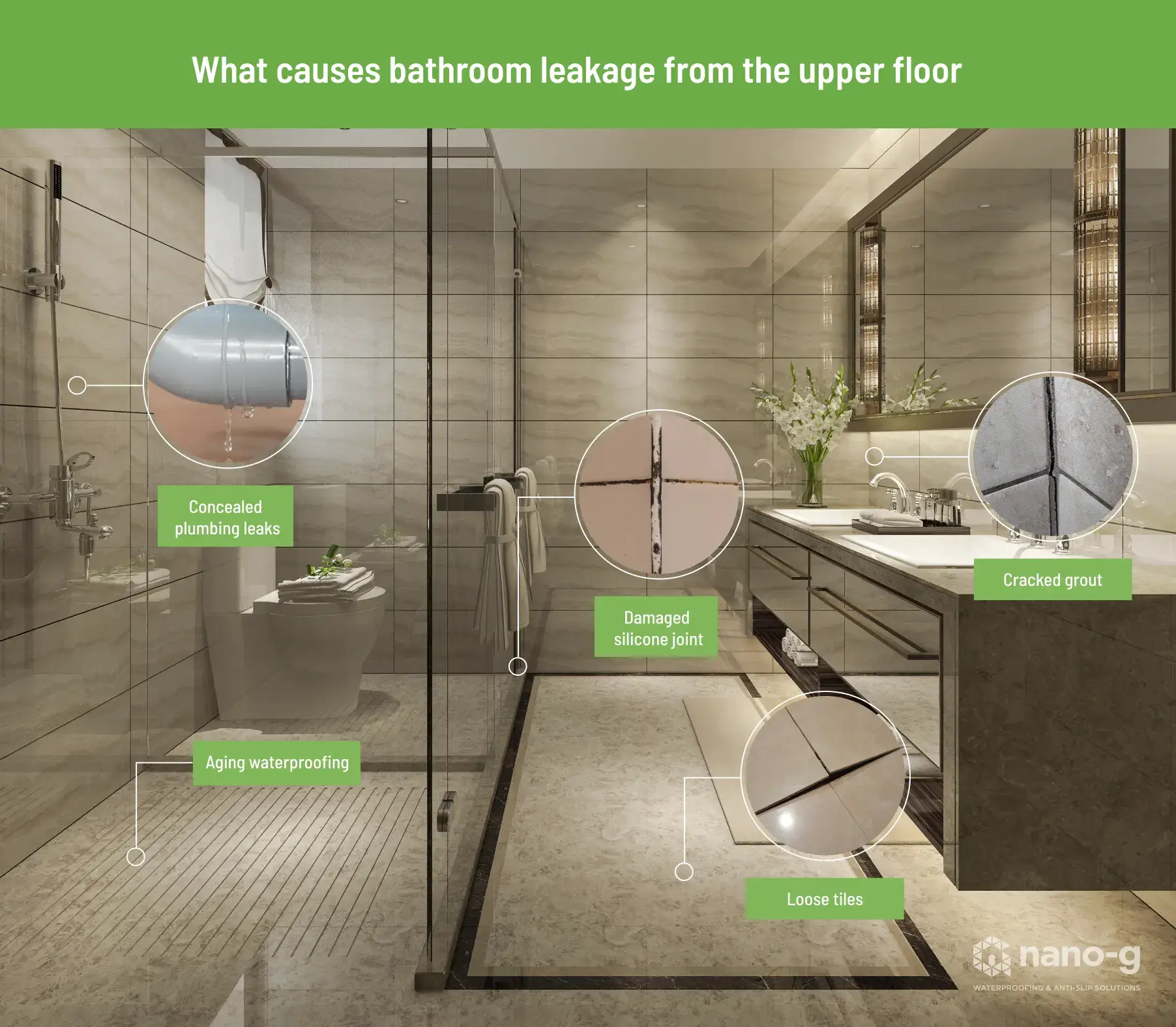
Some of the most common causes include:
- Aging waterproofing: An aging or damaged waterproofing membrane beneath the bathroom floor can gradually lose its effectiveness, allowing water to penetrate the floor slab.
- Cracked grout: Small cracks between tiles can create pathways for water to enter beneath the tiled surface.
- Worn silicone sealant: Sealant around floor traps, sanitary fittings and wall-to-floor joints can deteriorate over time.
- Loose or damaged tiles: Cracks and gaps around tiles may allow water to penetrate the surface more easily.
- Concealed plumbing leaks:A leaking pipe or damaged fitting hidden inside the floor or wall may be responsible rather than the waterproofing itself.
This is why simply covering a ceiling stain or replacing cracked grout may not solve the underlying problem. If the actual source remains untreated, the leakage can return.
What Should You Do If You Discover Bathroom Leakage?
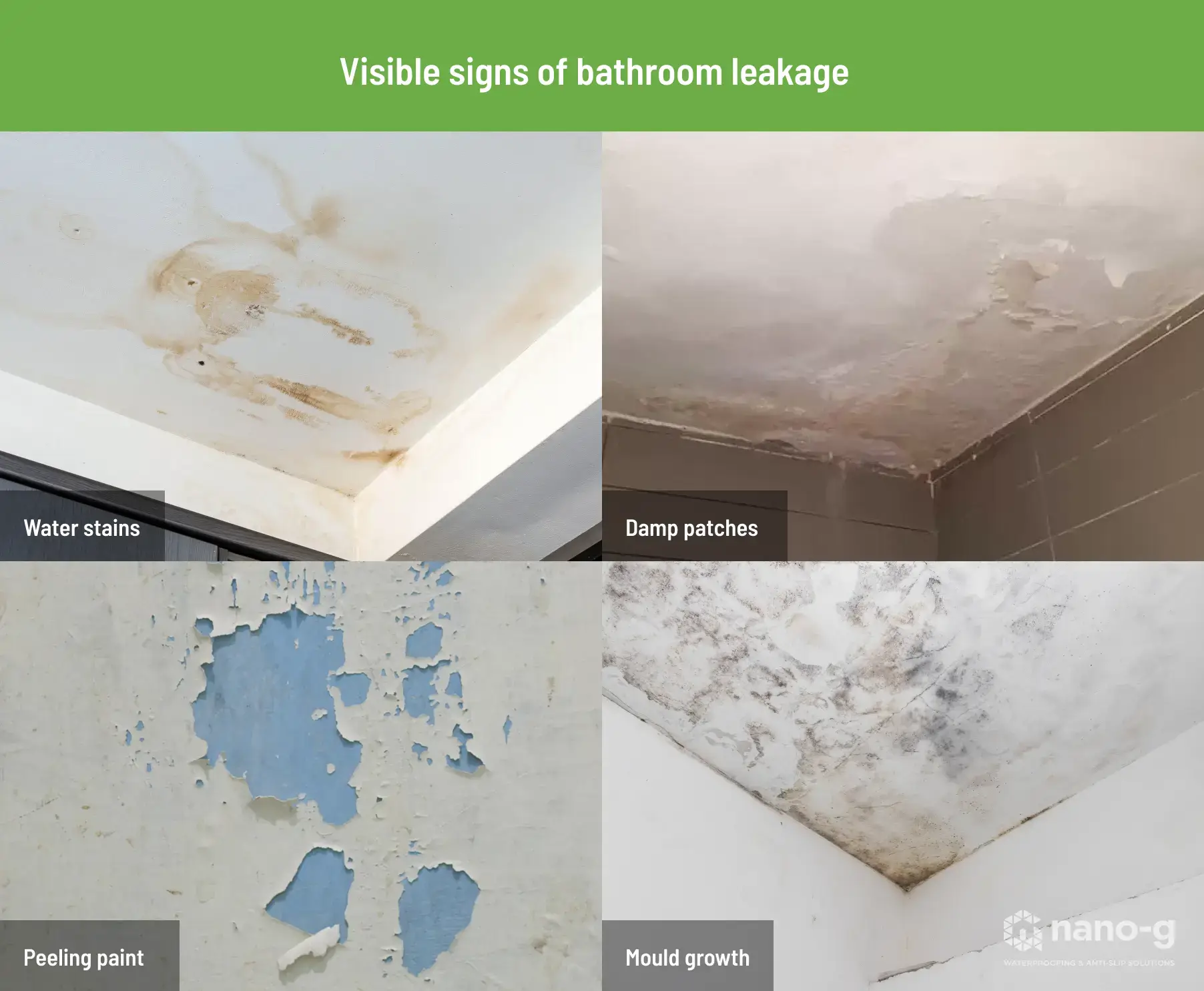
If you notice a damp ceiling, don’t wait until water starts dripping before taking action. Here’s what you can do:
- Observe when the leakage happens: Does the ceiling become wet shortly after someone showers upstairs? Does it happen whenever the bathroom floor is washed? Or does the dampness remain even when the bathroom has not been used?
- Document the visible damage: Take photos or videos of water stains, damp patches, peeling paint, mould or other signs of damage. If you live in a condominium or apartment, inform the upstairs homeowner and building management as soon as possible.
- Arrange for a professional inspection: A waterproofing specialist can determine whether the leak is caused by bathroom waterproofing failure, plumbing, damaged grout, worn sealant or another issue before recommending the right repair.
Did you know?
Malaysia has a formal process for handling inter-floor leakage in strata properties. KPKT’s strata management guidance states that after receiving notice, the developer, JMB, MC or Sub-MC should inspect the affected parcel and determine the cause and responsible party. An inspection certificate, known as Form 28, is then issued.
This process can be particularly helpful when the leakage involves two different units and it is unclear who is responsible for the repair.
How Can Bathroom Leakage from the Upper Floor Be Repaired?
For waterproofing-related leakage, a no-hacking waterproofing solution can help address water seepage without removing the existing bathroom tiles.
Nanotechnology waterproofing works by penetrating beneath the surface to form a water-repellent barrier that helps prevent further water seepage.
For suitable cases, this approach offers:
- Minimises hacking, dust and noise
- Causes less disruption to the household.
- Eliminates the need to replace existing tiles.
- Shorter completion timeframe without major renovation.
A lasting repair also starts with choosing the right waterproofing contractor. Here’s what you should consider before making your choice.
How Nano-G Helps Solve Bathroom Leakage
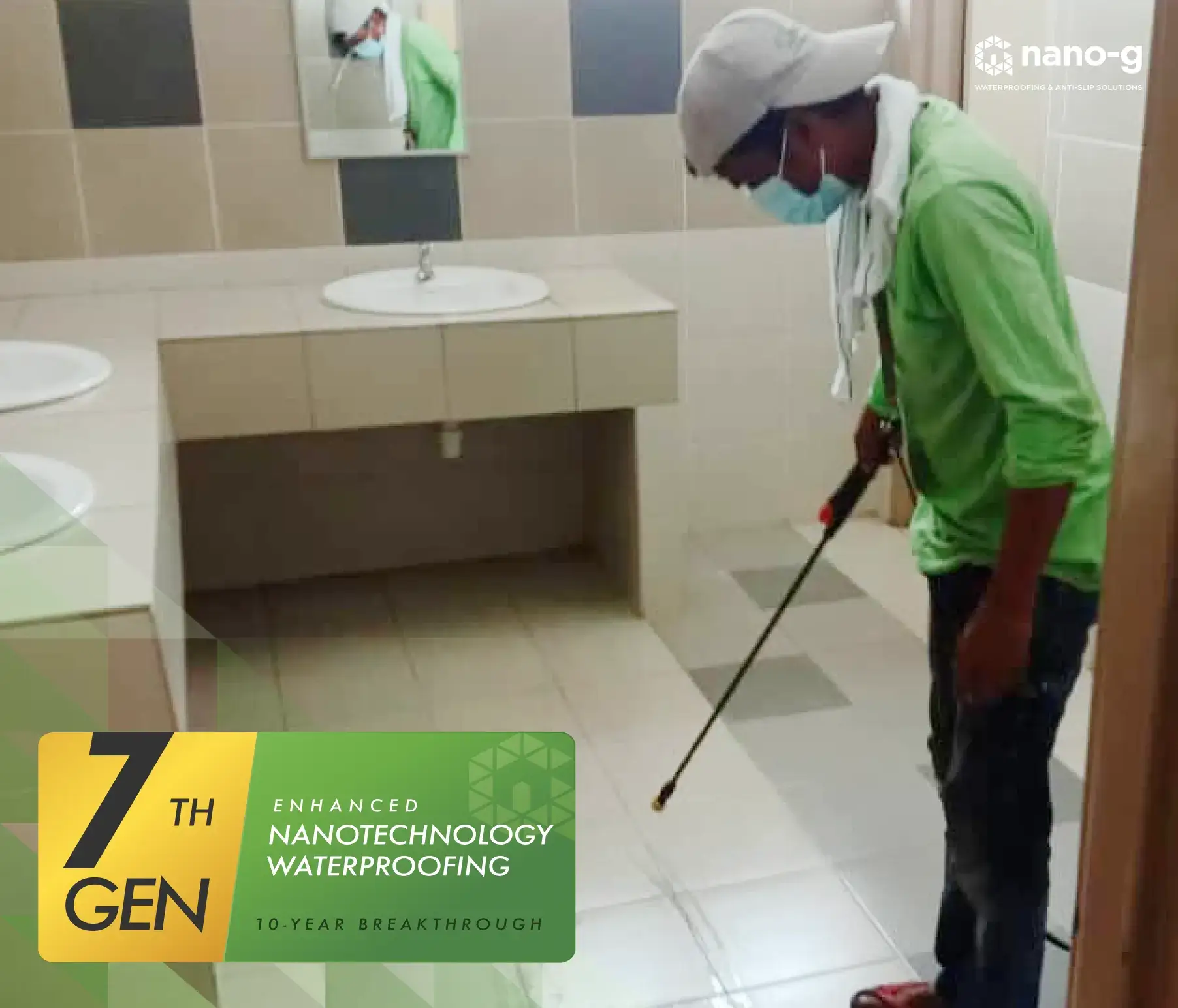
At Nano-G, the process begins by identifying the source of the leakage before recommending a suitable treatment. This is important because a ceiling stain alone cannot confirm whether the problem comes from waterproofing, plumbing or another source.
For suitable waterproofing-related leaks, Nano-G’s no-hacking nanotechnology waterproofing solution is designed to restore waterproofing protection without removing the existing bathroom tiles.
This means homeowners may be able to address water seepage while avoiding the extensive dust, noise and downtime associated with conventional hacking and retiling.
The solution can be used for suitable bathrooms in condominiums, apartments and landed homes, depending on the condition of the bathroom and the actual cause of the leakage.
Protect Your Home from Recurring Bathroom Leakage
Bathroom leakage from the upper floor is not something homeowners should ignore. A small damp patch today can develop into a much larger ceiling leakage problem if water continues to seep through the floor above.
Rather than repeatedly repainting stains or sealing visible cracks, start by finding the root cause. A professional inspection can determine whether you need plumbing repairs, grout or sealant replacement, conventional waterproofing, or a no-hacking solution.
By addressing the source early and choosing the appropriate repair method, you can better protect your home against recurring bathroom leakage while avoiding unnecessary renovation, disruption and repair costs.
FAQs
1. Why is water leaking from the ceiling below my bathroom?
Water leaking from the ceiling below a bathroom can be caused by several issues, including a deteriorated waterproofing membrane, leaking concealed pipes, cracked grout, damaged silicone joints or gaps around floor traps. Water can also travel through the concrete slab before appearing on the ceiling below, so the visible damp patch may not be directly underneath the actual source of the water leakage.
A professional inspection is recommended to determine whether the problem requires plumbing repairs, bathroom waterproofing or another form of treatment.
2. How do I stop water leakage from an upstairs bathroom?
The first step is to identify exactly where the water leakage is coming from. If a pipe is damaged, the plumbing problem needs to be repaired. If the leak is caused by deteriorated waterproofing beneath the tiles, the bathroom’s waterproofing protection will need to be restored.
Depending on the condition of the bathroom, this may involve conventional hacking and replacement of the waterproofing membrane, or a suitable no-hacking waterproofing treatment. Avoid relying only on repainting, regrouting or resealing until the actual source of the leak has been identified.
3. What are the signs of bathroom waterproofing failure?
One of the most obvious signs of bathroom waterproofing failure is a damp or stained ceiling directly below or near the bathroom. Other warning signs can include peeling or bubbling paint, mould growth, musty odours, deteriorating grout and loose or hollow-sounding tiles.
These symptoms should not be ignored, especially if they become more noticeable after showering or washing the bathroom floor. The earlier a waterproofing problem is identified, the easier it may be to prevent moisture from causing further damage.
4. Can bathroom waterproofing be repaired without hacking the tiles?
Yes, in suitable cases. No-hacking waterproofing solutions are designed to address certain types of water seepage without removing the existing bathroom tiles.
For example, nanotechnology-based waterproofing treatment can penetrate beneath the surface to create a water-repellent barrier. This can reduce the amount of dust, noise and renovation work compared with conventional hacking.
However, not every bathroom leak can be repaired without hacking. If the problem involves damaged plumbing or more extensive structural issues, other repairs may be required. A professional assessment should therefore be carried out before choosing a treatment.
5. Can waterproofing solve a ceiling leakage problem?
Waterproofing can solve a ceiling leakage problem when the source is water penetrating through a failed waterproofing system above the affected ceiling. This is commonly seen when a bathroom is located on the upper floor.
However, ceiling leakage can also come from leaking pipes, roofs, air-conditioning drainage and other sources. Applying a waterproofing treatment without identifying the source could leave the actual problem unresolved. The source of the leak should always be diagnosed first.
Related Articles