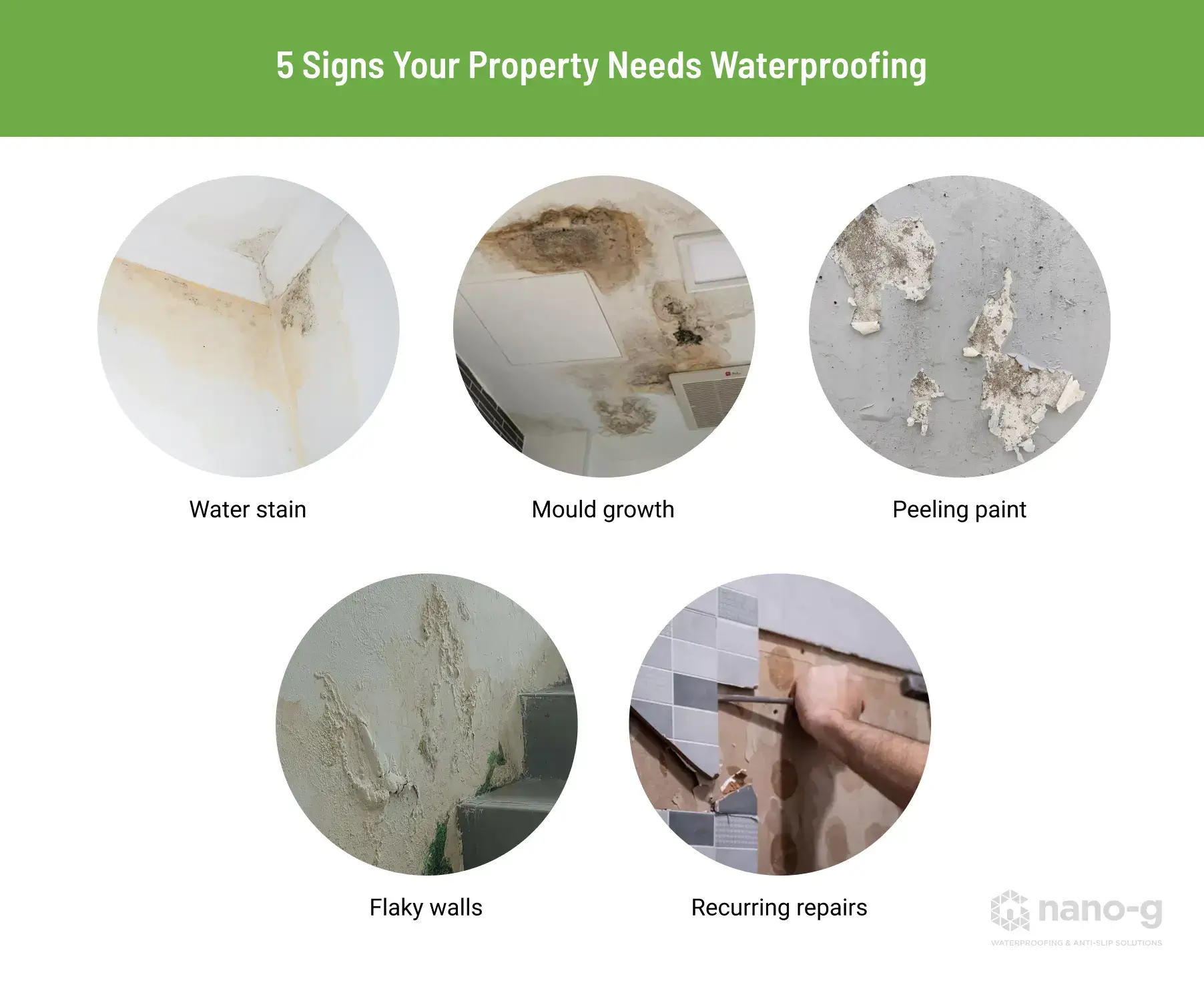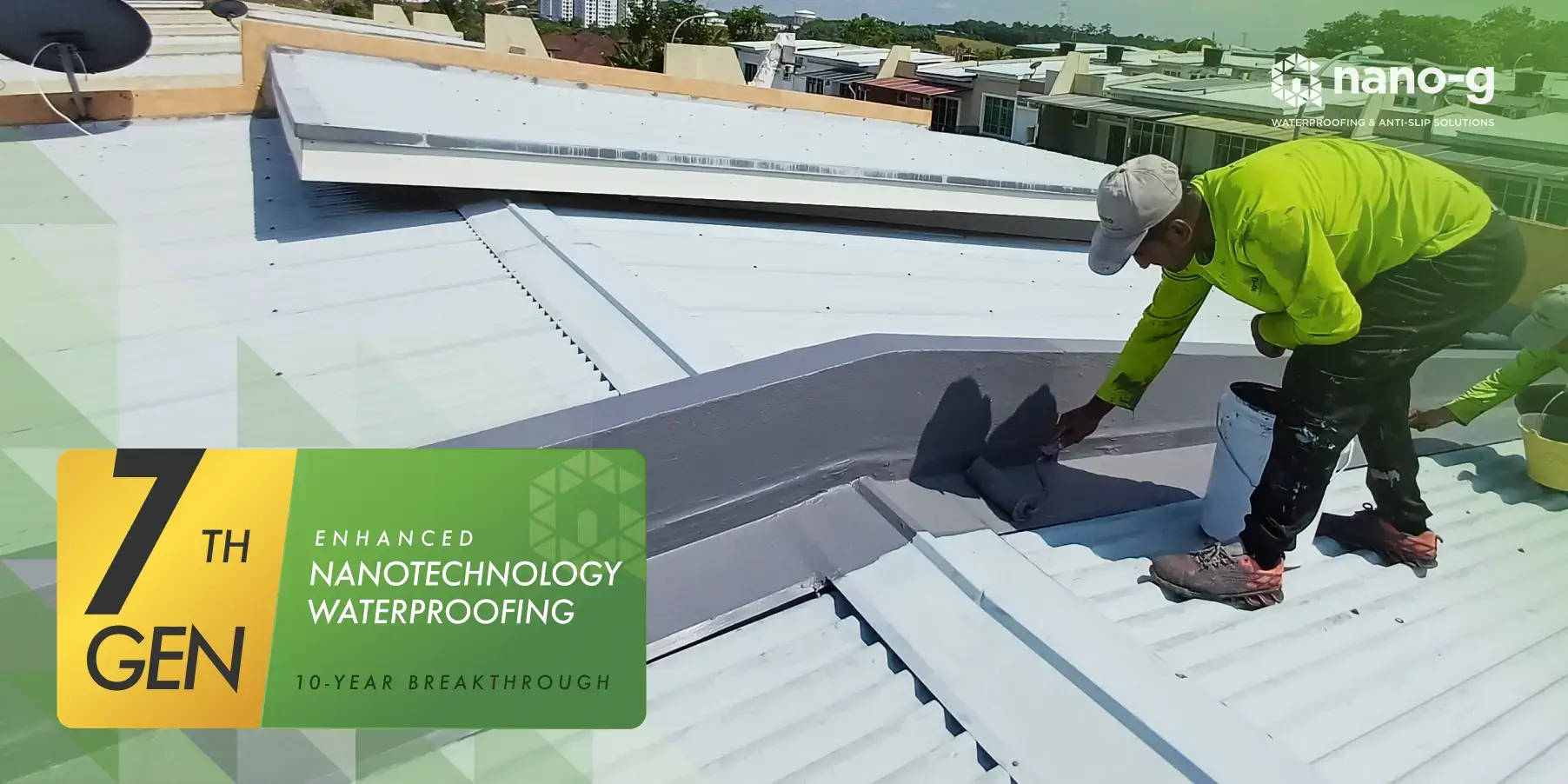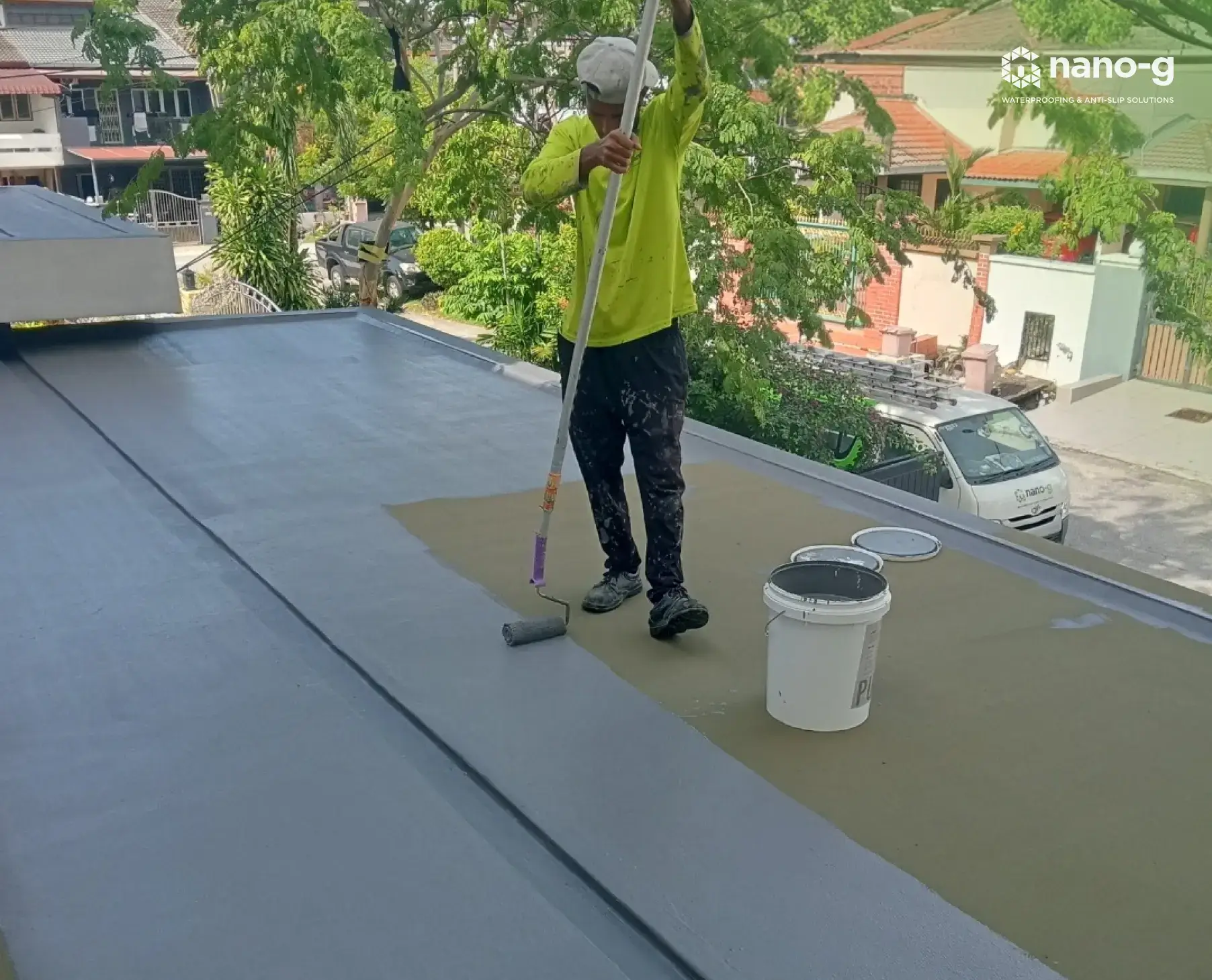


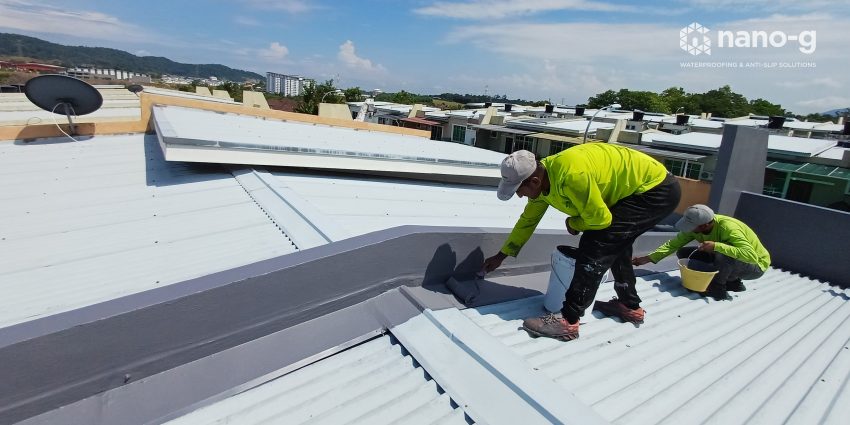
Maybe you have noticed a few roof tiles looking out of place after a storm, or a rusty section on your metal roof that seems to be getting worse. Perhaps you have already had the same area patched once, only for the problem to return a few months later.
If you have broken roof tiles, rusted metal roofing or a recurring leak, professional roof repair can help determine whether the damaged area can be repaired or needs replacing.
Key Takeaways
- A professional roofing contractor should inspect the roof first to understand what is damaged before recommending any work.
- Different roofing materials require different repairs, whether you have a tiled, metal, concrete or flat roof.
- Not every damaged roof needs a full replacement. Localised problems such as broken tiles or a damaged metal section may only require targeted repairs.
- Clear explanations of what will be repaired or replaced help homeowners understand the work and avoid unnecessary repairs.
- Roof problems such as broken tiles, corrosion, loose screws, cracks and standing water should be checked early before the damage becomes more extensive.
Table of Contents
- What Does a Roofing Contractor Do During Roof Repair?
- What Should You Expect From a Professional Roofing Contractor?
- Roof Repair vs Roof Replacement: Which Do You Need?
- Common Roof Repairs for Different Types of Roofs
- Where Can You Find a Roofing Contractor for Roof Repair?
- FAQs
What Does a Roofing Contractor Do During Roof Repair?
In Malaysia, roofs are regularly exposed to heavy rain, heat and humidity, which can contribute to problems such as displaced tiles, corrosion, water ingress and deterioration around roof joints.
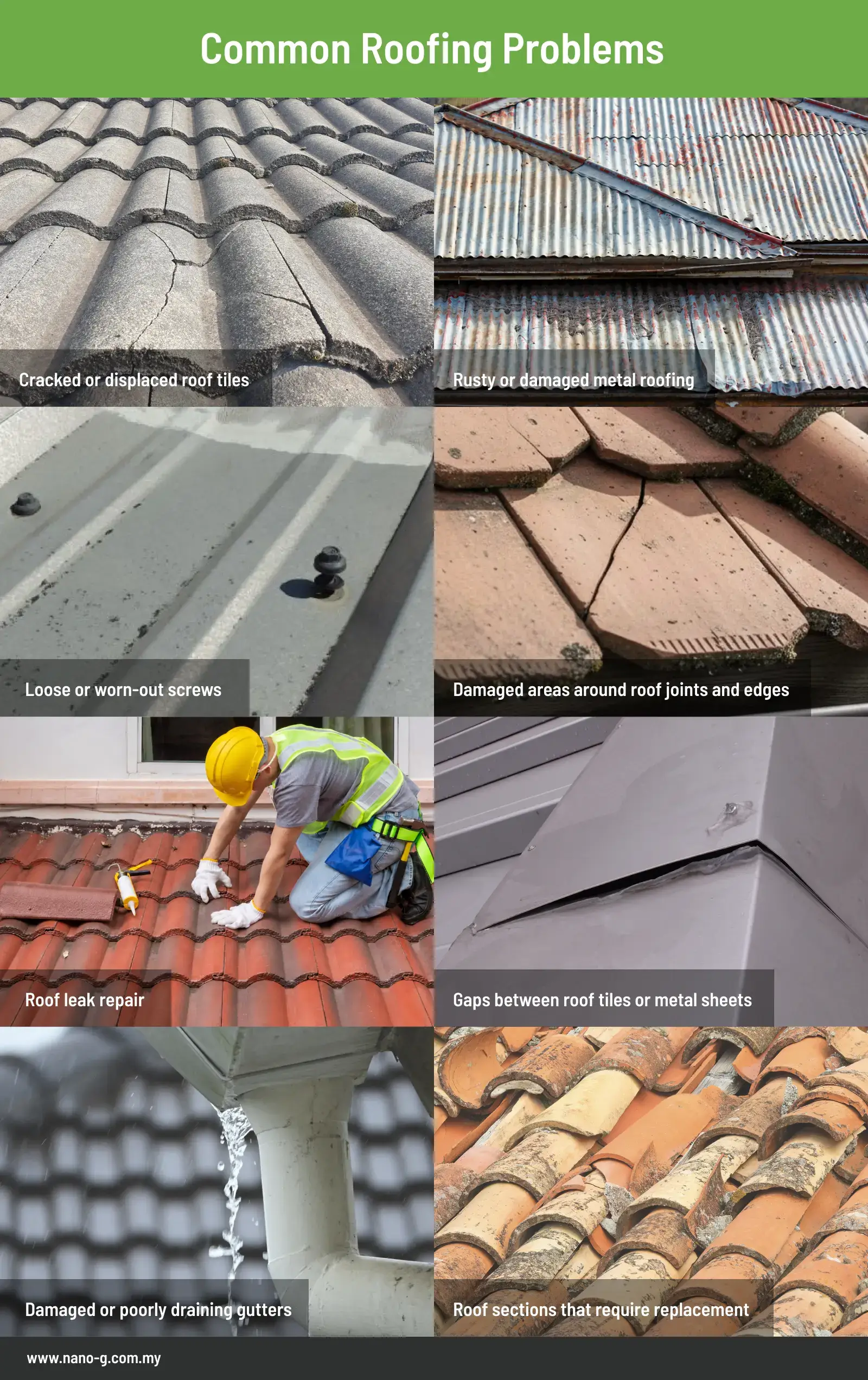
Depending on the problem, a roofing contractor may handle:
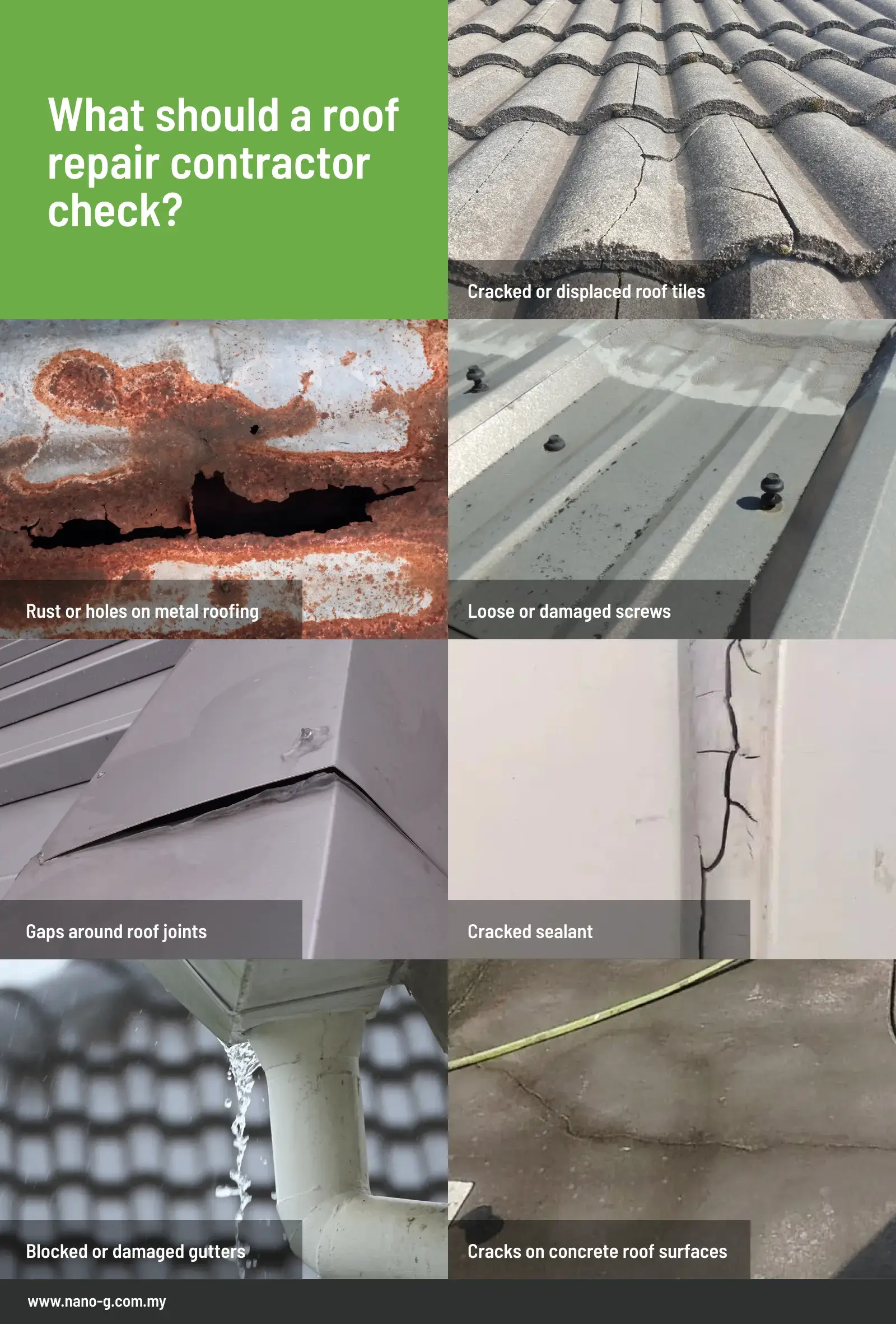
- Cracked, broken or loose roof tiles
- Rusty or damaged metal roofing
- Loose or worn-out screws
- Damaged areas around roof joints and edges
- Roof leak repair
- Gaps between roof tiles or metal sheets
- Damaged or poorly draining gutters
- Roof sections that are too damaged to repair and need replacing
The repair should depend on what is actually damaged. A few cracked tiles may only need to be replaced individually, while a metal sheet that has corroded badly enough to become weak may need a more extensive repair.
What Should You Expect From a Professional Roofing Contractor?
Finding someone who offers roof repair is easy. Knowing whether the work will be done properly is another matter, especially when most homeowners cannot easily climb up and check the roof themselves.
Here are a few things worth looking for before you agree to the work.
1. The Roof Is Checked First
Before suggesting any repair, the contractor should check the damaged area and the parts around it.
During a roof inspection, the contractor may check the damaged area as well as surrounding tiles, roofing sheets, fasteners, joints, drainage areas and other nearby components that could contribute to the problem.
2. The Repair Suits Your Roof
Different roofs need different repairs. A cracked tile may only need replacing, while a rusty metal sheet may need to be repaired or replaced if the damage is more serious.
A professional roofing contractor should know what works for your type of roof instead of using the same fix for every problem.
3. You Know What Will Be Repaired
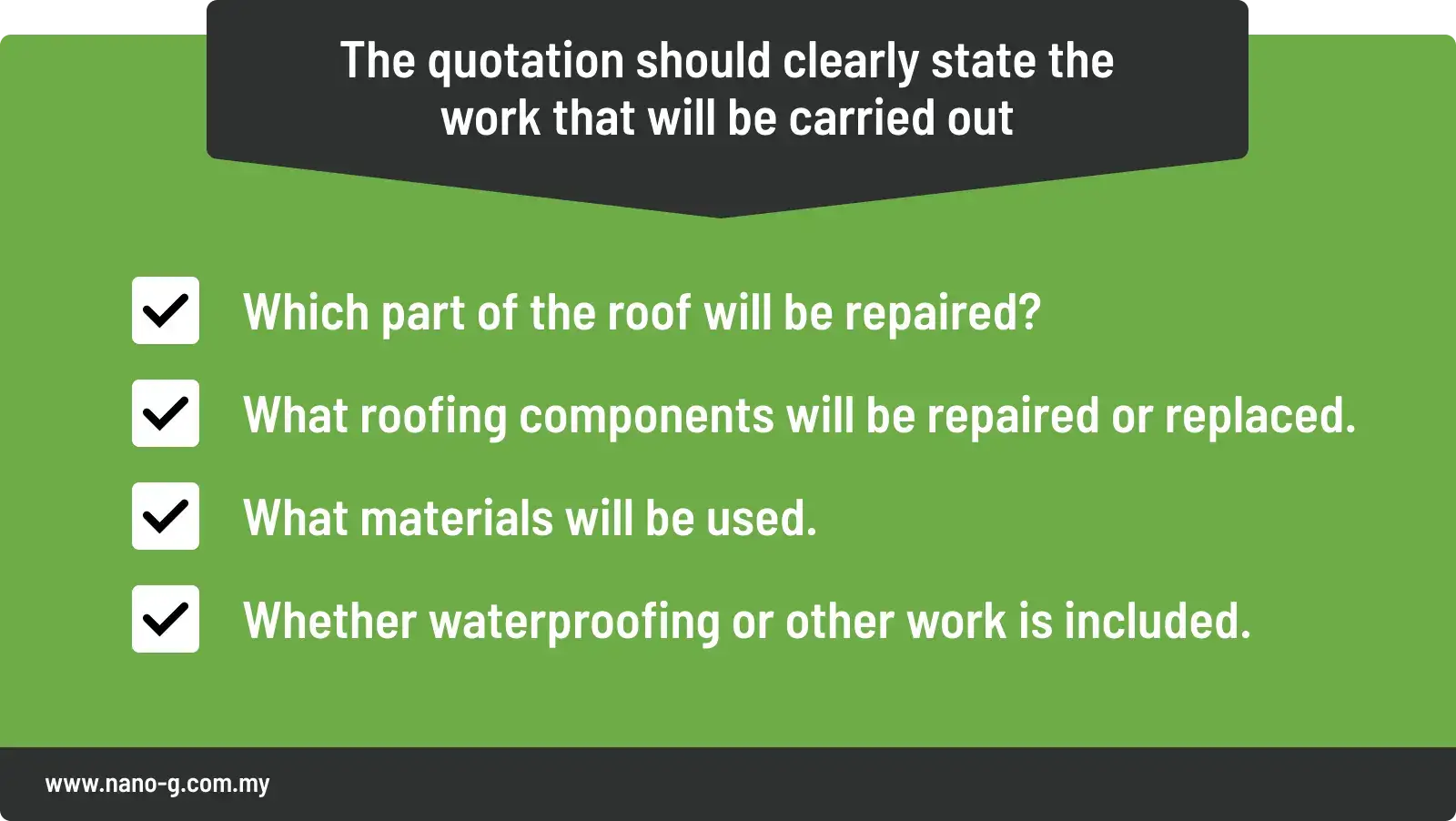
Before work starts, the contractor should explain what is damaged, what needs to be repaired or replaced and how much of the roof will be worked on.
This way, you know what you are paying for and why the repair is needed.
4. You Only Replace What Is Necessary
A damaged roof does not always mean you need a whole new roof.
If only a few tiles are broken, replacing those tiles may be enough. The same goes for a metal roof if the damage is limited to one section.
5. The Work Is Done Safely
Roof repair means working at height, sometimes on steep, wet or fragile surfaces. A professional contractor should use the right safety equipment and take the necessary precautions while carrying out the work.
Roof Repair vs Roof Replacement: Which Do You Need?
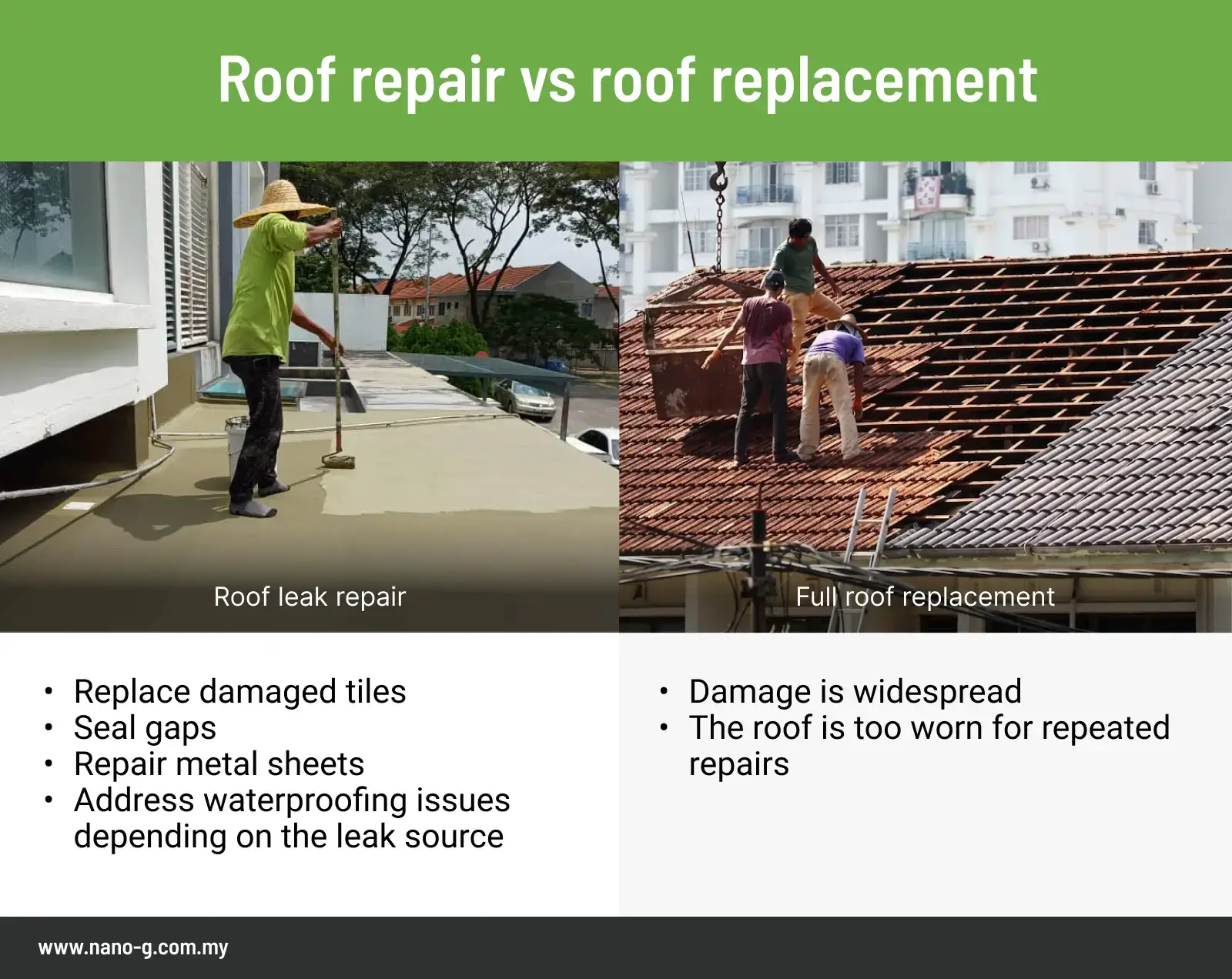
A damaged roof does not always mean you need to replace the whole thing.
If the problem is limited to a few broken tiles or one damaged section of metal roofing, a simple repair may be enough. If the damage has spread across a larger area, part of the roof may need to be replaced instead.
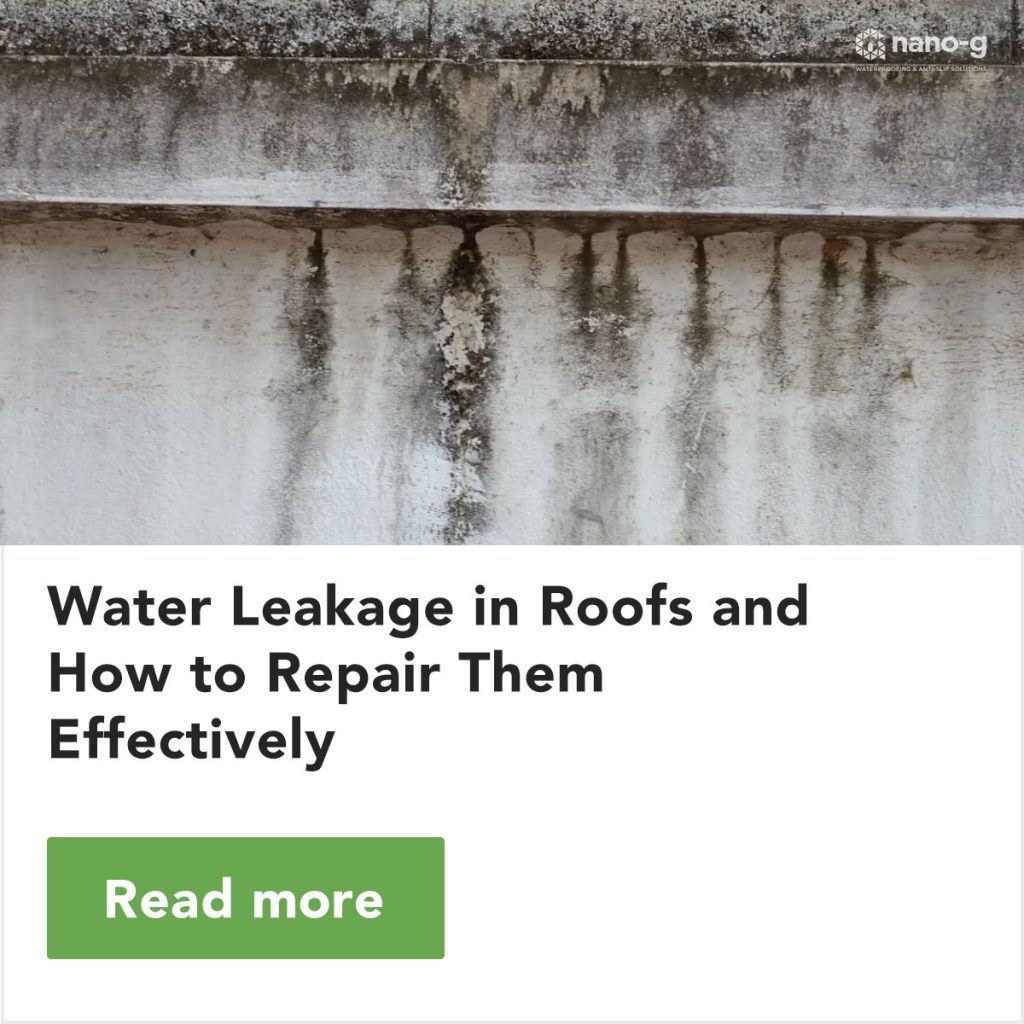
Roof leak repair may involve replacing damaged tiles, sealing gaps around joints, repairing metal sheets or addressing waterproofing failure, depending on where the water is entering.
A full roof replacement is usually considered when the damage is widespread or the roof has become too worn for repeated repairs to make sense.
A professional roofing contractor should check the extent of the damage first and recommend whether a repair or replacement is the better option.
Common Roof Repairs for Different Types of Roofs
Different types of roofs come with different problems, so the repair will depend on what your roof is made of and how badly it is damaged.
Metal Roof Repair
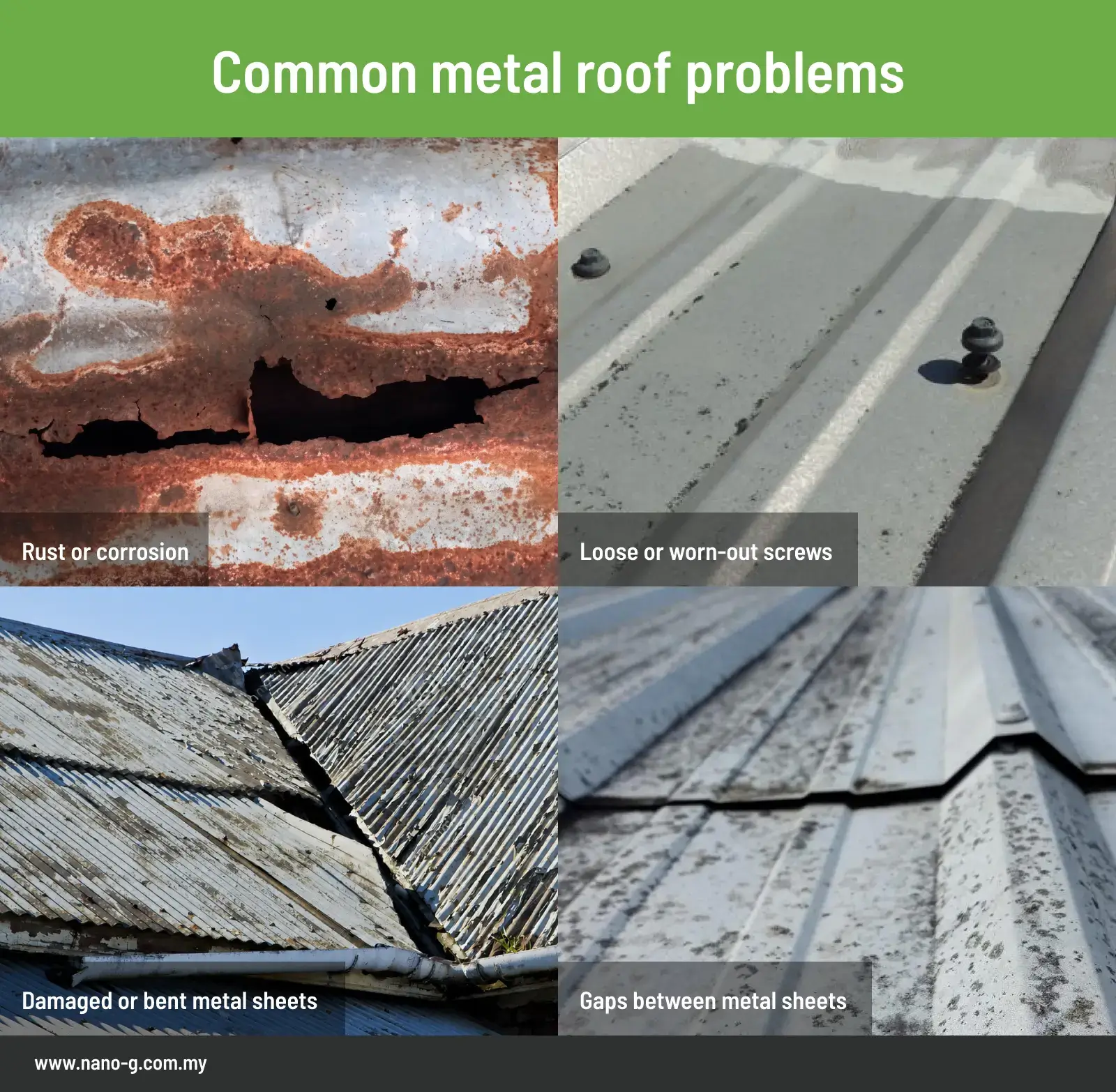
Metal roofs are commonly used for extensions, shoplots and commercial buildings. Over time, you may notice:
- Rust or corrosion
- Loose or worn-out screws
- Damaged or bent metal sheets
- Gaps between metal sheets
Small areas can often be repaired, but badly rusted metal may need to be replaced, especially if the sheet has become weak or developed holes.
Tiled Roof Repair
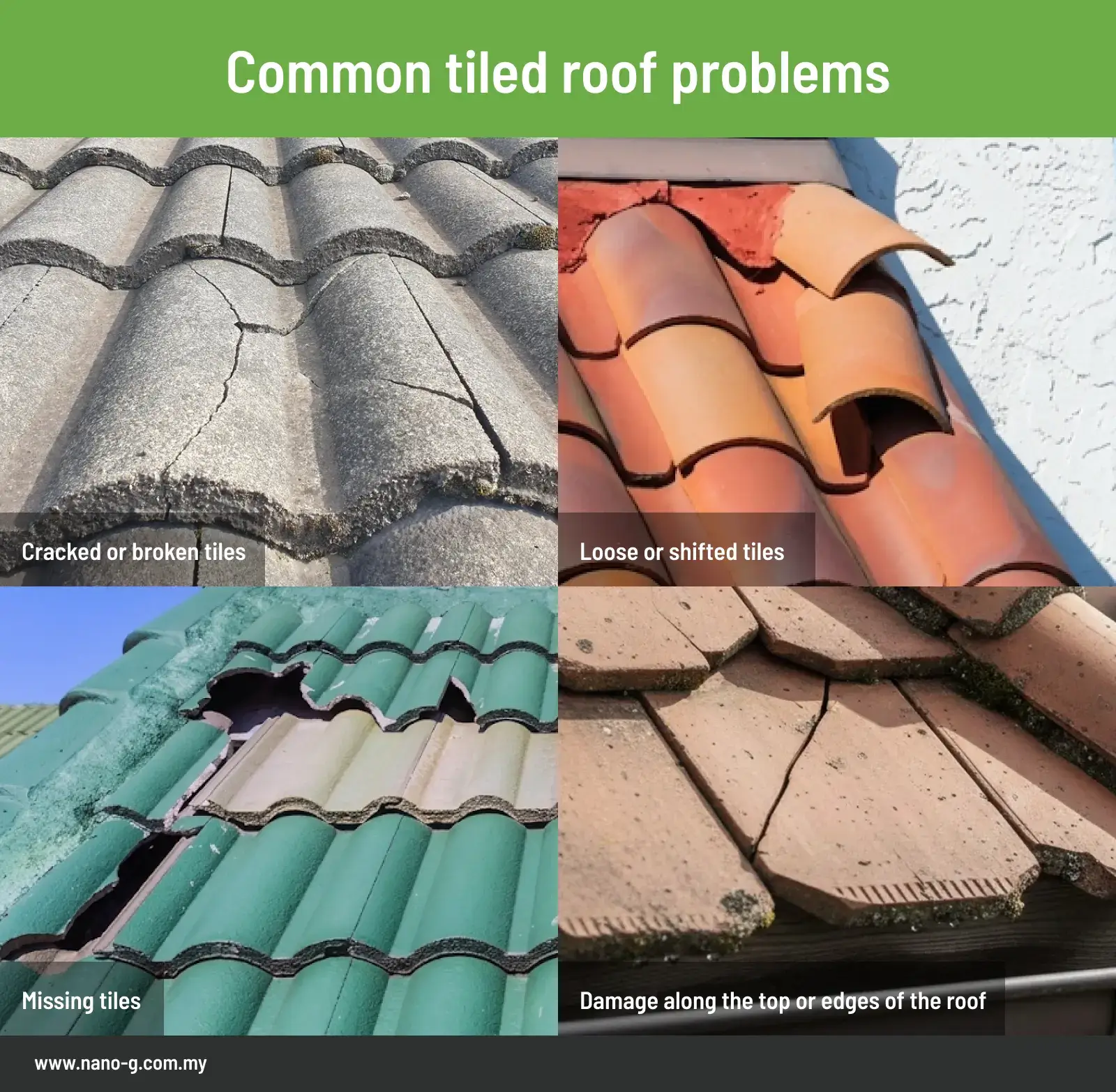
Tiled roofs can become damaged after years of exposure to rain, heat and strong winds. Common problems include:
- Cracked or broken tiles
- Loose or shifted tiles
- Missing tiles
- Damage along the top or edges of the roof
If only a few tiles are damaged, they can usually be replaced individually. If the damage affects a larger area, more of the roof may need to be repaired.
Concrete and Flat Roof Repair
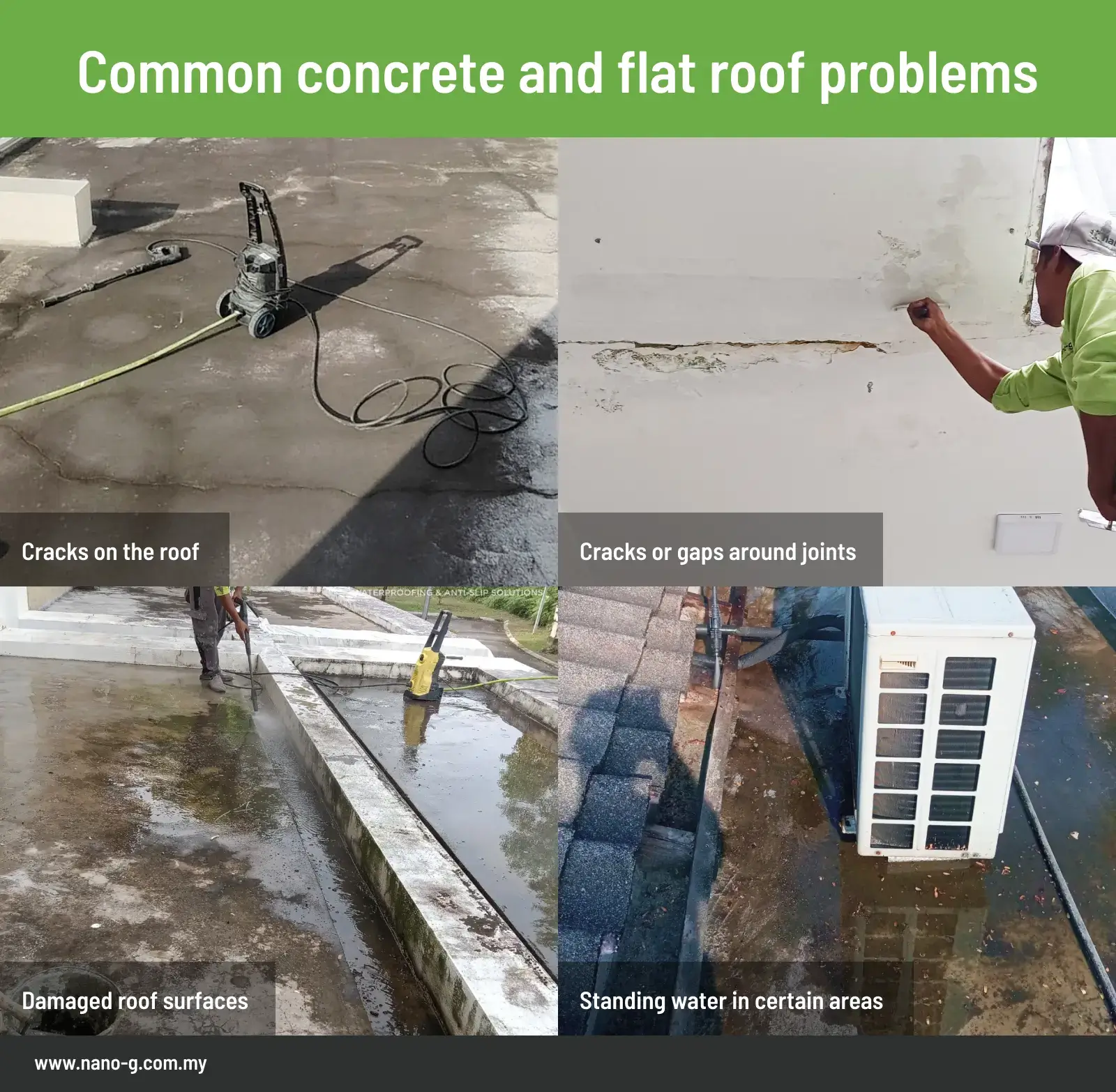
For concrete and flat roofs, the problem may not be something that can simply be removed and replaced. You may notice:
- Cracks on the roof
- Cracks or gaps around joints
- Damaged roof surfaces
- Standing water in certain areas
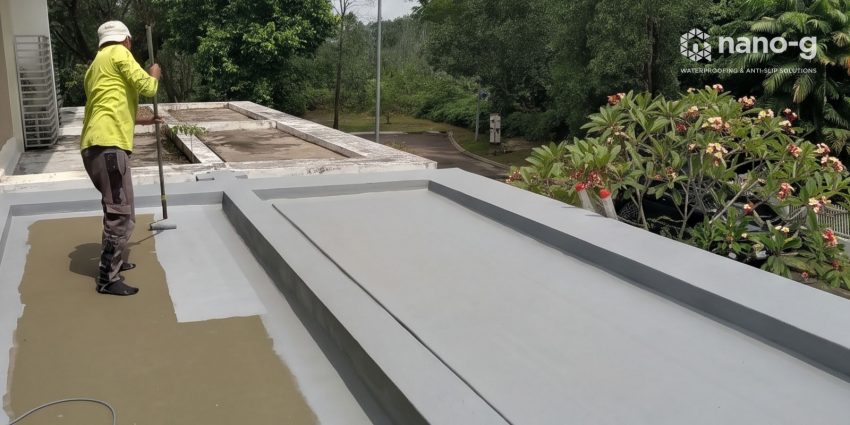
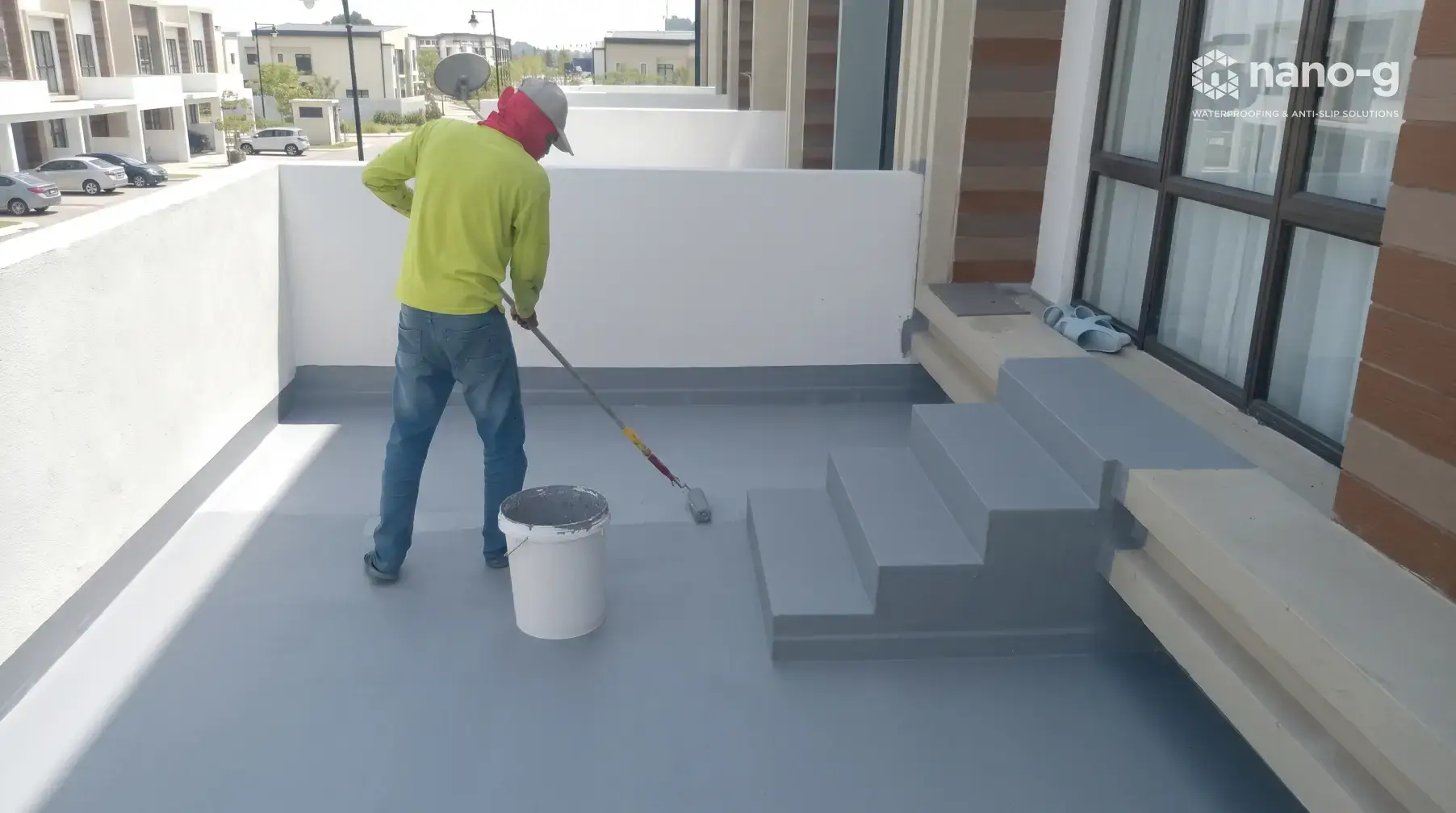
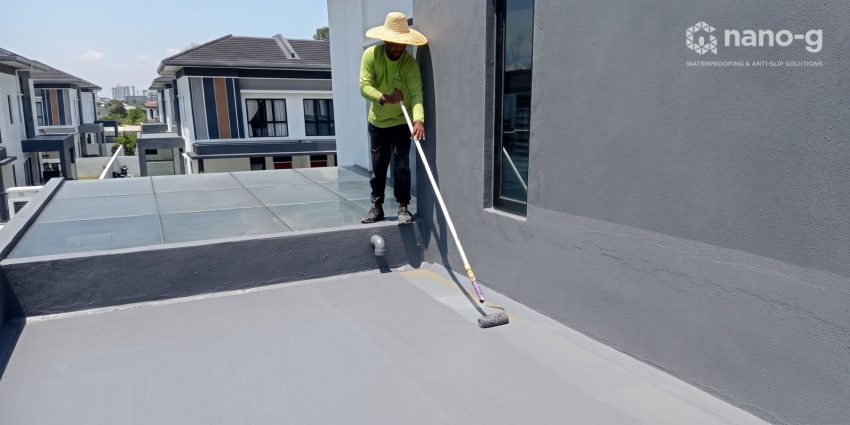
Flat roofs are also more prone to water leakage when rainwater collects or finds its way through cracks and gaps. This is why proper roof waterproofing is also important to help keep water from entering the property.
Where Can You Find a Roofing Contractor for Roof Repair?
If you keep noticing broken tiles, rusted roofing or other signs that your roof is getting worse, getting it checked early can help you understand whether you are dealing with a small repair or something that needs more attention.
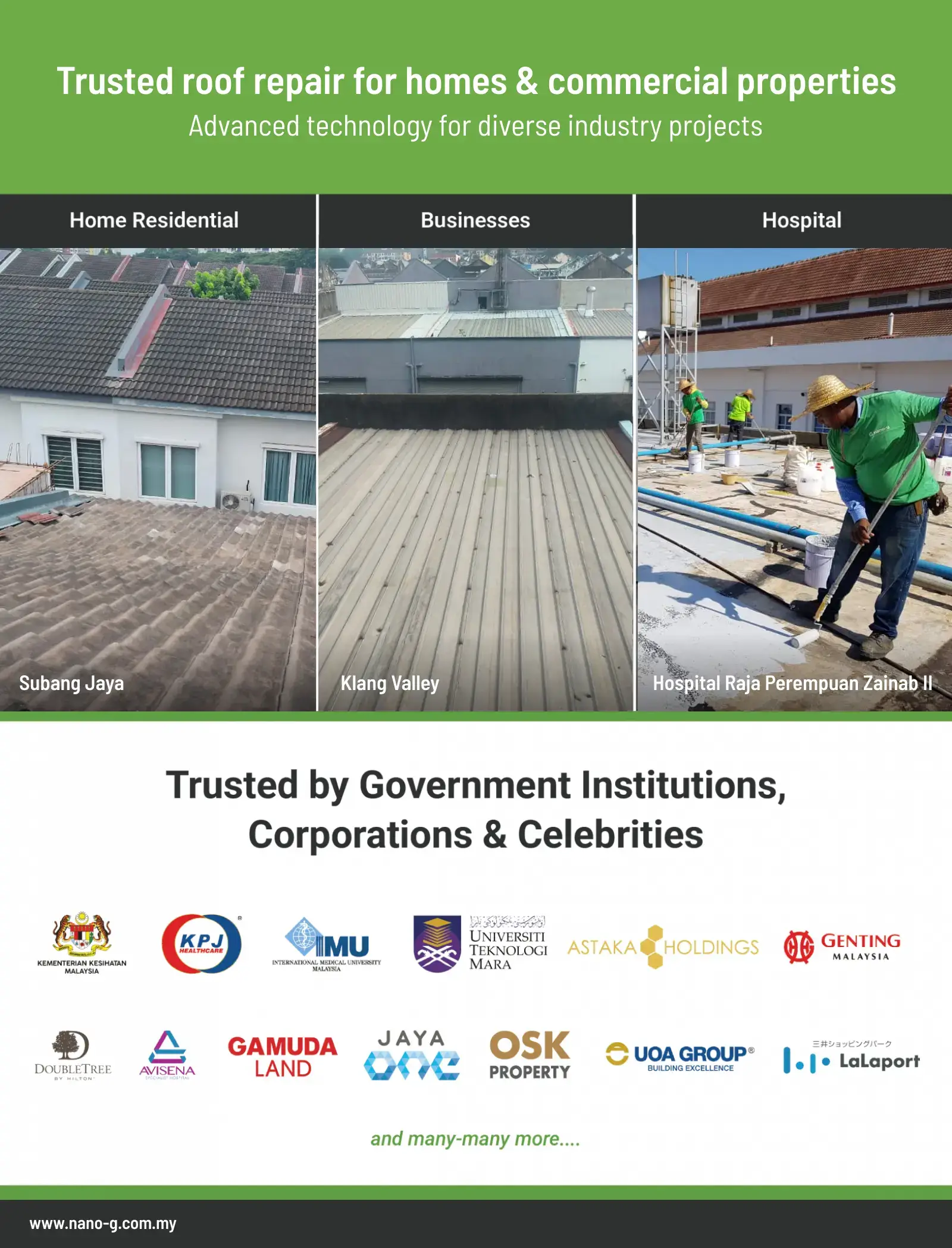
Nano-G provides professional roof repair alongside its waterproofing services, covering common problems involving tiled roofs, metal roofing and other roofing components across Malaysia.
Speak to Nano-G team today to arrange a roof inspection and find out what needs to be repaired before a small roofing problem becomes a bigger job.
FAQs
1. What does a professional roofing contractor do?
A professional roofing contractor checks the roof and carries out repairs or replacement where needed, which may include work on roof tiles, metal sheets, fasteners, gutters and other roofing components.
2. How do I choose a professional roofing contractor?
Look for a contractor who checks the roof before recommending work, explains clearly what is damaged and gives you a clear idea of what will be repaired or replaced. The recommended repair should also suit the type of roofing material used on your property.
3. Should I repair or replace a damaged roof?
It depends on the extent of the damage. If the damage is limited to a small area and the rest of the roof remains in good condition, a targeted repair may be enough. Larger replacement work is generally considered when the damage is widespread or the existing roofing material is too deteriorated for another practical repair.
4. Can a rusty metal roof be repaired?
It depends on how far the corrosion has progressed. Minor or localised damage may be repairable, but a metal sheet that has become weak or developed holes from corrosion may need to be replaced.
5. Can I replace only a few broken roof tiles?
Yes. If only a few tiles are cracked, broken or displaced and the surrounding roof remains in good condition, they can usually be replaced individually without replacing the entire roof.
6. Does Nano-G provide both roof repair and roof waterproofing?
Yes. Nano-G provides both professional roof repair and waterproofing solutions, so the right service can be recommended based on the problem. If the roof itself is damaged, repair may be needed, while roof leakage may require a suitable waterproofing solution.
Related Articles