

Malaysia’s tropical weather means our homes are regularly exposed to heavy rain, high humidity and intense sunlight. Over time, this constant exposure can take a toll on roofs, exterior walls, balconies, bathrooms and other areas where water can find its way into a building.
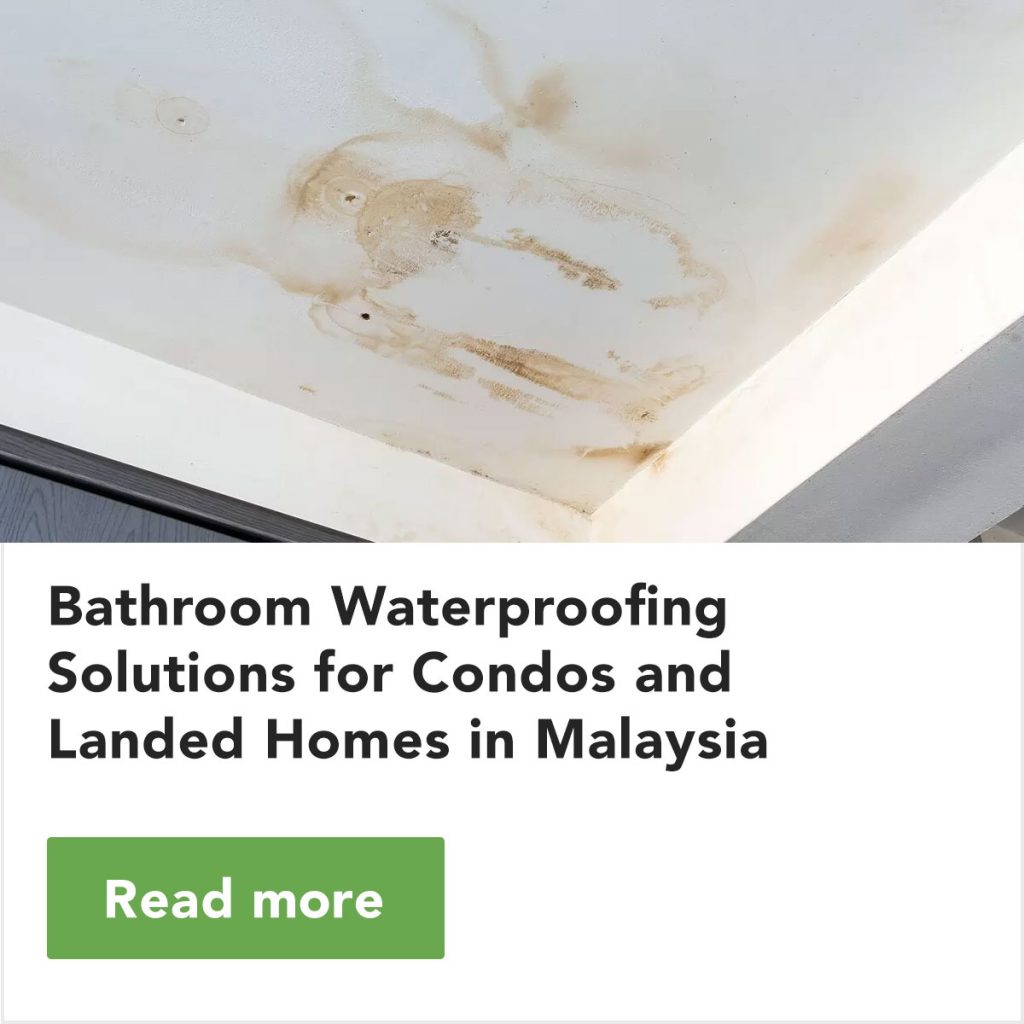
The first signs of water leakage are often easy to overlook. A small ceiling stain, damp patch, peeling paint or musty smell may not seem urgent, but these problems can become more serious when water continues entering the structure.
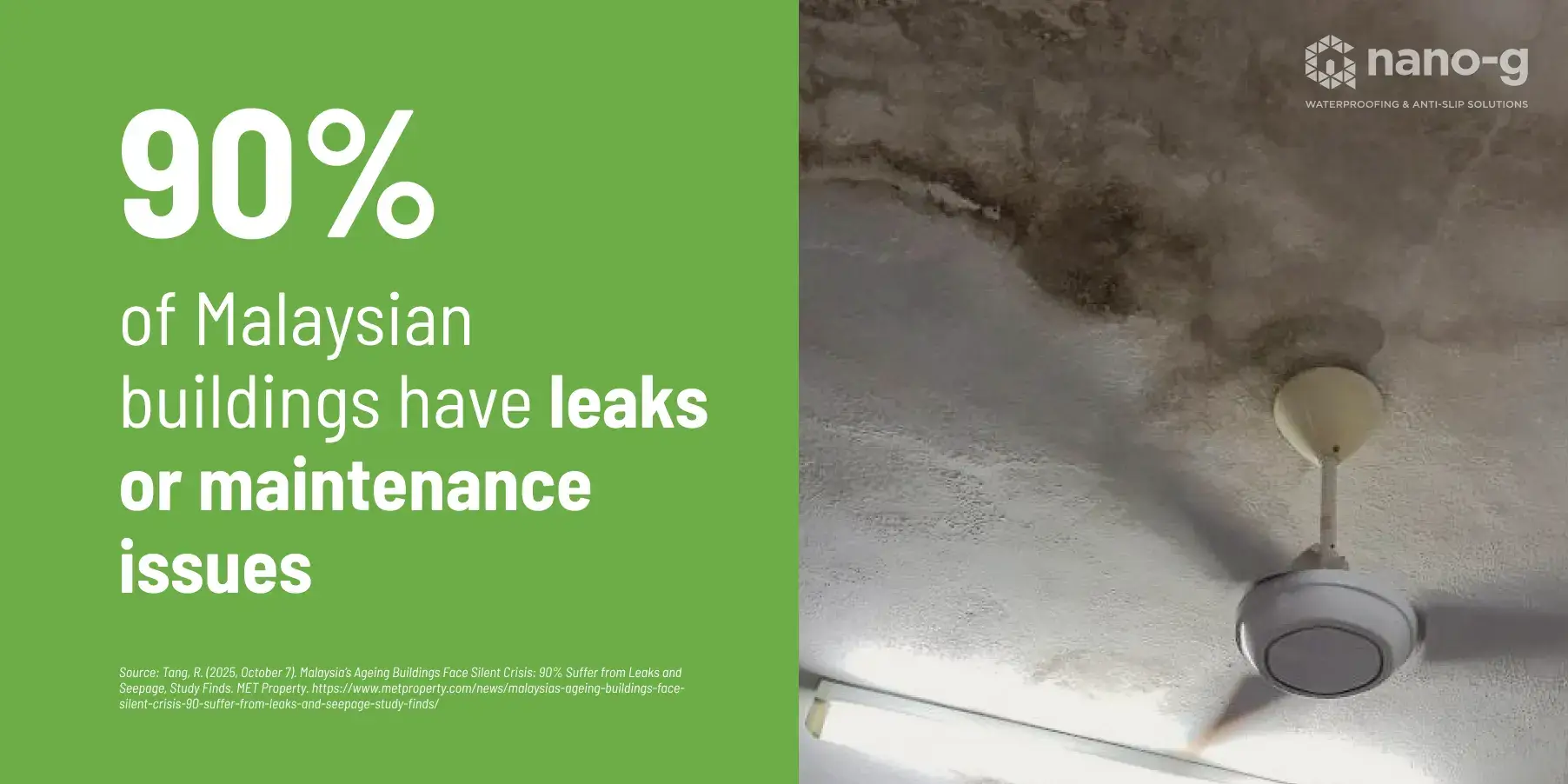
In fact, a nationwide study published in 2025 found that around 90% of Malaysian buildings surveyed showed signs of leakage, seepage or other maintenance-related problems.
Recurring leaks are particularly frustrating for homeowners because repairing what you can see does not necessarily stop where the water is coming from. Long-lasting waterproofing therefore starts with finding the source before choosing the right treatment.
Key Takeaways
- Water leakage can be difficult to trace, as water may travel through cracks, joints and concrete before becoming visible elsewhere.
- Proper leak detection is essential to identify the source and determine whether waterproofing, plumbing or another repair is needed.
- Nanotechnology waterproofing penetrates compatible surfaces to create water-repellent protection beneath the surface while preserving existing finishes.
- No-hacking waterproofing can reduce dust, noise, debris and disruption, with suitable applications potentially completed within 24 hours.
- Long-lasting waterproofing also depends on accurate diagnosis, proper surface preparation, professional application and the right solution.
Table of Contents
- Why Conventional Waterproofing Repairs May Not Last
- Why Proper Leak Diagnosis Matters
- What Is Nano-G 7th Generation Nanotechnology Waterproofing?
- What Makes the 7th Generation Waterproofing More Durable?
- No Hacking, Less Mess and Minimal Disruption
- Certified Technology for Greater Confidence
- Protect Your Home with Long-Lasting Waterproofing
- FAQs
Why Conventional Waterproofing Repairs May Not Last
Conventional waterproofing remains an effective and necessary solution in many situations, particularly where extensive deterioration or structural repairs are involved.
Depending on the problem, conventional repairs can involve hacking tiles or existing finishes, removing damaged materials, drilling, installing a new waterproofing membrane, rebuilding surfaces and replacing the finishes afterwards
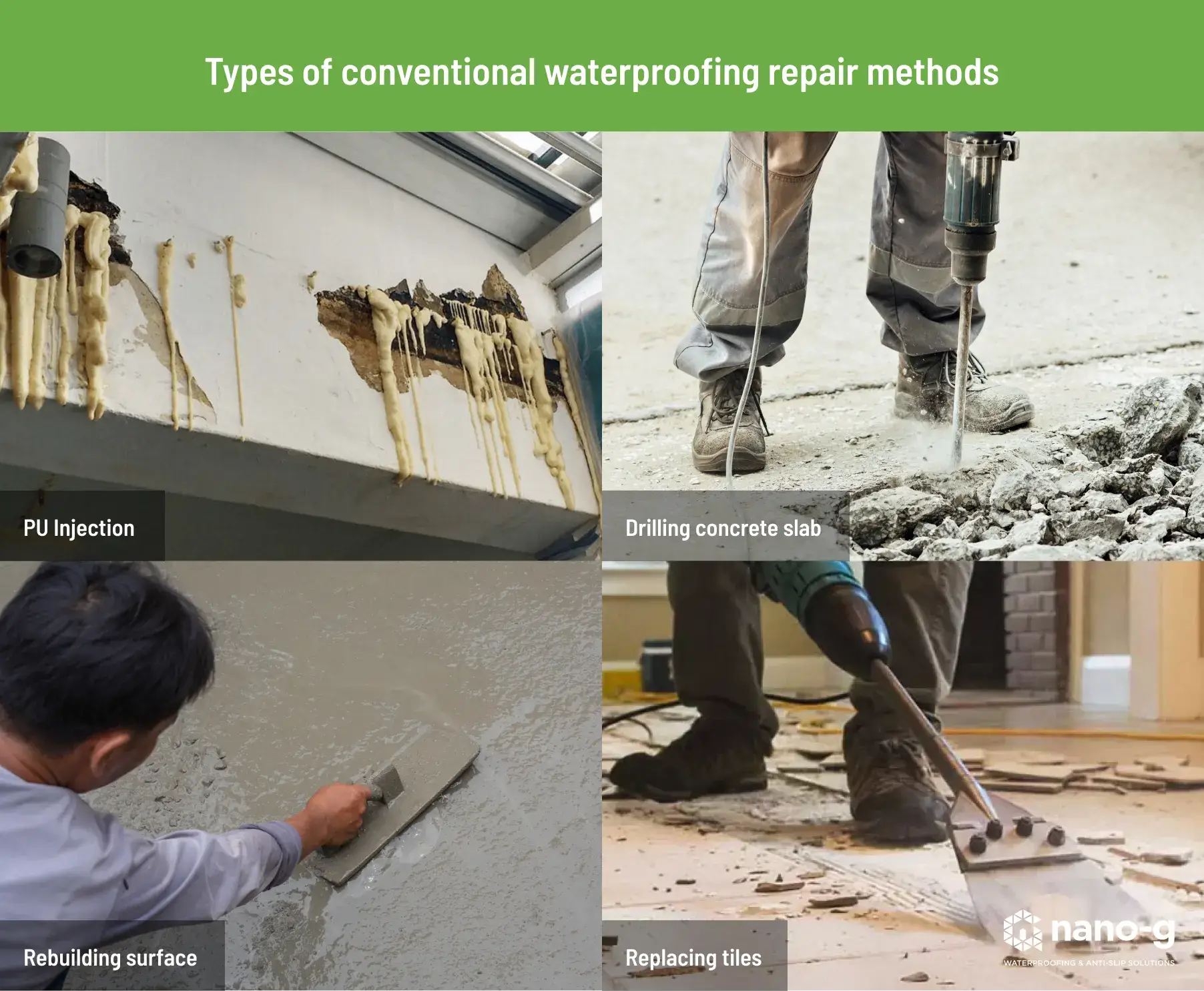
The issue is not necessarily the method itself, but how the problem is diagnosed and repaired. For example, repainting a damp wall or applying a waterproofing coating over a visible crack might temporarily hide the symptoms. However, if water is entering from another location, the leak may eventually appear again.
For waterproofing to last, the repair needs to address the actual point of water ingress while providing protection against the conditions the area regularly faces, including rain, humidity and UV exposure.
Why Proper Leak Diagnosis Matters
One of the trickiest things about a leak is that water does not always appear where it first enters your home.
Water can travel through cracks, joints, walls and concrete before becoming visible elsewhere. A stain on your living room ceiling, for example, does not necessarily mean the source is directly above it.
This is where professional leak detection becomes important. A proper inspection can help determine:
- Where water is entering the building
- How far moisture has spread
- Whether waterproofing or plumbing is responsible
- The condition of the affected surface
- Which repair method is most appropriate
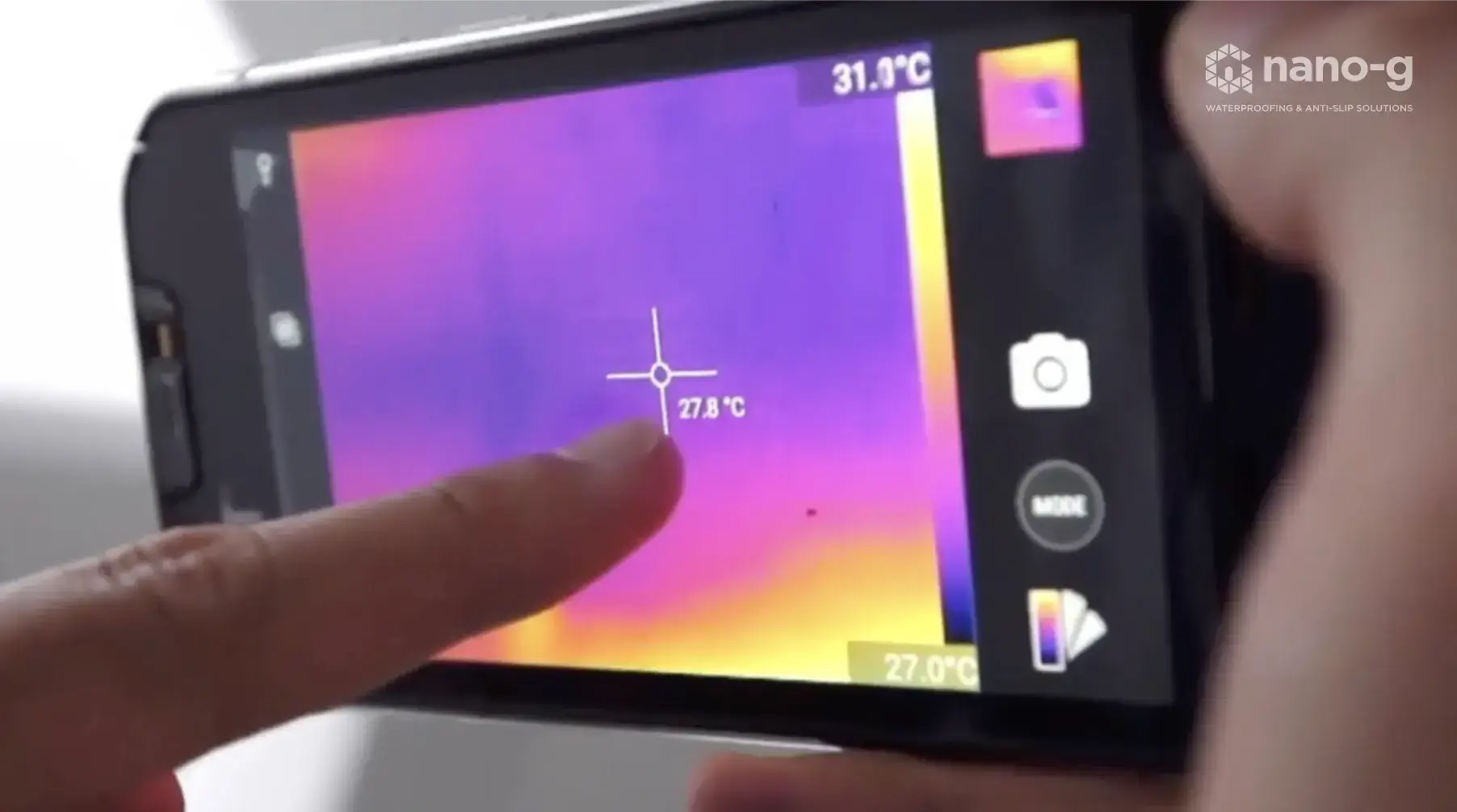
Modern diagnostic equipment can make this process more accurate. A professional water leak detector, thermal imaging or FLIR camera and moisture meter can help identify moisture that may not be visible from the surface.
The waterproofing contractor you choose matters too. Rather than immediately recommending a particular treatment, an experienced contractor should first determine what is causing the leak and whether waterproofing is actually the right solution.
What Is Nano-G 7th Generation Nanotechnology Waterproofing?
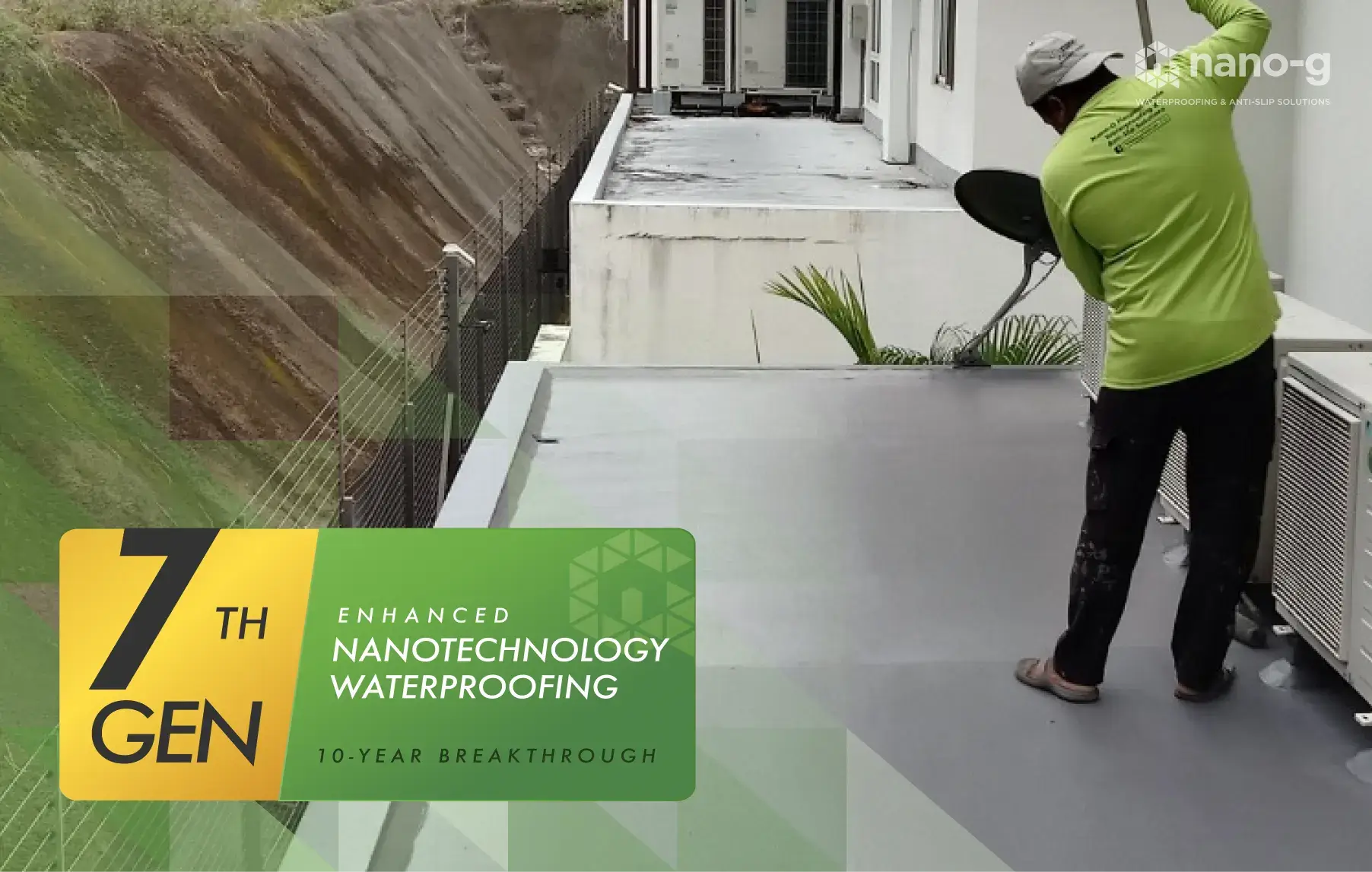
Nano-G’s 7th Generation Nanotechnology Waterproofing Solution is the latest evolution of its established no-hacking waterproofing technology.
Unlike a conventional surface treatment that relies solely on creating a protective layer on top, the formulation uses nanotechnology to penetrate beneath compatible surfaces and create an invisible water-repellent barrier.
This approach helps protect existing tiled and concrete surfaces while reducing the need for unnecessary hacking and major renovation work. The latest formulation was developed through Nano-G’s research collaboration in Greece, with a focus on improving long-term waterproofing performance.
For homeowners, the goal is straightforward: provide more durable protection against water leakage while keeping existing finishes intact wherever the condition of the property allows.
What Makes the 7th Generation Waterproofing More Durable?
Malaysia presents a challenging environment for any waterproofing coating or treatment. A solution may have to withstand frequent rain, strong sunlight, persistent humidity and repeated wet-and-dry cycles throughout the year.
Nano-G’s enhanced formulation is designed with these conditions in mind.
i. Deeper surface penetration
Rather than relying solely on a layer sitting above the surface, the nanotechnology formulation penetrates compatible materials to create water-repellent protection beneath the surface.
ii. Improved weather resistance
The formulation is designed to provide better resistance against rain, UV exposure and humidity, making it suitable for Malaysia’s demanding tropical climate.
iii. Breathable protection
Waterproofing should keep unwanted water out without unnecessarily trapping existing moisture inside. Breathable protection allows water vapour to escape while helping reduce water penetration.
iv. Transparent finish
Because the treatment is transparent, existing tiles and other compatible finishes can retain their appearance instead of being covered by a visible waterproof coating.
Together, these characteristics are designed to provide longer-lasting protection while helping reduce the likelihood of recurring leaks.
No Hacking, Less Mess and Minimal Disruption
For many homeowners, fixing a leak comes with another worry: renovation.
Traditional repairs can involve removing tiles and existing finishes, which means noise, dust, debris and potentially days of disruption to the household.
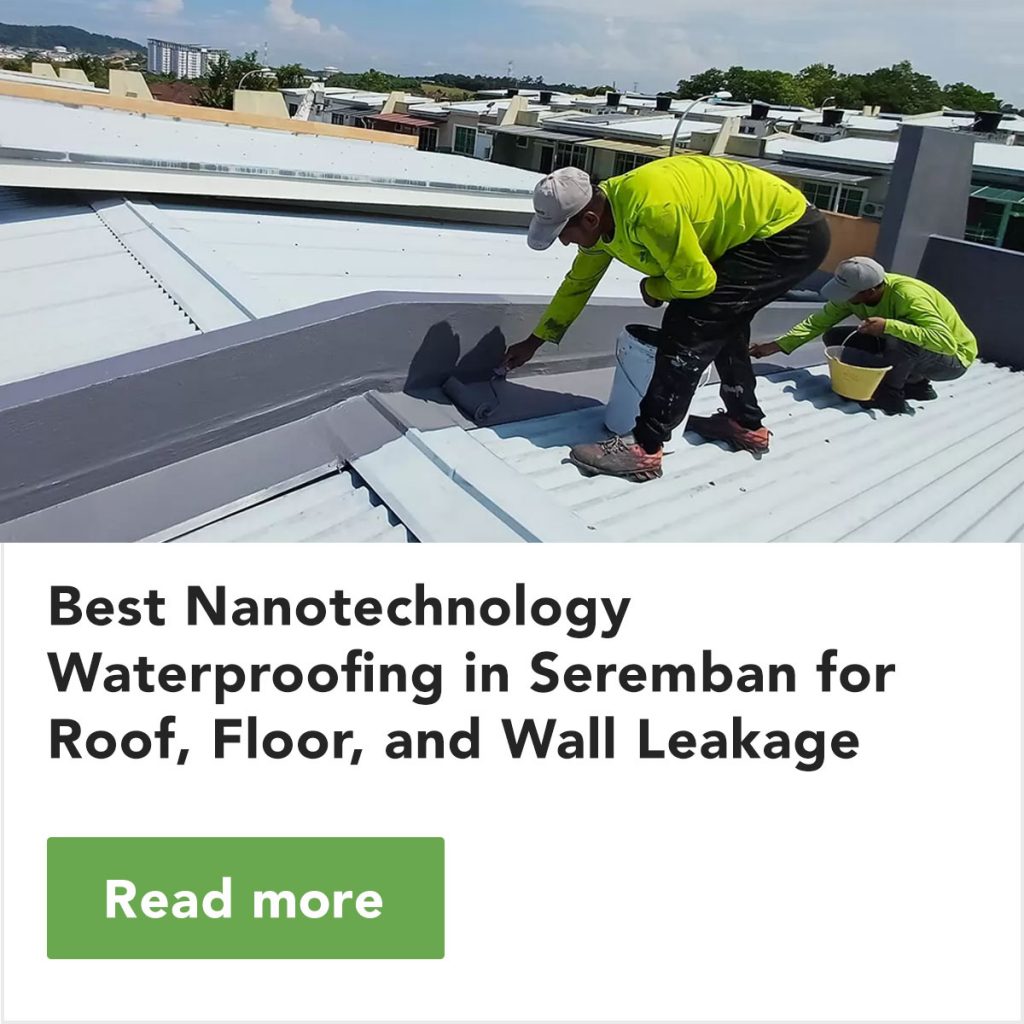
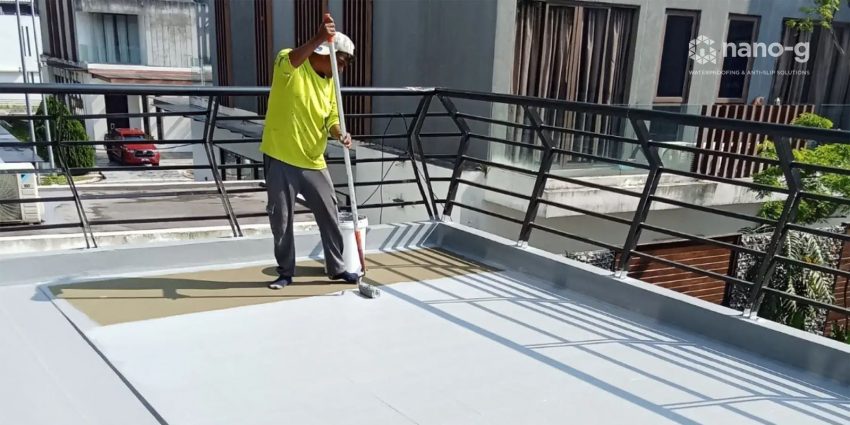
Nano-G’s no-hacking waterproofing method is designed to minimise this inconvenience. For suitable applications, existing surfaces can often be treated without removing tiles or carrying out major reconstruction, with treatment potentially completed within 24 hours depending on site conditions.
The technology can be applied to various compatible areas, including:
- Bathrooms and toilets
- Balconies
- Flat roofs
- Exterior walls
- Other tiled and concrete surfaces
Major structural damage, severely deteriorated surfaces or plumbing problems may require different repairs. This is why every property should be professionally assessed before treatment begins.
Certified Technology for Greater Confidence
Claims about durability should be supported by more than marketing promises.
When comparing waterproofing services in Malaysia, homeowners should consider the quality of the product, recognised certifications, independent evaluations, application standards and the experience of the contractor carrying out the work.
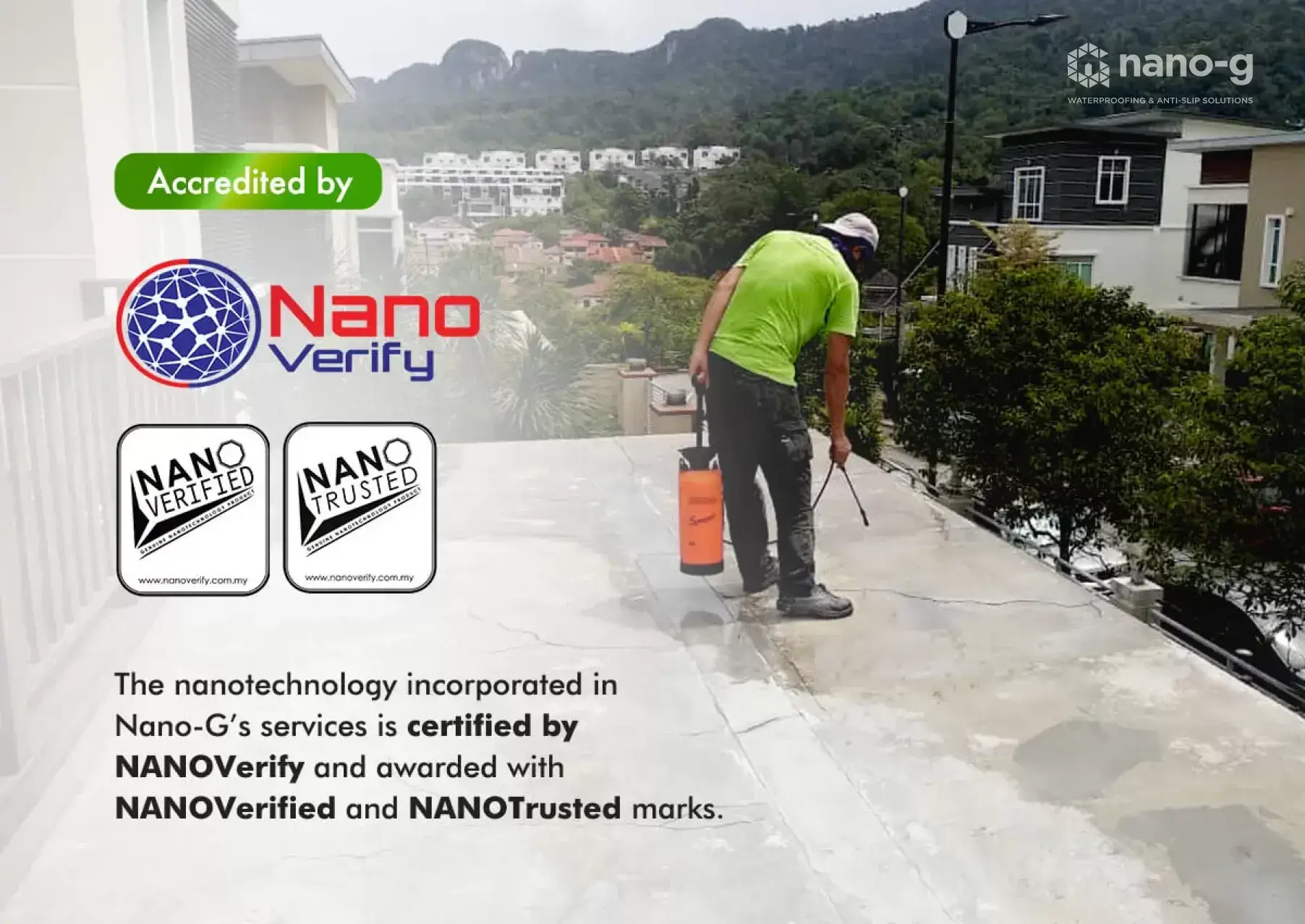
Nano-G’s nanotechnology is backed by recognised credentials, including NANOVerify by SIRIM, with Nano-G being the first company in Malaysia to receive the verification.
Certification is only one part of achieving reliable waterproofing. Accurate diagnosis, surface preparation and professional application are equally important because even a quality product may not perform as intended if it is applied to the wrong problem or surface.
Protect Your Home with Long-Lasting Waterproofing
The most durable waterproofing solution is not simply the one with the thickest coating or the most complicated repair process. It is one that addresses the actual source of water ingress and is appropriate for the surface, environment and condition of your property.
Nano-G’s 7th Generation Nanotechnology Waterproofing Solution combines an enhanced formulation, deeper surface penetration and no-hacking application to provide more durable, long-term protection against water seepage.2-
Whether you are dealing with bathroom waterproofing, flat roof waterproofing, exterior wall seepage or recurring leaks elsewhere in your property, wth an accurate diagnosis, suitable waterproofing technology and proper application, you can protect your home against recurring water leakage while reducing unnecessary hacking, renovation and future repair costs.
FAQs
1. What is nanotechnology waterproofing?
Nanotechnology waterproofing uses extremely small particles or compounds designed to penetrate compatible surfaces and create water-repellent protection within the material. Unlike some conventional waterproofing coatings that primarily form a layer on top of a surface, nano waterproofing can work beneath the surface while maintaining its existing appearance.
2. What is the difference between nanotechnology waterproofing and conventional waterproofing?
Conventional waterproofing can involve applying a waterproofing membrane or coating to create a barrier against water penetration. In some repair situations, existing tiles or finishes may need to be hacked and removed before a new waterproofing system can be installed.
Nano waterproofing, on the other hand, can penetrate compatible surfaces and create water-repellent protection without relying solely on a surface layer. Some nanotechnology systems can therefore be applied without hacking existing tiles or finishes, depending on the source and severity of the leakage.
3. Can waterproofing be done without hacking?
Yes. No-hacking waterproofing can be used for certain types of water seepage without removing existing tiles or carrying out extensive demolition work.
Nanotechnology waterproofing is one approach that may be suitable. The treatment penetrates compatible surfaces to create water-repellent protection while preserving existing finishes. This can reduce dust, noise, debris and disruption compared with extensive hacking and reconstruction.
4. Which waterproofing solution is best for Malaysia’s weather?
The most suitable waterproofing solution in Malaysia should be able to withstand the conditions affecting the specific area being treated. Outdoor surfaces, for example, may experience heavy rainfall, prolonged UV expos20ure and high humidity, while bathrooms face frequent direct contact with water.
Homeowners should therefore consider weather resistance, surface compatibility, durability and breathability when comparing waterproofing solutions. Proper diagnosis and application by an experienced waterproofing contractor in Malaysia are equally important for achieving long-term results.
5. Can nanotechnology be used for flat roof waterproofing?
Yes, nanotechnology can be used for flat roof waterproofing, offering a deep-penetrating, breathable and non-invasive alternative to traditional waterproofing membranes.
The treatment penetrates into the surface to form a water-repellent barrier, helping prevent water from seeping through cracks and porous areas. As it can be applied without extensive hacking or major renovation work in suitable cases, it can also help reduce disruption while providing longer-lasting waterproofing protection.
Related Articles