Kuala Lumpur, Selangor, Penang, Seremban & Johor

Category: Waterproofing

Nano-G's Waterproofing Solution for Condominiums and Apartments

Effective Waterproofing for Condos & Apartments

The Ministry of Health (MOH)’s top service provider to give your property an immediate water leak fix.

The best part about owning your own space is the absolute privacy and pride of having a nice place you can call your own. In high rise, this peace is often disrupted by a downstairs neighbour experiencing a persistent water leak coming from YOUR unit! Now, dealing with inter-floor waterproofing issues can be quite stressful especially if you live in condos and apartments. In Malaysia’s Strata Management Act, if water leakage is experienced through the downstairs neighbour’s ceiling, the upstairs neighbour is responsible to fix the issue. 

This whole process can be quite complicated and troublesome for you, the upstairs’ neighbour, because you’ll have to find the right waterproofing solutions provider that won’t leave your home dusty and musty after a long few days of renovation work.

We’ll cut to the chase, instead of combing through hundreds of possible service providers, call Nano-G. We are formally recognised by the Ministry of Health (MOH) to pull off a professional, hassle-free, no-hacking waterproofing service!

1. We deliver an effective & immediate water leak fix on compromised ceilings, floors, and walls within 24 to 48 hours.

Nano-G Waterproofing Solutions are Fast and Effective

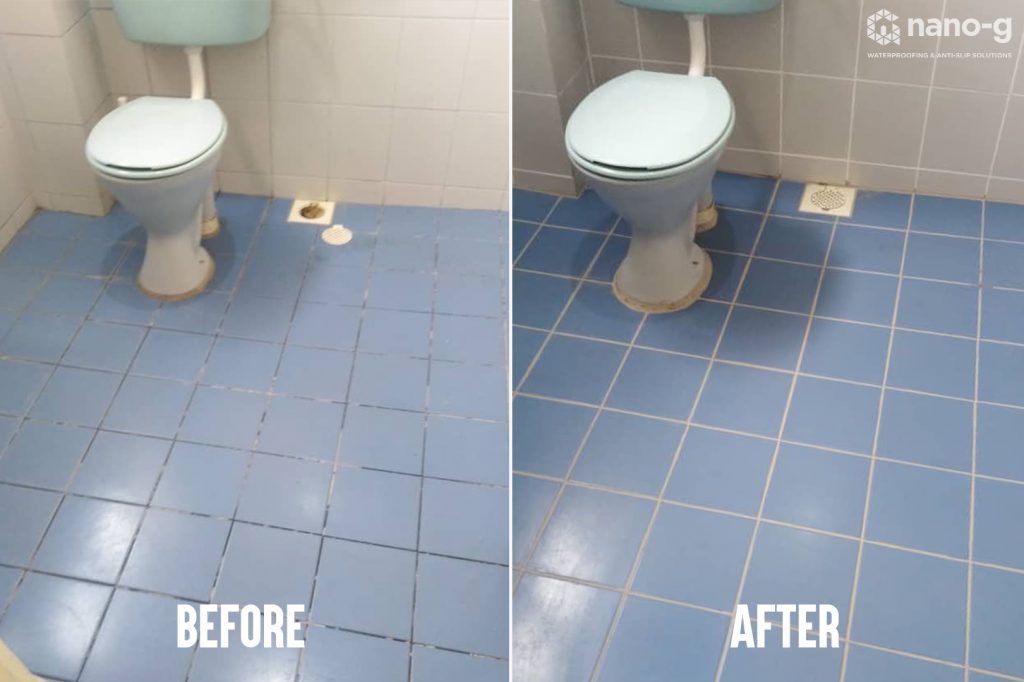
Our solution tackles leaking bathroom problems at common problem area; the grouts! Once dried, expect your bathroom to cause no more water leaking issues to your neighbours downstairs.

The nanotechnology waterproofing solution we use is industry-approved by NanoVerify, the pioneers of nanotechnology solutions backed by QAS SIRIM International. That means our solution is tested and checked by industry experts as to being true to our word- satisfaction guaranteed! 

Not only that, our projects don’t take any longer than 24 hours to apply, clean and dry for small rooms (like toilets), and 48 hours for bigger sized areas. On top of giving you a hassle-free and speedy service, we also go the extra mile in patching up the damage your water leakages have caused. This is our personal SOP we provide free of charge. 

Our qualifications and speedy project times are what ultimately let us get one foot through the door in our industry. The next thing we knew, we had become the MOH’s trusted and preferred waterproofing experts for government hospitals across Malaysia.

2. Our no-hacking Nano-G Nanotechnology Waterproofing method keeps our service dust-free.

Nano-G Provides Hassle-free Waterproofing Solutions

Nano-G Nanotechnology Waterproofing uses a no-hacking method when conducting our services. We believe that if there aren’t any major faults in your existing floor tiles, you shouldn’t have to hack, knock, drill, or grind on your tiles when they’re still in good shape!

Unlike many conventional waterproofing methods, Nano-G Nanotechnology Waterproofing requires no hacking, drilling, or knocking during our onsite service which makes it the best choice for condos. Instead, our on-site SOP has us preparing the work area to be clean and free from debris before applying our solution in the grouts of the bathroom, balcony, or kitchen. After application, we will do another round of cleaning to make sure we leave your home spotless and waterproofed.

What’s the difference between hacking and no-hacking waterproofing?

Nano-G Hacking or Non-hacking Waterproofing Solutions

3. Noise-free, lets you go about your day at ease.

Because our solution doesn’t hack, drill, or knock on your floors to work, our solution doesn’t create any noise disturbances that will disrupt your daily routine. In fact, this reason is why many hospitals or care centres like to engage with our services in the first place. 

Our criteria to solve this (waterproofing) problem was we don’t want to disturb the mothers, our business, and the babies. Since our business is ongoing, if there’s hacking and dust, our whole centre will not be able to operate… After engaging with Nano-G’s services, I realised their staff were very fast and also very professional and did not affect the mother’s or baby’s rest.


Mr Edward, Woyo Confinement Centre

4. An eco-friendly, non-toxic solution that doesn’t require homeowners to leave the house during the application process.

Nano-G Provides an Eco-friendly and Sustainable Water Proofing Solutions

Nano-G Nanotechnology Waterproofing solution is SGLS-approved to be a non-toxic and sustainable alternative for homes. SGLS stands for the Singaporean Green Labelling Scheme, Singapore’s leading certification board that holds the region’s most stringent environmental standards in the market.

On top of being dust-free, our solution is a certified eco-friendly solution that has been approved by the Singaporean Green Labeling Scheme (SGLS). The Singaporean certification has our region’s most stringent rules when it comes to labelling a solution as environmentally conscious and sustainable. This certification also means that homeowners don’t have to vacate the home during the application process because the solution itself doesn’t release harmful fumes during the drying process.

5. A water-repellent, hydrophobic solution that seals up cracks, preventing further waterproofing failure and making floors easier to clean in condos in the long run.

Our Nano-G Nanotechnology Waterproofing solution provides a protective layer that keeps water from being able to seep into a surface’s cracks or pores. This ultimately prevents water from seeping through, causing water leakage issues to persist.

We tackle water leakage issues from the source. Many times, waterproofing in condos and apartments, especially for bathrooms or tiled areas has issues with grouts. They cause issues for homeowners because of cracks that form from wear-and-tear over time. Unfortunately, these cracks and the porous surfaces are where bacteria and mould would grow.

Our nanotechnology waterproofing solution is able to penetrate into the thinnest cracks and smallest pores found in your grout’s surfaces. Basically, our solution seals the holes and cracks to prevent water from seeping through. At the same time, our solution will also prevent bacteria and mould from clinging to your grouts.

In the long run, cleaning your floors will require less scrubbing and the use of harsh cleaning agents to get rid of microbial buildup. 

Thanks to the way our solution works, we were able to serve many government hospitals.

Nano-G strives to provide homeowners with an affordable hospital-grade waterproofing solution that gives their bathroom water leakage issues an immediate, 24-hour fix. Nano-G Nanotechnology Waterproofing is a revolutionary no-hacking waterproofing method that doesn’t create a lot of noise, dust, or toxic fumes during the application process which makes it suitable to be applied in condos. Our solution is SGLS-certified as an eco-friendly and non-toxic solution that is safe to be used in residential homes and in the presence of homeowners. 

Need help with your water leakage problems? We’re the experts for you, message us on these platforms:

Facebook m.me/nanogmalaysia
WhatsApp nanog.wasap.my
Or give our hotline a call at 1800-18-6266

Nano-G Hacking or No Hacking Waterproofing Solutions

Should I Use a Hacking or No-Hacking Waterproofing Method for Water Leaking Issues?

Looking for a quick fix to your waterproofing issues but a little confused on how different methods may benefit your home, business, or office? Here is a simple explainer on hacking or no-hacking waterproofing solutions.

As a property owner, looking for waterproofing fixes can be quite stressful! You might be wondering “How many off days do I have to sacrifice for a full renovation of my leaking bathroom?”, “If I take on a no-hacking service, will it be just as effective?”, or “Which is the best solution for my home, office, or business, really?”

First and foremost, what is the difference between Hacking and No-Hacking waterproofing?

Hacking waterproofing requires the contractor to hammer, or knock at your flooring to fix water leakage issues. The contractor will usually be required to hack out your tiles and failed waterproofing membranes to reapply a new waterproofing solution. Once the solution is fully dried, a new concrete screed is to be applied before the new tiles are laid down on top of it. While hacking methods really do help renew your property’s structural waterproofing, this is a very noisy and dusty process!

Perfectly fine tiles have to be cracked and scraped off your surfaces during the hacking process. If you aren’t willing to let your nice bathroom tiles go to waste, hacking waterproofing should be your last resort!

Many homeowners realise too late that their homes remain dusty even after a thorough cleaning. On top of the mess, you may not be able to actually use your bathroom, balcony, or kitchen during the days or weeks it takes for the solutions to completely dry. That is why we only recommend hacking methods as the last resort when no-hacking methods have failed. Discomfort aside, the micro-dust particles in the air and on surfaces are quite hazardous for loved ones with asthma or other respiratory issues. 

Hacking waterproofing is a form of renovation work that requires your contractor to knock open your flooring to solve issues. Oftentimes, this method leaves the home in a big dusty mess that gets into hard-to-reach corners, bedding materials, clothes, and more.

On the other hand, no-hacking waterproofing methods are less invasive. One example of an effective no-hacking method is Nano-G Nanotechnology Waterproofing. Our solution deals directly with hairline cracks that cause water seepage issues in your bathroom, kitchen, balcony, or even car porch. We use an innovative nanotechnology waterproofing solution that penetrates deep into surfaces, providing grouts and flat roofs hydrophobic protection that prevents water from getting absorbed into the concrete. The Greek technology we use to create our solution has been certified by the world’s most stringent environmental standards from the ISO and the Singapore Green Labeling Scheme. To add to that, we are appointed by the Ministry of Health (MOH) as the go-to experts in waterproofing maintenance and rectification for government hospitals nationwide.

Nano-G Hacking And No Hacking Waterproofing Solution Comparison

Are no-hacking waterproofing methods reliable? Here are some of our past articles that look into the different conventional no-hacking waterproofing currently available in the market.

Nano-G What You Need To Know About Rubber Waterproofing Paint
Nano-G Waterproofing Solutions Using Epoxy Coating And 'No Hacking' Method
Hacking Causes Hairline Cracks

We recommend homeowners only resort to hacking waterproofing when they plan on renovating their entire bathroom, balcony, or kitchen floor. This is especially the case for older buildings, as these ageing structures may not be able to handle the force caused during operations.

Figuring out what’s really causing your water leak is the first step to determining if you should choose a hacking or no-hacking method. Read up on how to tell the difference between a broken pipe or a hairline crack!

Nano-G How To Deal With Water Leaks At Home

Our clients have remarked that Nano-G Nanotechnology Waterproofing has helped persistent water leakage issues go away for good!

Water leakage problem occurred in my bathroom a few years ago. Before Nano-G, I initiated 4 different other services but saw no good results. Nano-G remains the only solution to this problem.

Dato Azmi from Shah Alam

We should mention that we are not disregarding conventional hacking waterproofing methods. Some homes with especially bad cases of waterproofing failure should get the proper treatments needed to solve the issues once and for all. In cases where water leakages are caused by hairline cracks, however, one should consider using Nano-G Nanotechnology Waterproofing. We ensure a hassle-free, dust-free, and no-noise on-site procedure with a timely application drying time. 

Nano-G Nanotechnology Waterproofing’s track record of delivering an effective final solution for all our clients reflects how good our services are at fixing water leakages, as well as preventing them altogether. If you are still unsure about the reliability of our service and solution, our standard package offers our clients a 2-years warranty for us to come back if there should be any recurring leakages after our rectification work.

Need help with your water leakage problems? We’re the experts for you, message us on these platforms:

Facebook m.me/nanogmalaysia
WhatsApp nanog.wasap.my
Or give our hotline a call at 1800-18-6266

Epoxy Waterproofing VS Nanotechnology Waterproofing

Everything You Need to Know about Epoxy Coating Waterproofing and ‘No-Hacking’ Waterproofing Solutions

Are No-Hacking Required Waterproofing Solutions Reliable?

Looking for a way to fix a waterproofing issue and came across “no-hack solutions”? While we pride our nanotechnology waterproofing service to have the best satisfaction guaranteed, we can’t say it’s the same for all no-hack solutions in the market. We applaud the hard work of our fellow experts, but there are still many amateurs in the field that try to promise “cheaper” options. As industry experts, we feel like it’s important to inform you on what you’re in for when you come across epoxy coating waterproofing for your floors.

epoxy coating waterproofing comparison

*Nano-G’s completion time might vary according to the surface area our solution has to cover. Smaller, less humid areas are able to dry within 24 hours after project completion, but larger outdoor areas might take 48 hours or more. Please discuss with the supervisor on the day of your appointment to get a more accurate estimation of when your anti-slip floor coating will be completely dry to use.

How do Epoxy floor coatings for waterproofing work?

Epoxy Waterproofing is a waterproofing method that spreads Epoxy chemicals on the floor in a thick liquid state before getting hardened. These Epoxy chemicals include a resin material and a hardener that will then be blow-torched to fuse and create a new air-tight surface that sits on top of the area you want to be waterproofed.

epoxy waterproofing solution

Here are some things you need to know about Epoxy Coating Waterproofing.

1. Emits hazardous and strong smells during and after application.

Once the Epoxy resin and hardener have been mixed and poured on to the floor as a suitable and even layer, the contractor will then proceed to the “curing” phase of the operation. This is where a blowtorch or a heat gun activates and hardens the liquid Epoxy chemicals. Understandably, this causes harmful smells to emit from the working area.

Most contractors are knowledgeable enough to wear proper protective gear while doing their work- but the question is, will you or an at-risk loved one be able to handle the fumes?

2. Epoxy Floor Coatings have a long drying time.

Another factor you have to take into account is how long it would take for the epoxy floor coating to dry. In our experience, the material could take 3-7 days- sometimes even longer to cure because of numerous factors. We should mention at this point that, conventionally, epoxy is reserved for wide surface areas that aren’t visited often. In many cold countries, they are often used in basements.

Epoxy waterproofing requires contractors to pour out and mix Epoxy chemicals with hardeners on the spot.

That’s why we don’t recommend this solution to be done in places you use often, if you don’t have an alternative room for it. 

Nano-G Nanotechnology Waterproofing, on the other hand, is designed to be used in both frequently used or less-visited places. Because our solution only needs one thin layer to work. It usually takes between 24 to 48 hours to dry, depending on how big the surface area is.

3. Some Epoxy floor coatings have a slippery smooth surface.

More specifically, oil-based resin makes things slippery. Epoxy, as a coating, comes in many forms to serve the different needs of different surface areas. This could range from giving an object a greasy finish to further prevent air from corroding metal surfaces, to providing an enhancing varnishing layer to finish off an artwork. Both could result in a sleek and slippery surface that isn’t the best to walk on if you have weak knees and balancing issues!

epoxy waterproofing have a slippery smooth surface

When walking on epoxy floors, be mindful of your balance.

For the most part, Nano-G Nanotechnology Waterproofing only affects the crack and a little of the areas around it. Our versatile solution is able to waterproof cracks found in grouts, to all the small cracks found in the concrete slabs of flat roofs. Instead of focusing on coming up with a thick additional layer to the floor, our solution penetrates deep into the cracks and effectively plugs up all of the holes.

4. Some Epoxy dries into a hard and brittle material that scratches easily, depending on the type of solution provided.

There are various epoxy waterproofing coating solutions available that you might not be informed about by your contractors. While it’s best to do your research before getting the help of a contractor on your premise, sometimes amateur contractors might mark up the price of their service for a cheaply made solution that yellows or debonds easily over time. And sometimes, they don’t use the most advanced version of the product that delivers the quality you need to completely stop your water leakage issues. 

Nano-G Nanotechnology Waterproofing is our in-house brand of waterproofing solution that our experts have worked on for years. They are able to more effectively handle any pressure, scrubbing, or searching that may occur when you do your routine cleaning of the toilet, balcony, or flat roof area. In fact, heavy scrubbing isn’t even necessary! Our solution prevents microbes, fungus, or dirt from clinging onto your grouts when it is time to clean.

5. Debonding, cracks, or bubbling might occur if not properly installed.

It goes without saying that an Epoxy floor coating would require a thorough cleaning and drying of the area before any application of the resin materials. Any water left on the surface or in existing hairline cracks will only get trapped when it tries to evaporate.

bubbling might occur if not properly installed on epoxy waterproofing

Bubbling in Epoxy work a few days after the coating has ‘dried’.

What’s worse is that you may not actually see the side effects of poor waterproofing workmanship until much later, when an underlying water leakage issue has built up underneath your Epoxy floor coating or when cracks and bubbles have started to form.

Instead of creating a separate thick layer that sits on top of your existing tiles or concrete flat roof, our Nano-G Nanotechnology Waterproofing solution actually penetrates deep into all hairline cracks that the naked eye can’t see. This creates a more air tight and secure layer that keeps water vapour from damaging the surface or the concrete slab below.

Want to learn more about Nano-G’s ‘no-hacking’ waterproofing solution? Read more here:

Nano-G Hacking or Non-hacking Waterproofing Solutions

For many of our past clients, Nano-G Nanotechnology Waterproofing is the final solution they found that actually fixed what other contractors weren’t able to. 

I had been having water leakage problems for 6 months and had called the contractors about 3 times but my water leakage problems did not get resolved. Nano-G’s onsite team was very professional and answered all the questions I had about the product.”


Mr Mohd Idzwan

Need help with your water leakage issues? We’re the experts for you, message us on these platforms:

Facebook m.me/nanogmalaysia
WhatsApp nanog.wasap.my
Or give our hotline a call at 1800-18-6266

Rubber Waterproofing Paint VS Nanotechnology Waterproofing

Read This Before Using Rubber Waterproofing Paint

What is this paint-on method, and how does it compare to Nano-G Nanotechnology Waterproofing?

Having a persistent water leakage problem on your flat roof can be very stressful when you don’t know anyone to help you fix them. It doesn’t help that in this age of choice, you’re flooded with so many waterproofing options in the market. If you’ve stumbled on this article, you must be curious about what rubber waterproofing is, and if it’s suitable for your home. Rubber waterproofing paint, also known as elastomeric waterproofing paint, is made of liquified oil, latex, or rubber to be applied on a surface as a spray, or paint. For more structure, a fibre texture layer is added between paint layers to double down on its waterproofing qualities.

At its core, this paint-on method seems fairly straight forward – you only need the rubber paint and a brush! It is a budget choice for waterproofing work, but budget choices often come at a cost.

1. Poor workmanship leads to rubber paint peeling and bubbling over time.

A quality job well done by a contractor is not just by popping open a liquified rubber paint tin, dipping in a brush, and painting absentmindedly. It takes a level of clear understanding of the material to pull it off. This can range from how diluted the liquid rubber should be when applied on the surface, and how many layers does it take to give your surfaces the waterproof seal it needs to prevent water from seeping through. If the rubber material is too little or painted on unevenly, your new rubber surface will start to peel or bubble after a year. Some companies have opted to have a layer of PU coating on the surface after applying the rubber paint to more securely prevent leaks.

That’s why it’s so important for your contractors to be experienced in surface area prep for both outdoor or indoor settings. This ranges from predicting how the weather might affect the outdoor work area, to how to deal with hidden moisture in concrete. Not only that, the surface must be clear of dust and debris. Bad preparation can lead to vapour build up under the rubber waterproofing layer and clumpy paint application.

We guarantee that Nano-G’s on-site waterproofing team is properly trained with the right way of applying our nanotechnology waterproofing solution. Instead of blindly guessing if the surface is ready to be treated we follow a strict protocol when doing on-site work to ensure our solution is applied in the most effective way.

2. Rubber waterproofing paint will not seep into hairline cracks.

Rubber waterproofing paint is able to cover large surfaces but they don’t actually seep into hairline cracks. While the consistency of rubber paint varies according to each service provider, at its core, the paint is very thick. You could have extra support from an additional textured fibre layer, but it’s not as effective as plugging up the problem areas. So, they aren’t a good replacement for other conventional methods.

In our past articles, we’ve looked into how other waterproofing methods work and what to expect when their contractors enter your home.

Instead of just being a separate layer sitting on top of surfaces, Nano-G Nanotechnology Waterproofing is a solution that seeps deep into hairline cracks to tackle water leakage problems at the nanoscale. In our past projects, our solution has been effective on indoor and outdoor grouts of bathrooms or balconies, and flat roofs.

3. Rubber waterproofing paint has a long curing time to completely dry during humid weather.

Another thing homeowners have to take into account is that rubber waterproofing takes quite some time to solidify into a hard protective layer. It’s advisable (and a common practice) for contractors to build the thickness of the material through at least 3 layers of paint. Monitoring the drying of rubber paint can get quite tedious with Malaysia’s weather, given that a sunny hot afternoon can turn into a thunderstorm at any given moment.

What’s more, basic rubber waterproofing paint releases a very obvious smell during and even after dry time. While paint used by different contractors vary according to the company they work under, it’s best to prepare yourself for a few hours- even days- of breathing in paint fumes. 

We can’t deny that any on-site operation will create smells that interfere with your day. Still, we can guarantee that our operation wouldn’t release harmful and toxic fumes that put your loved ones at risk if inhaled. So, your family can still be in the house while Nano-G Nanotechnology Waterproofing is being applied! 

To get a rough estimate of how long our solution would dry in your home, it’s best for you to talk with our customer service team or the Nano-G Waterproofing Expert during your FREE first inspection! You can find our contact details at the bottom of this article.

4. It’s difficult to correct application mistakes.

Unfortunately, sometimes mistakes happen during the paint application process that leads to clumping, bubbling, or peeling. It’s especially a pain to deal with when it comes to higher grade paints. As it’s designed to really stay solid on surfaces, this means that it may take some hacking or chemical treatments to remove. In fact, rubber coatings are seen as one of the most difficult to remove coating in the industry. This means your rubberised surface will have to go through a costly hacking and grinding , or even water blasting service to effectively remove and reapply a new waterproofing layer.

We’re proud to say that Nano-G Waterproofing Experts carry their on-site work in a well-disciplined and professional manner to keep mistakes at a minimum. However, in the event that mistakes do happen, it wouldn’t require a noisy or chemical-heavy process to effectively remove. 

Nanotechnology Waterproofing is safe and chemical-free

Still, the decision you make for the most suitable waterproofing method to fix your water leakage in your home, business, or commercial building is up to you. While we do recognise that every company has their own in-house brand of rubber waterproofing paint, they may share some of the shortcomings as listed in this article. Therefore, it’s important for you to be prepared when problems do arise after your service.

Alternatively, Nano-G delivers a satisfaction and money-back guaranteed service with our nanotechnology waterproofing solution.

Our knowledge on conventional methods is not just based on our years of experience in the industry, it’s also based on what our clients have experienced before coming to us as the last resort when other methods have failed.

I find that Nano G’s service is pretty good. There are no more leakages after using their products. Before, I tried out many other solutions, but only Nano-G gave me the best solution… In the end, Nano-G successfully solved my problem.”


Mr. Tan, Petaling Jaya.

So it’s safe to say that we’re one of the best waterproofing services you will receive. Instead of going through trial and error with other methods- claim a FREE inspection from our experts to really fix the leak

Need help with your water leakage problems? We’re the experts for you, message us on these platforms:

Facebook m.me/nanogmalaysia
WhatsApp nanog.wasap.my
Or give our hotline a call at 1800-18-6266

Torch-On Membrane VS Nanotechnology Waterproofing

Things You Need To Know Before Choosing Torch-on Membranes Waterproofing Solutions To Solve Your Leakage Problems

The differences between this fire-based solution and Nano-G’s Nanotechnology Waterproofing solution.

Looking for a sustainable way to waterproof your property? When researching for methods, you are likely to come across the “Torch-On Membrane” method. While common practice for flat roofs, there are some precautions developers and homeowners have to bear in mind when it comes to this petroleum-based waterproofing solution.

The two most common Torch-On Membranes in the market are known as Atactic Polypropylene Plastic modified Bitumen (APP), and Styrene Butadiene Styrene modified bitumen (SBS). Both are heat-sensitive materials that are widely used internationally to cover flat roofs, floorings, car porch, and balcony areas.

How it works

The application of Torch-On Membranes involves two main layers to work, the substrate layer laid out on the surface and the thermofusible film of the membrane itself. The thermofusible film is a type of hot-melt plastic adhesive.  Essentially, the torch on membrane is supposed to create a barrier on top of the surface of the leakage problem to keep water from seeping through. However, poor workmanship can lead to these membranes to not work as intended.

There are also more downsides to the method that we feel the need to point out.

1. Poor workmanship leads to membrane failures and debonding.

The whole process isn’t just a simple blowtorch-and-roll procedure based on instinct. In fact, this method requires strict SOPs. This ranges from the heat of the blowtorch, to the way the membrane overlaps, to the speed or position the membrane is at when rolled out.

Seam failure can be seen by too much overflow of the adhesive at overlapping parts of two membranes.

Ideally, the amount of fluid that spreads out from the overlapped parts must be between 1-2.5cm. If too little of the heat-fusible side has not been melted, you can experience membrane failure in the future. That’s why it’s hard to make sure that the membrane has been properly melted, even if handled by an expert!

2. The Torch-On Membrane is not suitable for all surfaces.

Torch-On Membranes are reserved for surfaces that are resistant to heat, such as concrete. This technique requires the contractor to work with a blowtorch! Therefore, it is not advisable to be used on flammable surfaces such as wood or insulation boards.

Poor judgement calls from the technician may lead to costly damages to your property.

Homeowners should bear in mind that Torch-On Membrane methods are reserved for wide outdoor areas, such as on commercial building flat roofs, outdoor car parks, and car porches. Even so, extreme caution must be observed when working around electrical or gas connection systems, such as AC outdoor units, electric boxes, and near plastic water tanks (tangki). This is because these areas are susceptible to heat and may get damaged, causing problems in the future.

3. Torch-On Membranes release harmful and toxic gas into the air and are not environmentally sustainable.

There’s a reason why this method is reserved for outdoor or open-air areas. Alongside the fire hazard that comes with using a blow torch, this method releases harmful chemicals into the air. Some websites might try to push that their solutions are sustainable and non-toxic, but they are still using petroleum-based materials!

The torch is used to heat up both the substrate laid out on the floor, and the petroleum-based adhesive side of the membrane.

According to a paper by the Centers for Disease Control and Prevention (CDC), asphalt fumes generated from the torching process releases carcinogenic particles. Due to long exposure, these particles can increase cancer risk in people. Not to mention, after the installation process, the smell of burning rubber may last for a good few days! 

4. Uneven or damp surfaces leads to Torch-On Membranes debonding.

Debonding is the process that happens when the membrane lifts, peels or bubbles after a period of time. Unfortunately, several factors can cause debonding and they are usually a result of errors during the application stage.


Video credit: The Council for Sustainable Building Practices via YouTube

Namely, some of the main factors that cause debonding are damp, uneven, or poorly primed surfaces.

Your Torch-On membrane might debond due to your contractor using the wrong membrane that doesn’t work well with the substrate they choose from your floors, the surface of your floor being damp from the leakage problem, uneven, poorly primed, or contaminated surfaces! What’s worse, you wouldn’t notice if the waterproofing membrane was damaged until it starts leaking when it’s placed someplace you don’t visit often! 

5. The surface of the membrane is likely to pool water.

On flat roofs, be prepared to notice that there may be unevenness on the membrane due to an uneven surface. These dips on the surface are likely to cause water to pool, creating a water ponding problem.

This will both deteriorate the membrane, as well as become a breeding ground for bacterial and mould growth. Scrubbing or power-washing the floor wouldn’t be as easy to clear off on a concrete surface.

Want to learn more about waterproofing your property? Read more here:

Nano-G Hacking or Non-hacking Waterproofing Solutions

In the long run, we at Nano-G think it’s best for developers, property, business, and especially homeowners to be aware of what to expect when using Torch-On Membrane for leakage problem for their outdoor spaces.

With the knowledge of the solutions offered by our fellow industry experts in mind, we always ensure our solutions come with more benefits than drawbacks. We strive to offer solutions that other providers have failed to deliver. We believe Nano-G Nanotechnology Waterproofing is one of the revolutionary waterproofing solutions providers that give your balcony, flat roof, or car porch area the added waterproofing layer you need.

Our satisfaction guaranteed solution doesn’t require complicated and meticulous steps, harsh chemicals, or blowtorching. Instead, we leverage on the use of nanotechnology! This effective water-based waterproofing solution can create a thin protective layer on surfaces by deeply penetrating the smallest hairline cracks.

Need help with your water leakage problems? We’re the experts for you, message us on these platforms:

Facebook m.me/nanogmalaysia
WhatsApp nanog.wasap.my
Or give our hotline a call at 1800-18-6266

Nanotechnology vs PU Injection

Everything You Need to Know about PU Injections to Solve Your Leakage Problem

The differences between this drill, pump, seal method and Nano-G’s Nanotechnology Waterproofing.

Hairline cracks in concrete are usually the main causes of water leakage problems at home and in commercial buildings.

One common waterproofing technique used is the PU injection (a.k.a Polyurethane Injection), a conventional hacking method. Contractors using PU Injections usually drill a hole into the problem area, where the PU is then pumped into the hole. The chemical composition in the injection is then triggered to expand and fill up the walls or ceiling, blindly covering the whole area in hopes of filling in these hairline cracks.

Think of it like this: PU is made of the same spongy material found in chair cushions. The chemicals used in PU injections are broken up into two separate solutions to be mixed together before pouring the material into a pump machine. Then, it is pumped into the ceiling as the PU begins to react and expand.

Websites and social media like to advertise this method misleadingly- with claims that their in-house method requires no hacking, is fast-drying and has a clean operation throughout!

X company is advertising a promise for a toxic-free, hack-free, and fast PU Injection service. But our experience as waterproofing experts tells us that X might be stretching the truth!

Here’s a quick comparison of conventional PU Injection methods and Nano-G’s Nanotechnology Waterproofing. However, when looking into common practices done by most contractors- their claims just don’t match.

pu injection and waterproofing comparison

1. No hacking required, but DRILLING is required!

Despite not being a hacking method, PU Injections still require holes or scrapes to be made to the wall or ceiling. Drilling creates as much, if not more, noise and fine dust than hammering and hacking. Just for your understanding, the first thing a contractor learns when working on PU Injections is how to drill a hole into the affected area. More specifically, it’s to learn how to drill in a 45° angled hole through the suspected crack area to be filled in with PU later on.

We should also mention that the method in question we’re talking about isn’t the PU materials you can get in your local DIY shop. The chemicals used in this process have to be handled using heavy duty machines that mix up the chemicals before filling up the hole, where it should expand into.

Nano-G strongly believes that hacking methods should only be used as the last resort by any home or business owner for their premises. That’s why Nano-G’s Nanotechnology Waterproofing is done without the need for any hacking or drilling! Instead, we developed our solution to be able to seep into the thinnest of hairline cracks on any surface, filling up and protecting the layer from any further damage.

2. It can take a long time to complete the repair.

The thing about the PU Injection method is that it is a long process of drilling, grouting, sealing and cleaning. Add in some unforeseen issues and the entire process will take some time and patching up to complete. After the drilling, the contractor will use a high-pressure injection grouting machine that injects the polyurethane into the hole. This is when you will notice the excessive polyurethane dripping downwards from the hole.

If there are no more leaks, the contractor will proceed to clean up and properly seal the injected area. Our previous clients remarked that the spilled and solidified polyurethane were left there for up to 2 WEEKS before they were properly removed and cleaned up. In between the 2 weeks period, they noticed a recurring wet spot, resulting in them having to drill and inject the problem area again. Unfortunately, the wet spot can be a result of heavy rains or poor workmanship. If you’re unlucky a poorly done PU Injection can lead to a recurring water leakage that lasts for MONTHS even after repeated patching.

As a home or business owner, you need to ask yourself: Do I really want my ceilings looking like this?

Nano-G’s Nanotechnology Waterproofing solution, however, does not require any drilling and only takes about 24-48 hours to complete. This includes the work area preparation stage, application of the solutions, drying time and cleaning up.

3. Polyurethane is a known respiratory toxin.

Homeowners have to take note that Polyurethane is a petroleum-based method that can release harmful gas into the air as it is being applied. In fact, exposure to fumes from wet Polyurethane is known to provoke asthma and cause other issues to the throat, eyes, and skin and is definitely not safe around young children.

Four of the harmful chemicals found in PU Injections.

Instead of creating a health hazard for our clients, Nano-G ensures that our work materials are safe for your home, office, or business. This is because our nanotechnology waterproofing solution is a non-toxic material that doesn’t emit strong-smelling and hazardous chemicals. Therefore, you can still be present during our operation to have a look at what we do!

Take a look at what Nano-G’s previous clients have to say about our on-site services, here!

4. It’s messy, dirty and needs a thorough cleaning.

Not only will you be dealing with the harmful fumes, drilling noises, and unsightly drying times, you will also have to deal with the possibility that there will be stains that you can’t clean! PU Injections tend to leave marks on the walls or ceilings that are quite noticeable when you first walk into the room. Imagine after all the hassle you had to go through when dealing with the process and you’re left with specks of paint all over your furniture!

Our clients remarked that the PU Injection method left their premises in a mess, and later had an issue where they were not able to match the ceiling paint of their home! Therefore , we recommend for homeowners to be present as the application is being done and be firm on cleanliness once on-site application is done.

Nano-G’s experts are disciplined when enforcing a special on-site SOP that keeps your premises always clean and tidy, while not causing too much noise when applying our nanotechnology waterproofing solution. This includes cleaning the work area before and after the operation, as well as a final inspection from our supervisor. If your water leakage problems aren’t fixed from our workmanship, our solutions come with a money-back guarantee! If you’re not satisfied, we’re not satisfied.

5. PU Injections are a bad idea for plaster ceilings.

In homes with plaster ceilings, homeowners should take note that your contractor will have to cut a hole into the plaster ceiling that is big enough for them to reach the concrete ceiling hidden above.

PU Injection are a bad idea for plaster ceilings

The whole process creates a lot of dust and debris, as well as a wide and long hole in the ceiling. What’s worse, most contractors will only patch up the area they had drilled or hacked open. In older homes, this issue is even more of an eyesore as the plaster around the crack must have already aged into a cream colour, making it very obvious that rectification work has been made.

With Nano-G, our solution doesn’t require us to cut a hole into your ceiling. We’d also like to mention that we were able to solve numerous water leakage issues that conventional waterproofing methods like the PU Injection couldn’t solve. Many of our clients have remarked that both our Nano-G Nanotechnology Waterproofing and on-site SOP were the hassle-free, hack-free, non-toxic and effective solution they have been looking for.

Have a look at what Mr Edward had to say about Nano-G’s onsite service in his testimonial!

After engaging with Nano-G’s services, I realised Nano-G’s staff were very fast and also very professional and did not disturb the mother’s and their babies’ rest. I am quite satisfied with Nano-G’s service. I give them a thumbs up.”

Mr Edward, Woyo Confinement Center

Still looking for the right solution to your water leakage problem?

Nano-G’s Nanotechnology Waterproofing solution is the satisfaction guaranteed solution you’ve been looking for to solve your water leakage issues in a hack-free, non-toxic and dust-free manner. Nano-G’s Waterproofing Experts are trained to follow a disciplined on-site SOP that keeps your premises clean and tidy, before, during, and after our rectification work. This is because our solution only needs our experts to lay down our water-based nanotechnology solution on your floor to waterproof them, and should be done within 24-48 hours!

Don’t wait too long to get your water leakage problem fixed! Rectify the issue before it causes further damages to your home! If you’re still unsure about why Nano-G is a better choice for your floors, drop us a message to find out what we can do to help you fix your water leakage problems!

Need help with your water leakage problems? We’re the experts for you, message us on these platforms:

Facebook m.me/nanogmalaysia
WhatsApp nanog.wasap.my
Or give our hotline a call at 1800-18-6266

Editor’s Note 14/4/21: This article was originally published on 21/1/21 and have since undergone minor changes to more clearly present our advice to homeowners.

Nano-G New Bathroom

New Homeowners Should Waterproof Their Bathrooms

Here’s a tip: coat a layer of Nano-G’s Nanotechnology Waterproofing on your bathroom grouts to prevent water leaking!

You’ve done it, after years of working hard and saving up, you’ve finally bought yourself a home. But before you go about your homemaking, as a new homeowner, ensuring your bathrooms are properly waterproofed should REALLY be part of your checklist. See, while all bathrooms are already waterproofed under the tiles, having a protective layer on your grout is important too. This is because the layer underneath your tiles, called a waterproofing membrane, might have some defects that you don’t notice! So, take the proactive step to safeguard your bathroom with waterproofing for the utmost peace of mind.

A forum discussion on waterproofing issues in new homes
For my_nickleo, his new bathroom’s waterproofing membrane wasn’t working AND he had to deal with a difficult developer! As a homeowner to a new or second-hand property, you should know that you are entitled to a warranty for any structural defects you find. Always take photos of these problems as you see them!

That’s why doing a water ponding test is so important when you first move into your home.

What is a water ponding test? It’s a type of test for your bathroom floor to see if the waterproofing membrane underneath actually prevents water from seeping through and leaking into the ceiling below it. You wouldn’t want to one day be the upstairs neighbour that causes a water leaking issue to your downstairs neighbour, do you? 

Still, even if your water ponding test has been a success- or even after you get your waterproofing membrane fixed by the developer, you’ll still have to think about possible water leakage issues in the future. This is because waterproofing membranes will break down over the years, as like any protective building material. And also, if not damaged, the space between your tiles (the grout) will build up unsightly bacteria and mould that just ruins your tilework!

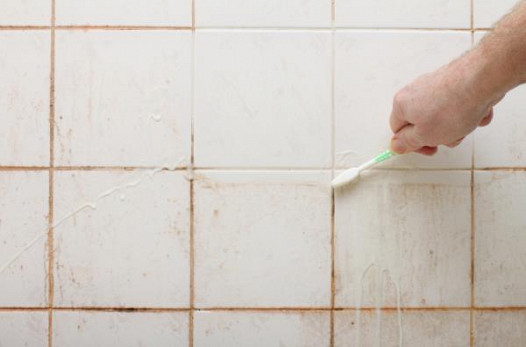
Bacterial build up in grouts being cleaned with a toothbrush
Photo credit: Networx
It doesn’t matter how frequently you scrub or wash your bathroom- a stain, is a stain. And a non-waterproofed grout allows bacteria to penetrate into its pores overtime.  

So, here are 3 reasons why you need a layer of Nano-G’s Nanotechnology Waterproofing on your bathroom grouts.

1. It’s a preventative measure against future water leakage issues.

It’s not enough to just have a waterproofing membrane underneath your tiles- you need to make sure that the surface of your grouts is waterproofed as well. Most bathroom grouts use cement that is prone to hairline cracks. These cracks aren’t visible to the naked eye and can run very deep into the cement. When still water gets on it, it will seep through the cracks and leak into the floor below it.

With Nano-G’s Nanotechnology Waterproofing, however, you don’t have to worry about water seeping into your grout. Our solution penetrates as deep as 3 cm into the grout and keeps the water droplets from seeping through.  

Unfortunately with our humid Malaysian weather, our bathrooms tend to dry slower. This means that still water is likely to stay for longer, creating water pressure on the tiles that weaken the grout and waterproofing membrane over time! Eventually, water will seep through to the floor below it, causing water damage to the ceilings.

With Nano-G’s Nanotechnology Waterproofing, however, you wouldn’t have to worry about your grouts absorbing water!

2. Nano-G’s Nanotechnology Waterproofing prevents mould growth.

Hydrophobic materials are made to specifically not let water seep and spread on them. 

Nano-G’s Nanotechnology Waterproofing solution is so hydrophobic that it prevents water from seeping through hairline cracks in grouts! Instead, the water will stay on the surface and dry off more thoroughly. By having such a water-resistant surface, this prevents water from pooling or seeping in your bathroom grouts. Therefore, these areas become less susceptible for bacteria to build up and grow into mould that is difficult to clean! Of course, this doesn’t mean you don’t have to clean your bathroom floors, it’ll just take less scrubbing.

3. You maintain your property value over time.

Because of Nano-G’s extra protection against water leakages and mould growth, you’re able to maintain the value of your home for a longer time! The reason why property loses value over time is because of how much damage it gets from wear and tear. What’s more, you’re less likely to have to spend a lot of money on bathroom renovations to fix your water leakage issues using hacking methods. Which, unfortunately, don’t always work.

With Nano-G’s Nanotechnology Waterproofing, you can keep your bathroom looking new for a long time!

Click here to watch how YouTuber Jeff & Inthira choose Nano-G to waterproof their new bathroom

Our tip to new homeowners is simple- waterproof your bathroom floor tiles to prevent water leakages and mould build-up. You’ll save a lot of money, as you wouldn’t need to spend it tirelessly trying to fix water leakage problems from the bathroom in the future.

You don’t even have to lift a finger or sacrifice a lot of your time to get it done! You simply need to set a date and time and we’ll send over our team of waterproofing experts to your home to apply our solution. It is a hack-free, dust-free and non-toxic operation that shouldn’t take longer than 24 hours to complete! What’s more, the material we use to waterproof your bathroom is made with nanotechnology, a material that’s so fine that it goes into the smallest pores on your tile and not create even the slightest change to the appearance of your tilework. 

While you’re at it, coat a layer of Nano-G’s Anti-Slip Coating to keep your bathroom slip-proof as well. You’re making a home after all!   

Interested but need more information? We’re here for you, message us on these platforms:

Facebook m.me/nanogmalaysia
WhatsApp nanog.wasap.my
Or give our hotline a call at 1800-18-6266

5 Types of Waterproofing Solutions to Fix Water Leakages in Malaysia

Waterproofing your walls, ceilings, and flat roofs at home, in the office, or at your business to prevent black and yellow stains from getting worse.

Malaysian households and workplaces are prone to mouldy walls or ceilings, especially in landed homes, condominiums, and even shop lots, due to waterproofing failure.

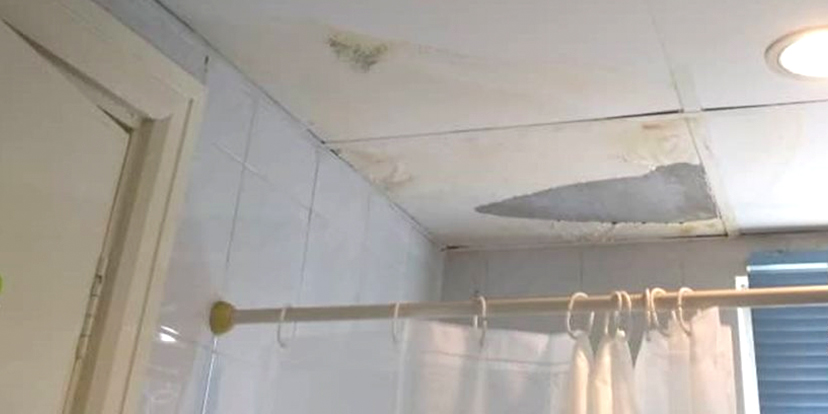
A water leaking issue from the upstairs bathroom has caused the ceiling to grow black mould and dark stains.
 In fact, you’re probably experiencing an ugly black or yellow stain on your ceiling right now that just won’t go away! 

The reason behind these unsightly stains is likely due to a water leakage issue in your toilet or balcony cement slab. If you don’t resolve these leakages fast, the stain could become a health hazard!

Worry not, you can keep your leak from getting worse and solve your leaks by using these waterproofing solutions on your leak-prone areas.

1. Cement your leak-prone cracks

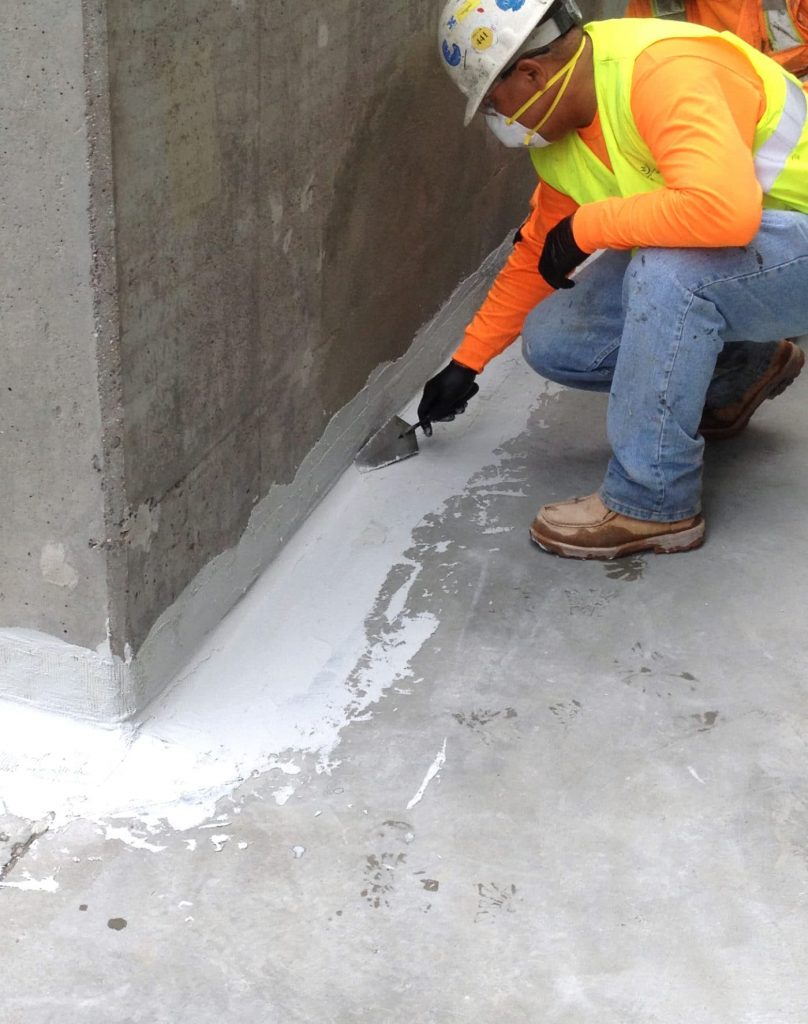
A contractor cementing the corners of a building as a way to waterproof corners.
Photo credit:  W.R meadows
 Cement coatings are  used at the side of buildings as a form of external waterproofing.  

This cheap waterproofing method uses cement mixed with acrylic additives to make a solid waterproof material used in sides of buildings or cement flat roofs. This is to seal places most likely to pool water from rain. Your hired contractor will spread a layer of cement mixture over hairline cracks to fill them in and prevent them from spreading. 

Unfortunately, cement is still cement. Aside from its long drying time, this mixture is not very flexible. Temperature fluctuations throughout the day is likely to cause cracks when the cement expands and contracts. This makes it highly unsuitable for our Malaysian weather. As our weather jumps from being hot and humid, to rainy at a moment’s notice. Overtime, your cement coating might crack, making the roof more susceptible to leakage.

2. Coat a layer of asphalt on your cement flat roof

 Bituminous (also known as asphalt) coatings use the same material found on roads. 

Asphalt, or more specifically, bituminous coatings, are a petroleum-based waterproofing method. As a flexible material, it can be applied like paint, or stuck on surfaces as an adhesive. With its rubbery consistency, this method is pressure resistant to damage. As such, bituminous waterproof coating is usually used on flat areas like flat roofs.

However, this waterproofing material is not suitable for places that have sun exposure as it gets hot easily. You will need an additional cement coating to prevent it from cracking. Some of Nano-G’s experienced contractors recommends against using this material indoors. This is because the material used emits a faint odor that is harmful if inhaled for long periods of time.

3. Fill cracks with a PU injection

What if you want to try something that requires less mixing? A PU (Polyurethane) injection is another common way to fill up cracks found in the ceiling. Unfortunately, these techniques require drilling. Firstly, your contractor will treat the suspected leakage area by drilling a hole into the ceiling. Then, they will stick a motorized pump into the ceiling to fill in the hole with the expanding liquid.

In theory, this seems like your seal will reach a wide surface area but it’s not guaranteed to fill in every hairline crack.

Unsightly PU injections in the ceiling.
Photo credit: Dryproof Waterproofing.
 PU injections take a week to dry off before your contractor comes back to remove these unsightly drips. 

4. Coat a layer of epoxy resin on your floor

Okay, what about epoxy resin? This is remarked to be a very cheap method to cover all cracks in the floor, ceiling, or balcony. Your epoxy resin floor will also double as an anti-slip solution as well- but these benefits are only temporary.

Like the previous methods, you will have to be touch up and re-layer epoxy coatings over time. Not to mention, there will be a tedious pre-cleaning time and long waiting period until the floor is safe to be walked on again.

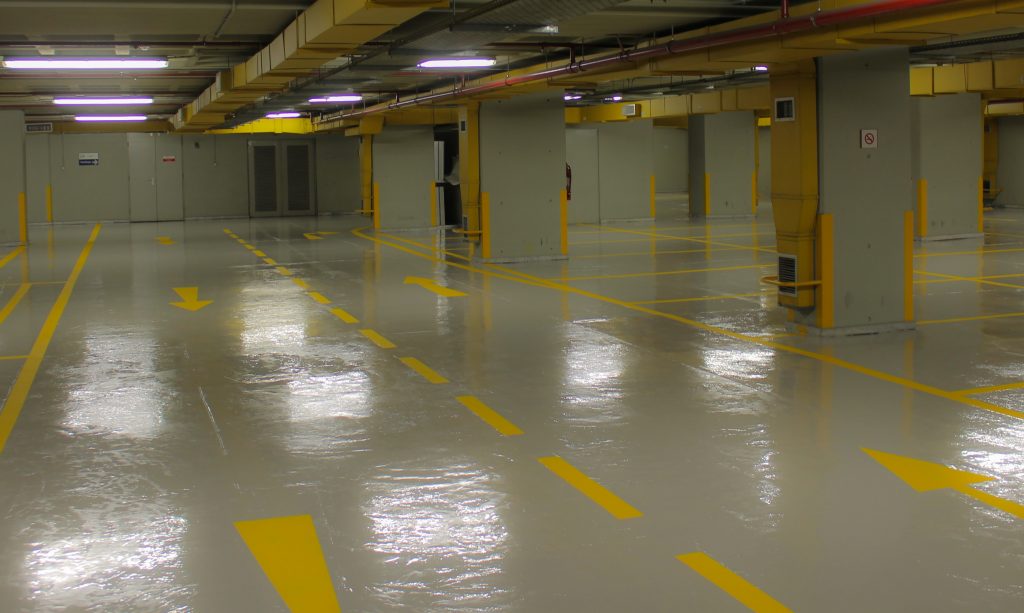
Epoxy coating belongs in the carpark, not your home!
Photo credit: Learncoatings
 And do you really want your toilet, ceiling, or roof looking like a carpark? 

5. Use nanotechnology waterproofing by Nano-G

One way to prevent water leakages is by waterproofing areas that tend to pool water.
 Have your bathroom tiles look brand new again!  

Instead of going through the trial and error of figuring out what’s the best method to waterproof your bathroom tiles, ceiling or roof, get an expert to inspect your stain or leaking issues!

Nano-G uses a non-hacking, non-toxic method that creates a thin layer of coating that goes into the smallest hairline crack on any surface. It is also suitable for both indoor and outdoor coating. Unlike the previous waterproofing methods, Nano-G’s nanotechnology waterproofing technology is dust-free and odor-free. You can still be at home as the product is being applied in your bathroom, balcony, or on your ceiling. What’s more, the waterproofing application only takes 24 hours to dry!

Read more about Nano-G’s waterproofing services here:

Need help with your water leakage problems? We’re the experts for you, message us on these platforms:

Facebook m.me/nanogmalaysia
WhatsApp nanog.wasap.my
Or give our hotline a call at 1800-18-6266