Kuala Lumpur, Selangor, Penang, Seremban & Johor

Year: 2026

Bathroom Waterproofing Solutions for Condos and Landed Homes in Malaysia

Have you ever noticed a faint musty smell or slight discolouration at the base of your tiled wall, or even had a neighbour knock on your door to complain about a water stain on their ceiling? These are often early warning signs that waterproofing for condos and landed homes may be failing, allowing moisture to seep into areas where it shouldn’t.

In Malaysia’s humid climate, bathroom waterproofing failure is more than just an inconvenience, it can quickly escalate into a costly problem if left unchecked. Studies suggest that nearly 70% of buildings experience leaks in wet areas, yet most homeowners only realise something is wrong once visible damage has already set in, often requiring expensive repairs.

Water leakage is often insidious, developing gradually as moisture travels through hidden cracks, joints, and porous grout long before any visible drip appears. Whether you live in a high-floor condominium unit or in a landed home, your bathroom is constantly exposed to moisture and humidity that can slowly weaken waterproofing layers over time.

However, while the risks are universal, the repair strategies differ wildly depending on your property type. Understanding the right solution isn’t just about stopping a drip, it’s about preserving your investment, avoiding legal disputes, and maintaining a healthy living environment.

Key Takeaways

  • Bathroom leaks often develop slowly, making them difficult to detect until visible damage appears
  • Moisture can travel through hidden cracks, grout lines, and porous materials before showing any signs
  • Both condominiums and landed homes are exposed to constant bathroom moisture, regardless of property type
  • Repair strategies differ depending on building structure, accessibility, and renovation restrictions
  • Condo bathroom leaks can be more complex due to shared structures and potential impact on neighbouring units
  • Addressing waterproofing issues early helps prevent recurring damage and higher repair costs
  • The right waterproofing solution focuses not just on stopping visible leaks, but on protecting long-term structural integrity and indoor living conditions

Table of Content

  1. Common Signs and Causes of Waterproofing Failure
  2. What causes waterproofing failure?
  3. Why Bathroom Waterproofing Problems Often Recur
  4. Choosing the Right Bathroom Waterproofing Solution for Your Home
  5. Choosing the Right Bathroom Waterproofing Solution
  6. How Modern Waterproofing Technology Improves Repair Efficiency 5
  7. Conclusion

Common Signs and Causes of Waterproofing Failure

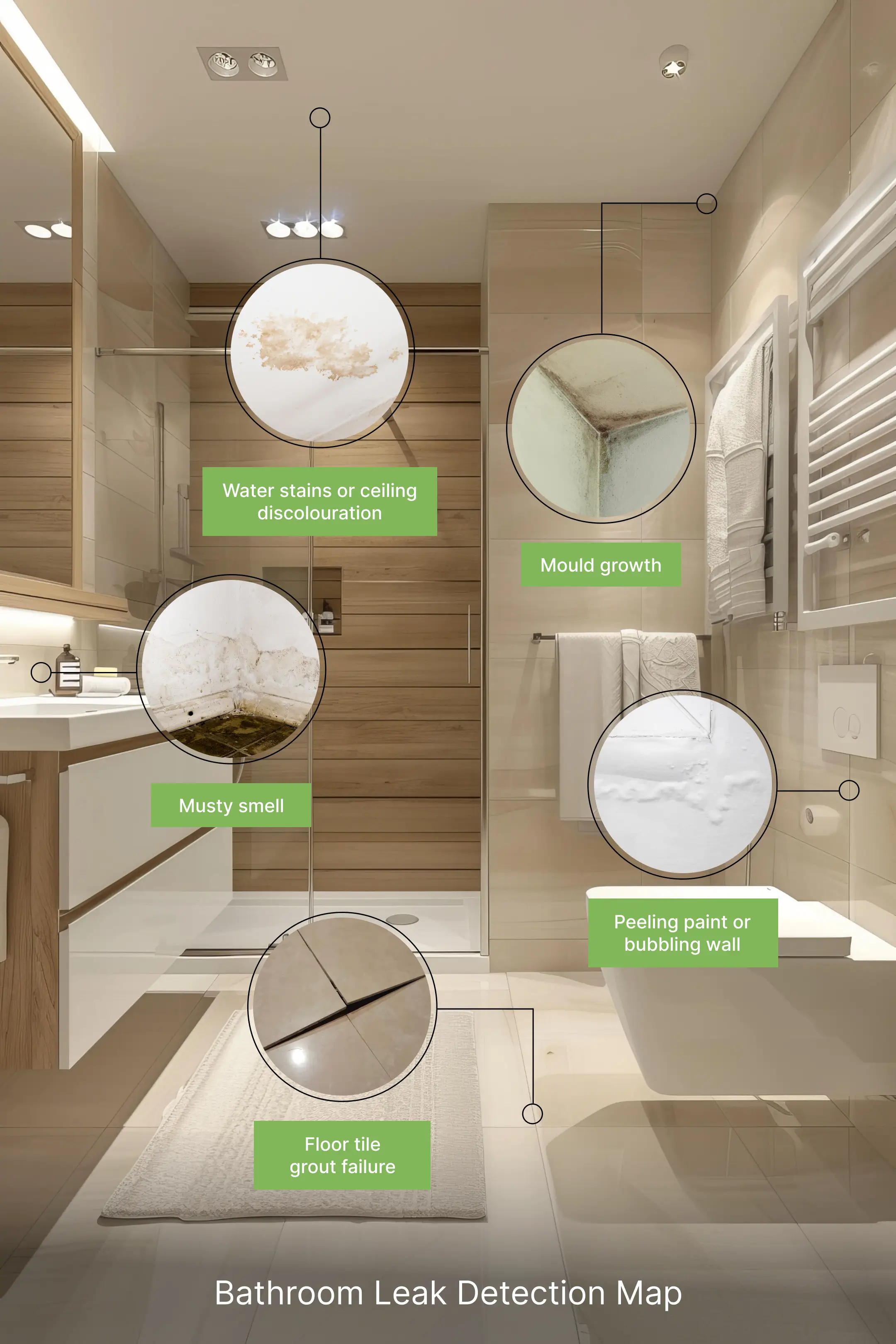
Ignoring the early warning signs is the number one reason minor issues become catastrophic failures. Look out for these red flags:

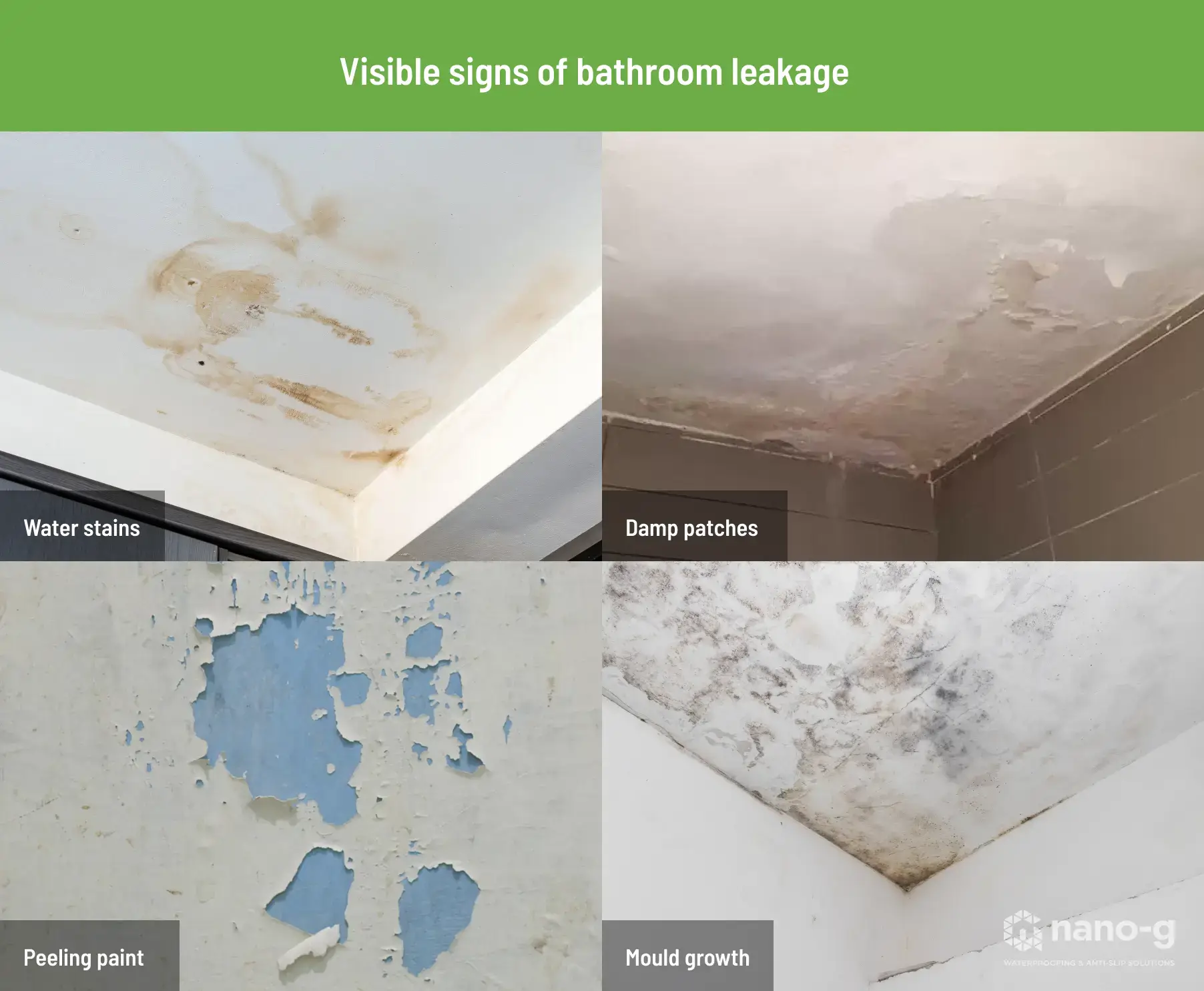
  • Persistent damp patches on nearby walls or flooring
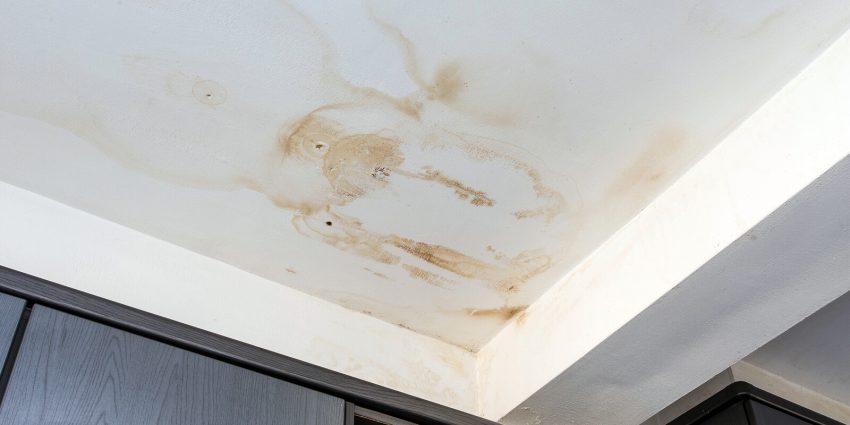
  • Water stains or ceiling discolouration, especially in rooms below
  • Mould growth caused by trapped moisture
  • Cracked bathroom tiles or loose grout joints
  • Peeling paint or bubbling wall finishes
  • A musty smell that lingers despite cleaning

Although these signs may appear minor at first, they often indicate that water has already penetrated beneath the bathroom surface.

What causes waterproofing failure?

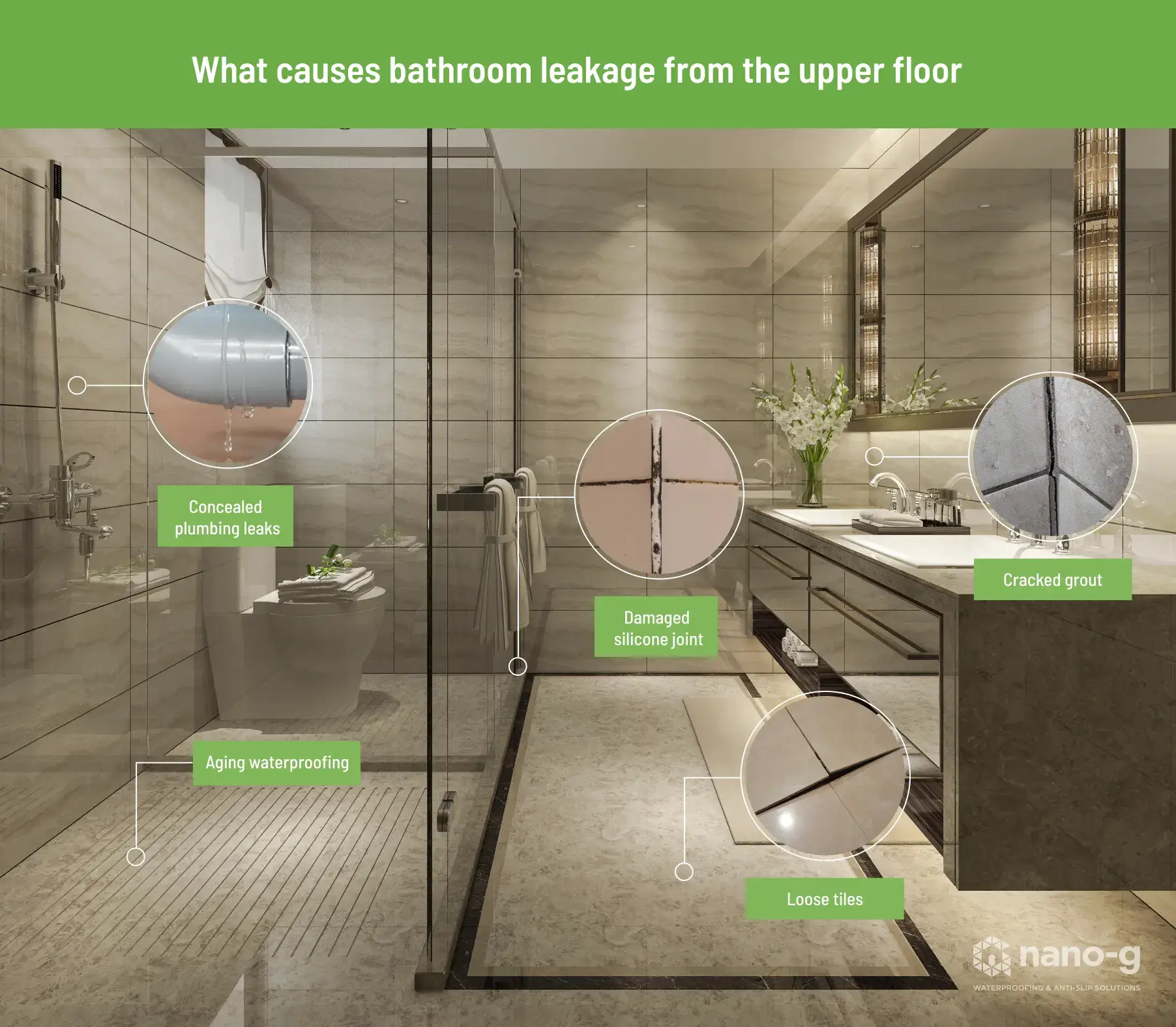
Several factors can contribute to bathroom leakage over time, including:

  • Poor waterproofing installation during construction or renovation
  • Low-quality waterproofing materials that deteriorate faster
  • Ageing grout and sealants that lose effectiveness over time
  • Poor drainage design, allowing water to pool in certain areas
  • Hairline cracks and porous surfaces that gradually absorb moisture

Since bathrooms experience constant exposure to water, even minor weaknesses can eventually turn into recurring seepage problems.

Why Bathroom Waterproofing Problems Often Recur

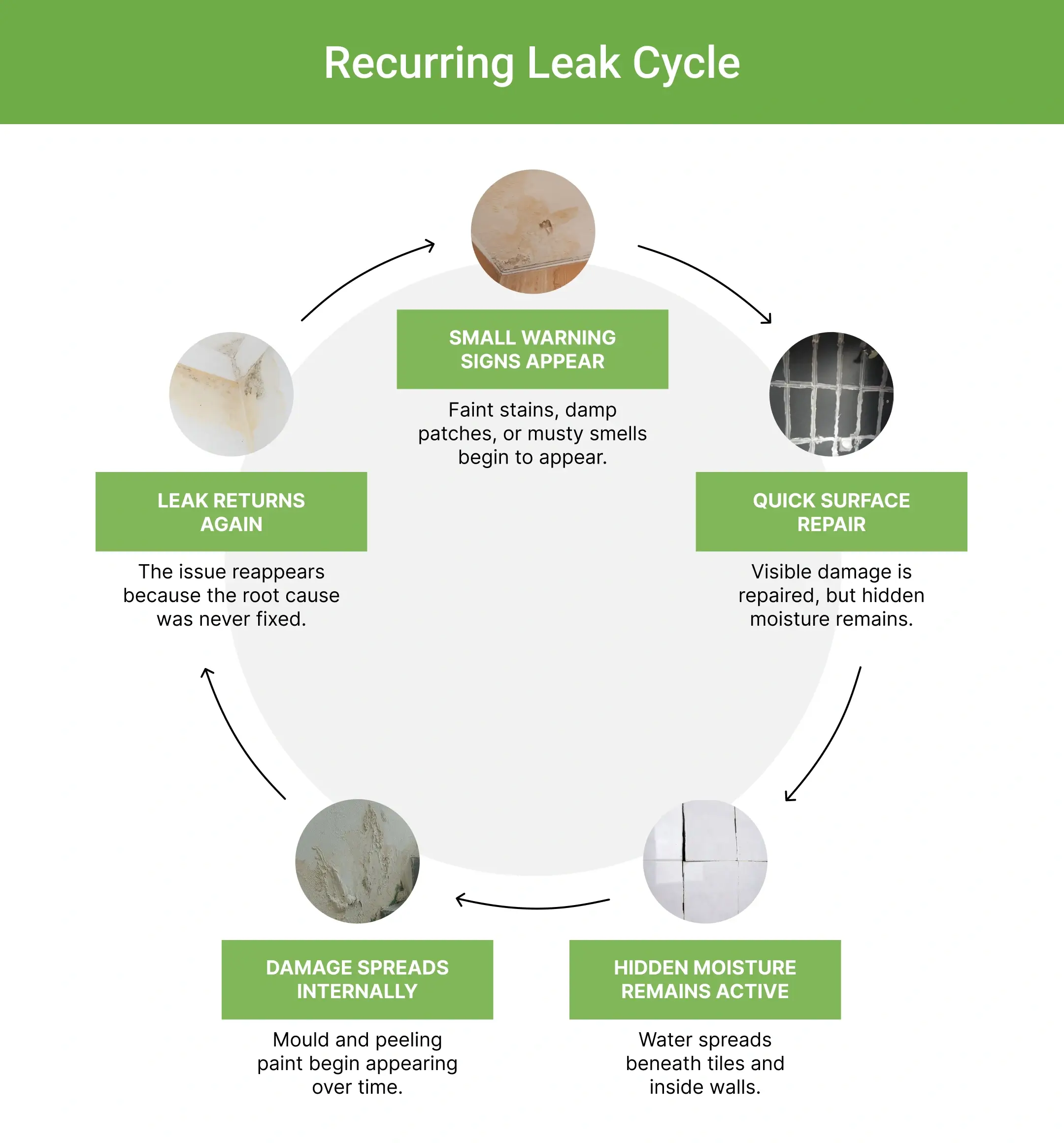
One of the most frustrating things about bathroom leakage is fixing the problem only for it to return a few months later.

This usually happens due to the following factors  :

  • Previous Repairs: Most previous repair works only address visible symptoms such as cracks or leaks on the surface, without resolving the deeper waterproofing failure underneath the tiles and structure.
  • Travelling Water: Water is highly persistent and can travel through hidden cracks, tile joints, and porous building materials, which makes it difficult to accurately trace the true source of leakage.
  • Ageing Systems: Waterproofing systems age. Harsh cleaning chemicals, thermal expansion, and daily wear degrade membranes over time.
  • Delayed Action: When you delay proper repairs, moisture spreads from the affected area to the walls, ceilings, and eventually into structural components. By the time you notice the mould presence, the waterproofing has likely failed significantly.

Choosing the Right Bathroom Waterproofing Solution for Your Home

Bathroom leakage can be stressful in any property, but the level of complexity often differs between condominiums and landed homes due to structure, access, and repair constraints.

Water Leakage in Condominium Bathrooms

In condominiums and apartments, leakage is not confined to a single unit, making effective waterproofing for condos and landed homes especially important. As floor slabs and structural elements are shared, water seepage can easily affect neighbouring homes, particularly units below.

Common challenges include :

  • Water stains or damp ceilings in units below
  • Urgent complaints from neighbours once leakage appears, causing inconvenience and immediate attention.
  • Requirement for property management approval before repairs
  • Restrictions on hacking or major renovation works
  • Limited access to plumbing and floor structures

As a result, even minor leaks can become urgent issues that require fast coordination to prevent disruption and further damage.

Water Leakage in Landed Home Bathrooms

Landed properties offer more flexibility since repairs are contained within a single household and are not subject to strata regulations.

Homeowners often benefit from:

  • Fewer renovation approvals
  • Easier access for inspection and repairs
  • Greater flexibility for extensive waterproofing works

However, delaying repairs can still lead to severe water damage, mould growth, and higher restoration costs over time.

Choosing the Right Bathroom Waterproofing Solution

Bathroom leakage issues vary in severity, and the appropriate waterproofing solution depends on both the extent and location of the damage. Whether it involves waterproofing for condos and landed homes, a proper assessment is essential to ensure repairs are effective rather than temporary fixes.

Since waterproofing systems are designed for specific problem types, the chosen method should be guided by the severity of the leak and the areas affected.

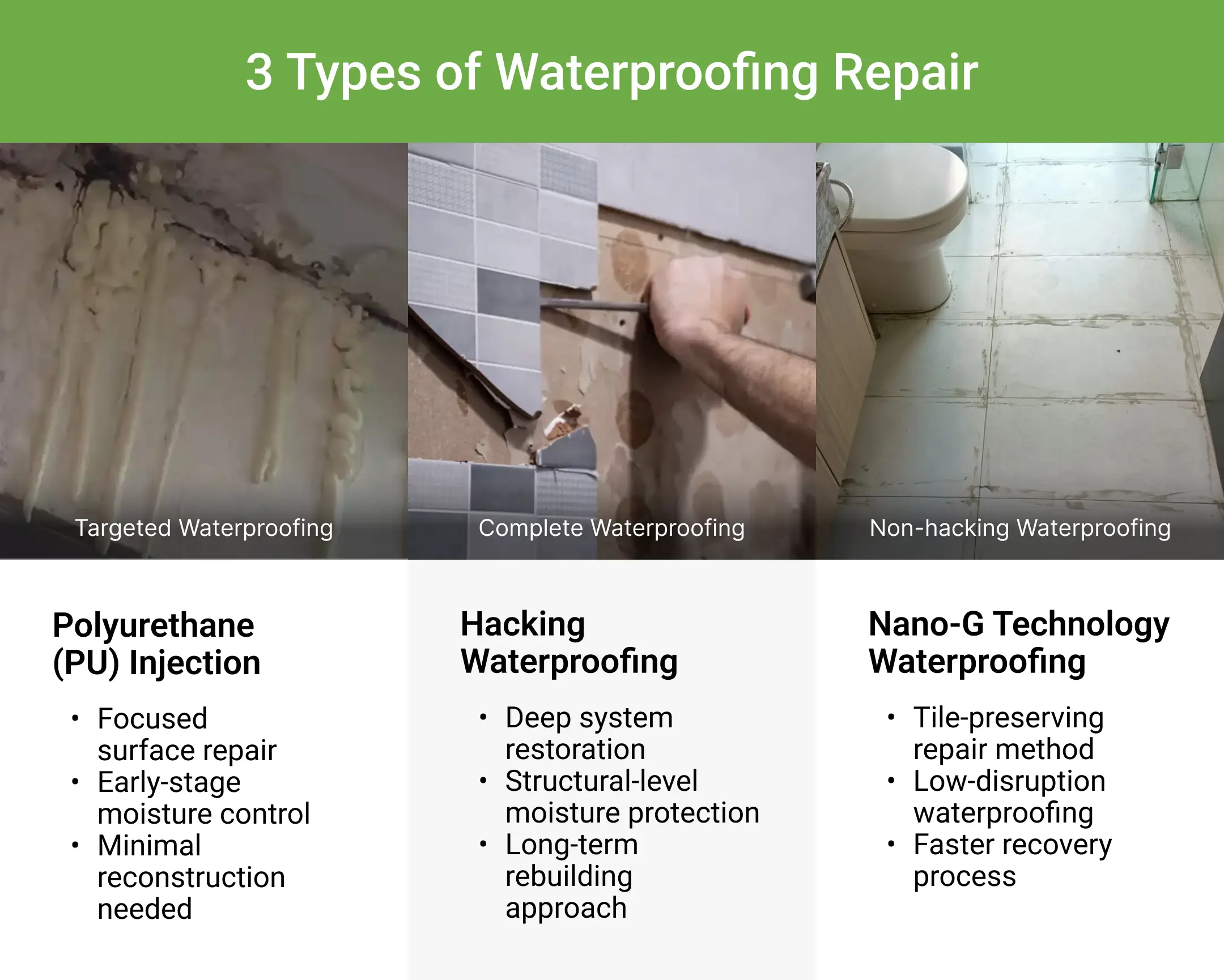
Targeted waterproofing treatments

  • Caused by hairline cracks, worn grout, or deteriorated joints
  • Suitable to address minor leakage or surface-level issues
  • Usually does not require major renovation work

Complete Waterproofing Replacement

  • Typically involves deeper structural water penetration
  • Suitable for severe or long-term leakage
  • Ensures long-term protection of bathroom structures

Non-hacking waterproofing solutions

  • Increasingly preferred for modern homes and condominiums
  • Allows repairs without removing tiles or breaking surfaces
  • Minimises disruption to daily routines
  • Ideal for occupied units where downtime must be reduced

How Modern Waterproofing Technology Improves Repair Efficiency

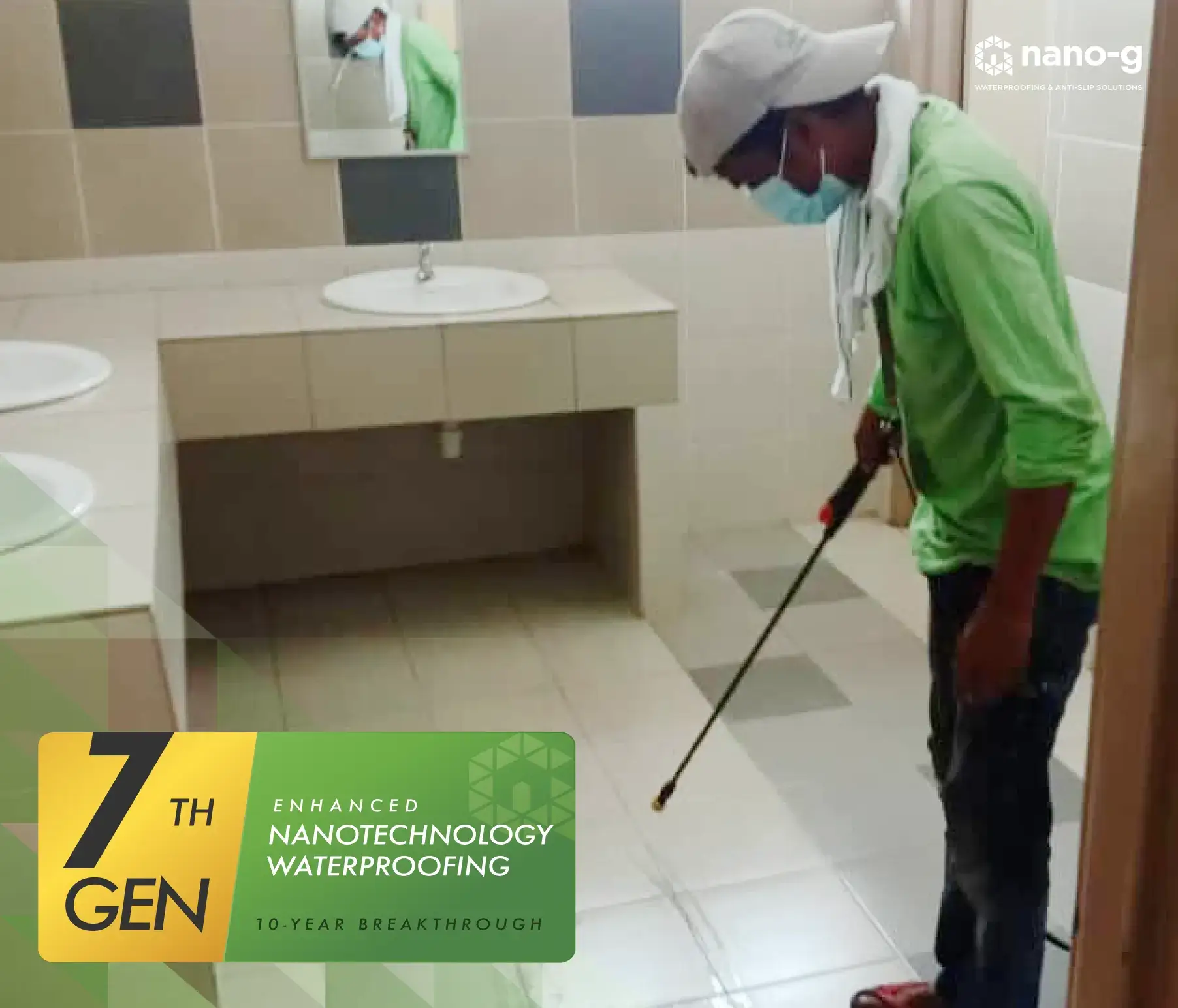
Advances in waterproofing technology have made it possible to treat certain types of leakage directly from the surface, reducing the need for extensive demolition work. Modern waterproofing systems are engineered to penetrate deep into building materials, forming a protective barrier that seals existing cracks and helps prevent further water intrusion.

Non hacking waterproofingGIF

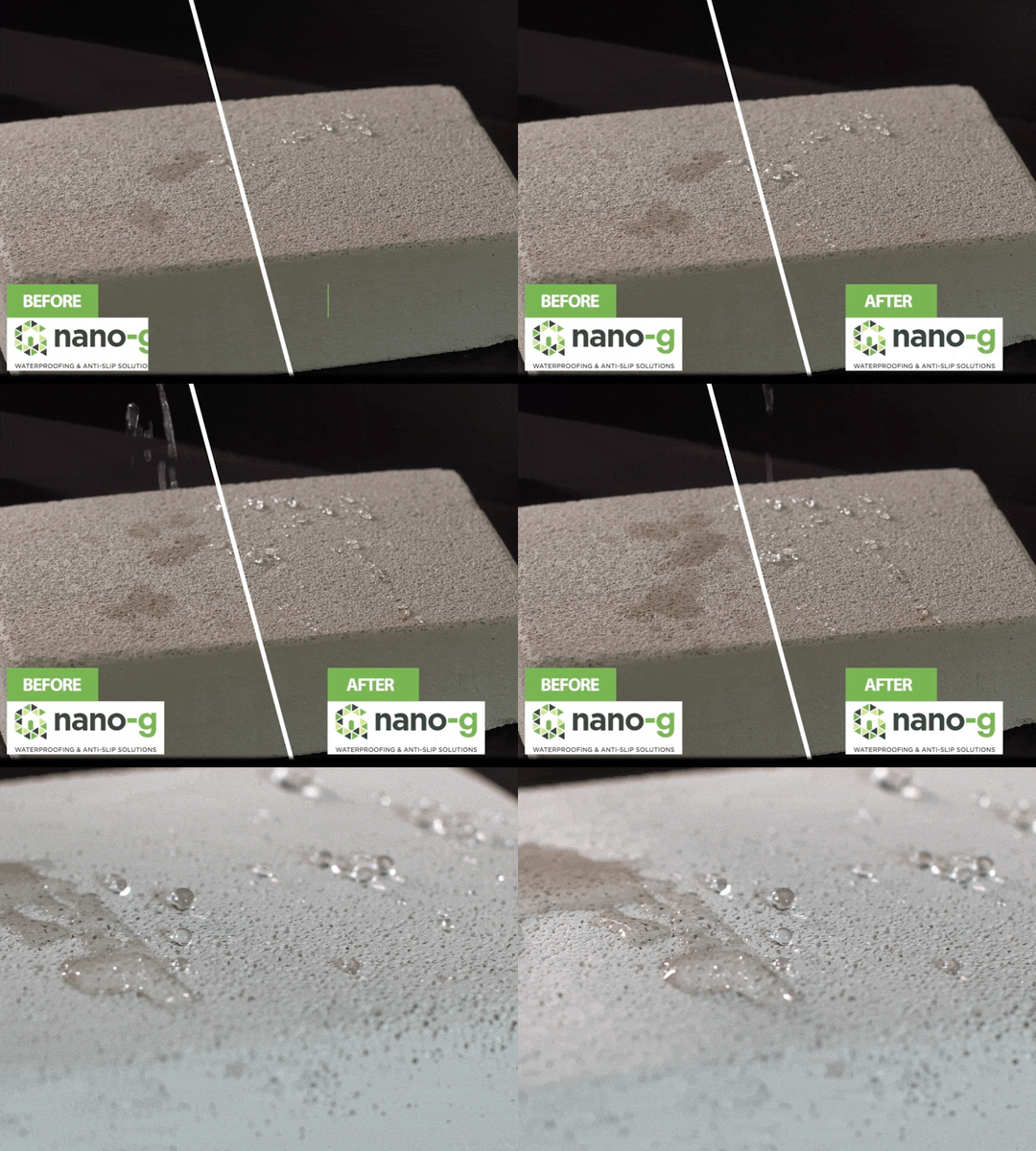
Nano-G offers waterproofing solutions using an advanced nanotechnology-based system designed to meet demanding performance standards. Ideal for waterproofing for condos and landed homes, this technology works by seeping into microscopic pores that conventional coatings cannot reach, creating a durable water-repellent barrier from within the material itself.

For a deeper understanding of how this technology supports bathroom waterproofing and helps prevent long-term water damage, read more here.

Conclusion

A professional inspection is essential to accurately identify the true source of leakage and determine the most suitable waterproofing solution. Addressing issues early helps reduce the risk of structural damage and prevents repair costs from escalating over time. With proper inspection, repairs can target the root cause of the problem instead of just treating surface symptoms.

Taking timely action is key to maintaining a safe, dry, and well-protected living environment. If you are experiencing signs of leakage or water damage, contact Nano-G today for a professional assessment and tailored waterproofing solution.

FAQs

1. How do I know if my bathroom has a waterproofing issue?

Waterproofing problems are not always visible at the source, which is why proper waterproofing for condos and landed homes requires regular attention and early intervention. Common indicators include water stains on ceilings or walls in the unit below, peeling paint, bubbling plaster, musty odours, or persistent damp patches in or around the bathroom. In some cases, tiles may appear intact while water is already seeping through hidden gaps beneath the surface, meaning the issue may only become obvious when it affects neighbouring units.

2. Do all bathroom leaks require hacking and tile removal?

Not necessarily. The repair method depends on the severity and depth of the leakage. Minor issues such as hairline cracks, deteriorated grout, or joint failures can often be treated using targeted or non-hacking waterproofing solutions applied directly to the surface. Hacking and tile removal are typically only required when leakage is severe, long-term, or has penetrated deep into the structural layer, where surface treatments are no longer sufficient.

3. What is a non-hacking waterproofing solution?

A non-hacking waterproofing solution is a repair method that addresses leakage without removing tiles or breaking bathroom surfaces. Instead, specialised waterproofing materials are applied over or into the affected area to seal cracks and restore protection. This method significantly reduces renovation time, mess, and disruption, making it especially suitable for occupied homes and condominiums where continuous access to the bathroom is important.

4. Why is early waterproofing repair important?

Early repair is critical because water damage tends to worsen over time, even if the leak appears minor at first. Delays can lead to concrete deterioration, mould growth, damage to internal finishes, and even disputes in condominium settings when neighbouring units are affected. Addressing the issue early helps contain the damage, simplifies repairs, and significantly reduces long-term repair costs.

5. How does modern waterproofing technology improve repairs?

Modern waterproofing systems are designed to go beyond surface-level protection. They can penetrate into microscopic pores and fine cracks within building materials, sealing pathways that conventional coatings cannot reach. Nanotechnology-based solution used by Nano-G forms a durable water-repellent barrier from within the material, improving adhesion, coverage, and long-term resistance against water intrusion.

6. Why do I need a professional inspection instead of DIY fixes?

Water leakage is often complex and can originate from multiple hidden sources, making it difficult to diagnose accurately without technical assessment. A professional inspection helps identify the true cause of leakage and ensures the correct repair method is applied. DIY solutions often treat surface symptoms only, which can lead to repeated failures and higher long-term repair costs if the underlying issue is not properly resolved.

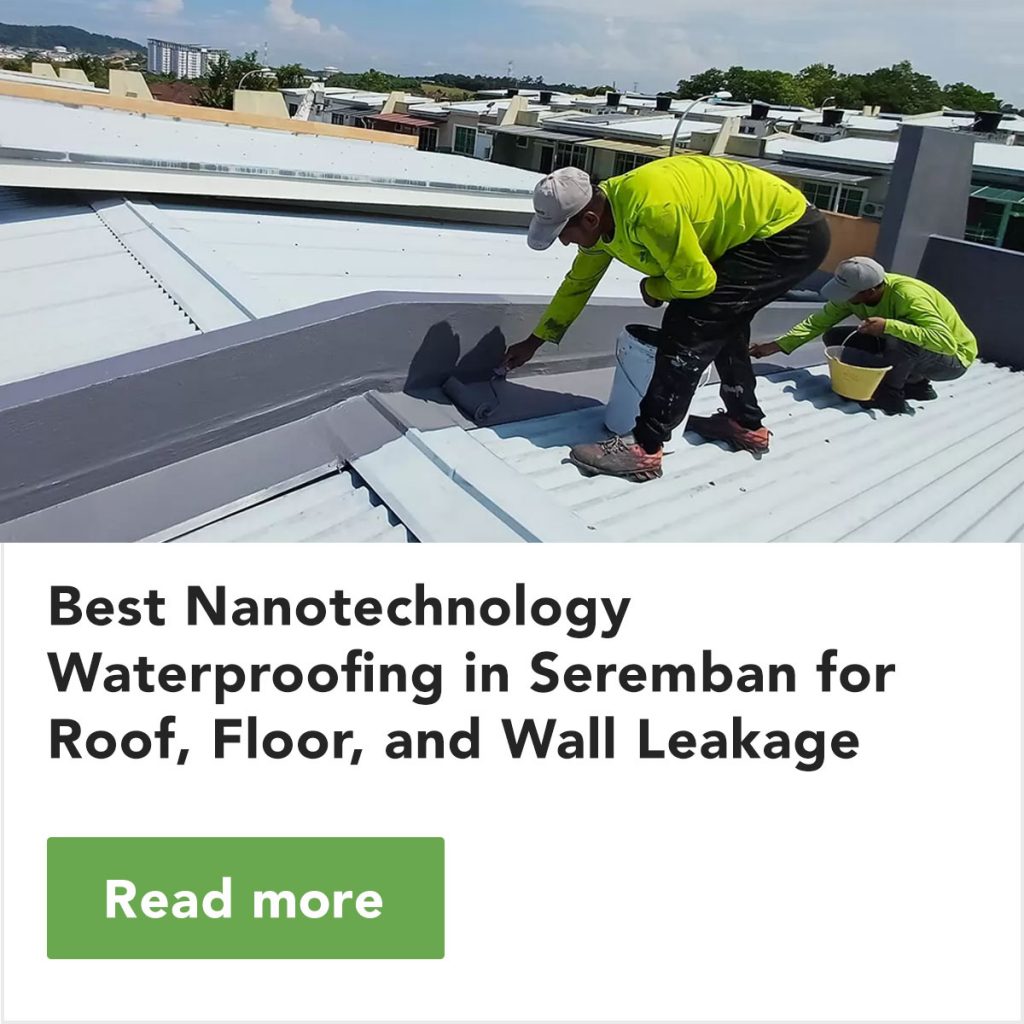
Best Nanotechnology Waterproofing in Seremban for Roof, Floor, and Wall Leakage

Water leakage is one of the most common property issues faced by homeowners in Seremban. What starts as a small crack, damp patch, or minor ceiling stain can gradually turn into a costly problem is left unresolved. investing in proper waterproofing in Seremban is essential to prevent water seepage and protect both landed and high-rise properties from long-term damage.

Many homeowners only react when the damage becomes visible such as peeling paint, mould growth, or water dripping through ceilings. However, by that stage, moisture may have already spread deeper into the structure, affecting walls, flooring, and internal surfaces.

Fortunately, waterproofing technology has evolved significantly in recent years. Instead of relying solely on traditional methods that may involve tile hacking and extensive repair work, many property owners are now exploring nanotechnology waterproofing as a more efficient and long-lasting solution.

Common Areas in Homes That Frequently Experience Water Leakage

Water seepage can happen in different areas of a property, especially where surfaces are regularly exposed to rain, moisture, or poor drainage. Identifying vulnerable areas early can help prevent extensive damage later.

i. Roof Leakage

Roof leakage GIF

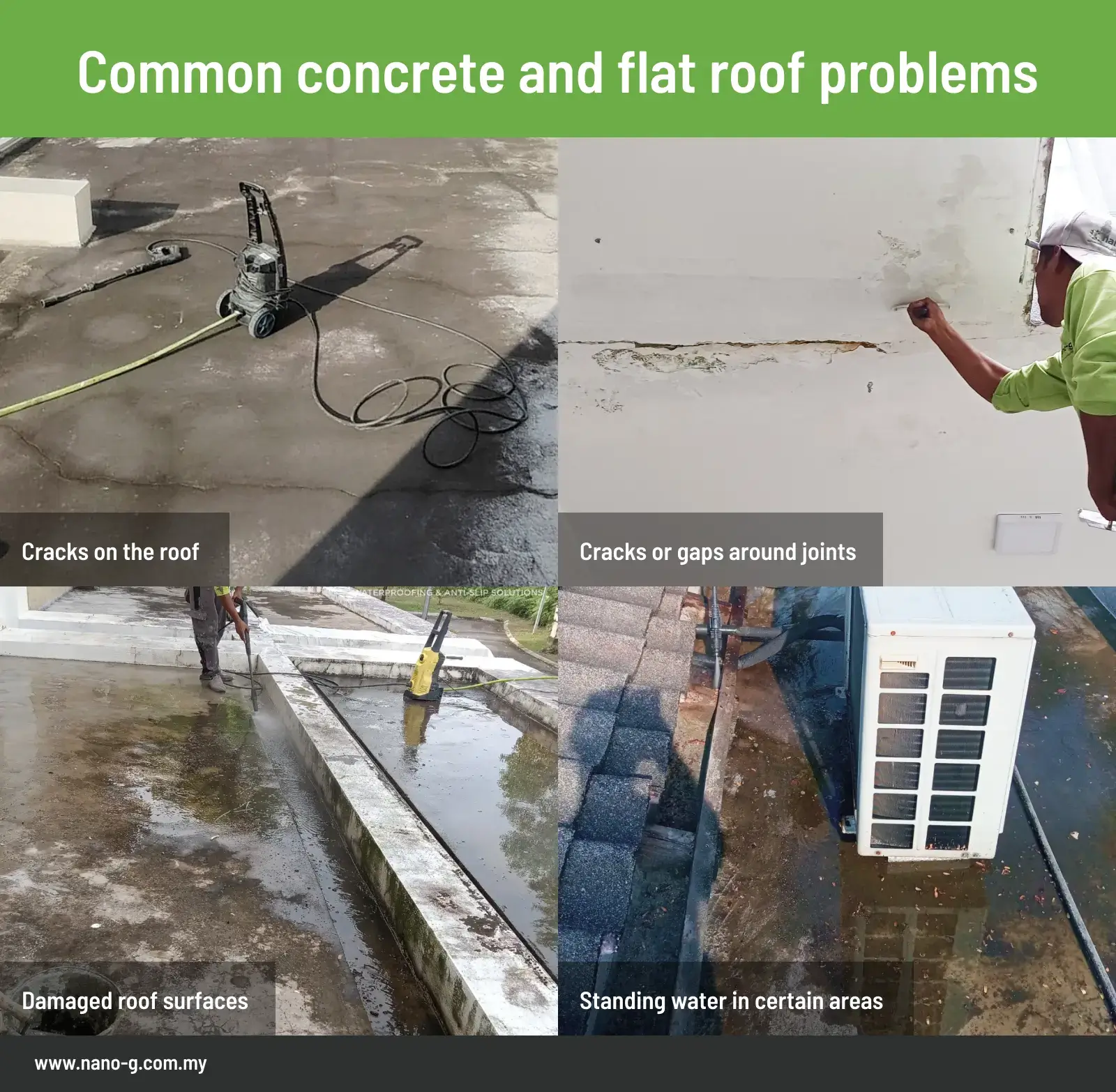
Roof leakage is among the most common problems faced by homeowners in Seremban, particularly for landed properties with flat roofs, concrete rooftops, and car porch roofs that are constantly exposed to rain and heat. This is why effective waterproofing in Seremban is essential for protecting roofs against long-term water damage.

Constant exposure to rain, harsh sunlight, and fluctuating temperatures can eventually weaken roofing materials, causing cracks to develop over time. In some cases, clogged drainage systems may also lead to water pooling, which increases pressure on roof surfaces.

  • Water stains appearing on ceilings
  • Damp patches near upper-floor walls
  • Peeling ceiling paint
  • Mould growth around roof corners

If ignored, roof leakage can worsen and eventually compromise structural integrity while increasing repair costs. To understand more on roof water leakage, read our article here.

ii. Floor Leakage

Floor leakage GIF

Bathrooms, kitchens, balconies, and other wet areas are particularly vulnerable to floor leakage due to continuous water exposure.

In many homes, waterproofing beneath floor tiles deteriorates over time. Once this protective layer weakens, water can slowly seep into the slab and spread to nearby rooms or lower floors.

Some signs of floor leakage include:

  • Damp ceilings on lower floors
  • Cracked or loose tiles
  • Persistent moisture smells
  • Watermarks near adjoining walls

Traditional repair methods often involve hacking tiles to locate the source of leakage, making repairs time-consuming and disruptive.

iii. Water Leakage

Water leakage GIF

Wall leakage is another common issue, particularly for exterior walls exposed to heavy rain and humidity.

Over time, small cracks may develop due to weather exposure, paint deterioration, or structural movement. Rainwater entering through these openings can slowly spread within walls, causing internal moisture problems

Signs of wall leakage often include:

  • Peeling or bubbling paint
  • Damp patches on walls
  • Black mould spots
  • Crumbling or powdery wall finishes

Without proper treatment, wall leakage can continue spreading and negatively affect indoor air quality.

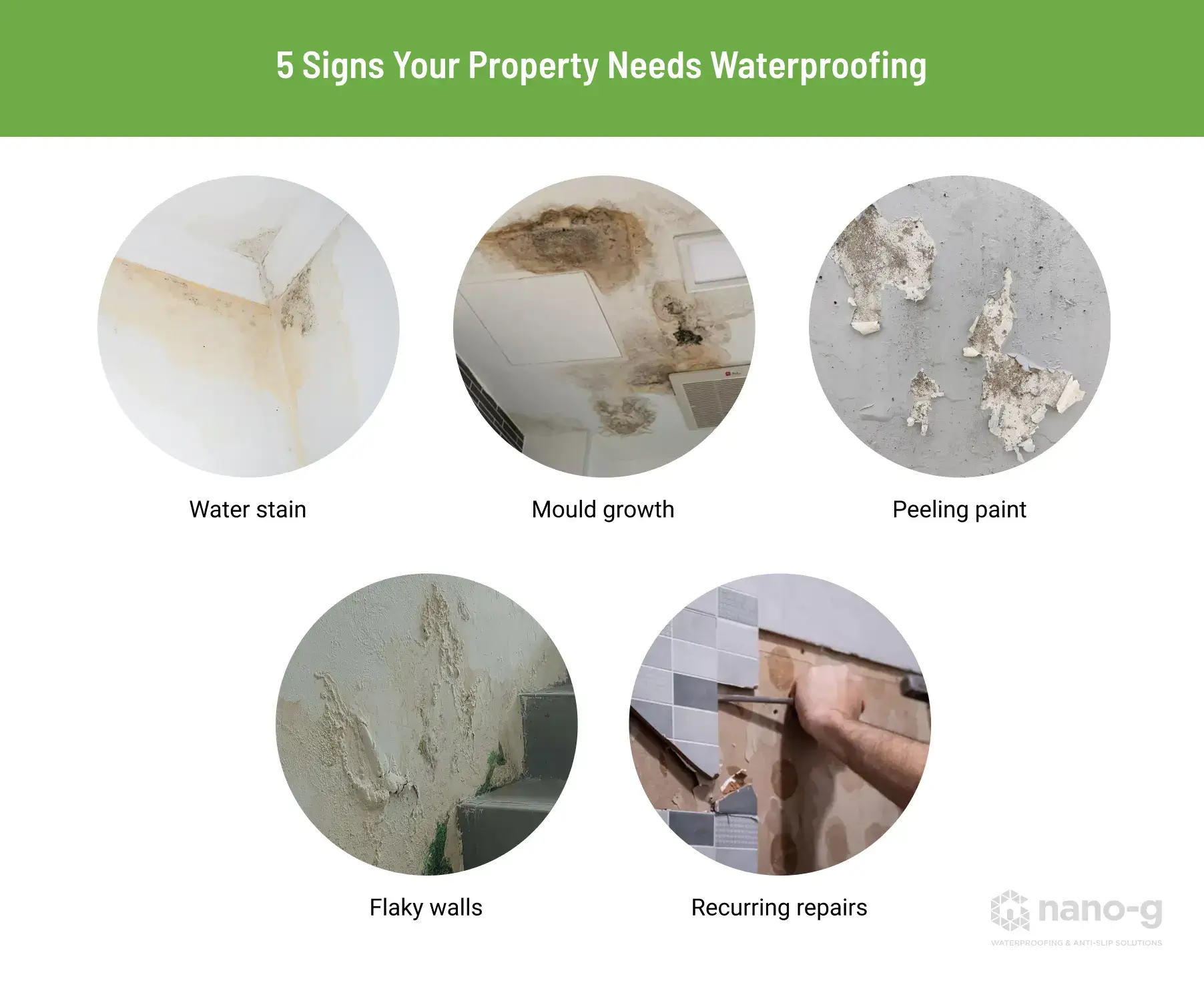
Signs That Your Property Needs Waterproofing

Water damage often develops gradually, making it easy to overlook in the early stages. Recognising warning signs early can help homeowners address issues before repairs become significantly more expensive. Look out for the following indicators:

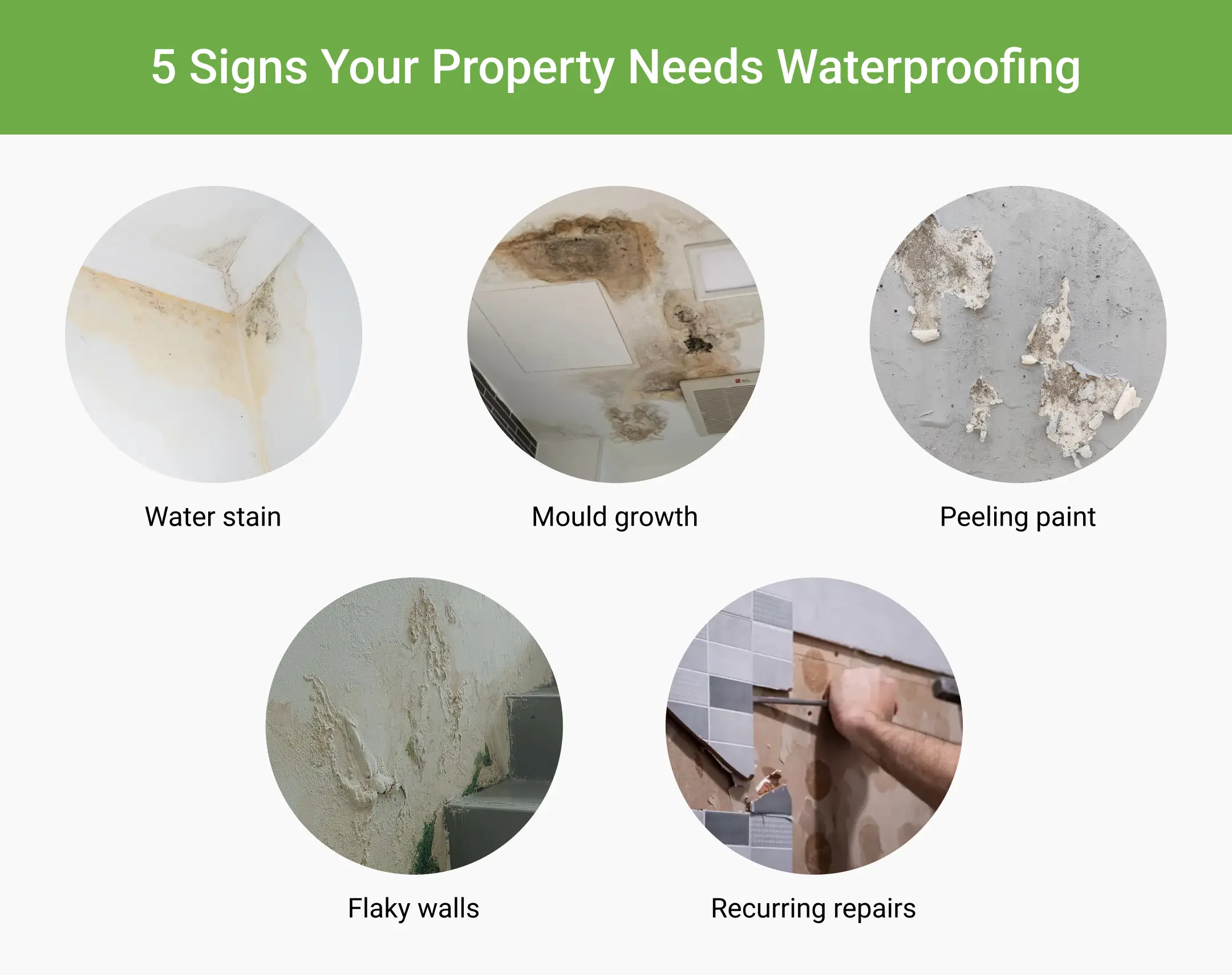
1. Persistent Water Stains

Brown or yellowish stains appearing on ceilings or walls are often signs of hidden moisture intrusion. Even if the stain appears small, water may already be spreading internally

2. Musty Smells and Mould Growth

A damp, musty odour inside rooms may indicate moisture trapped behind walls or beneath flooring. Mould growth is also a strong sign that waterproofing protection may have failed

3. Peeling Paint or Bubbling Surfaces

When moisture builds beneath paint layers, surfaces often begin peeling, bubbling, or cracking.

4. Powdery or Flaky Walls

Walls affected by moisture sometimes develop chalky or powder-like surfaces, indicating prolonged seepage beneath finishes.

5. Recurring Leakage Repairs

If the same leakage issue keeps returning despite repeated repairs, the root cause may not have been properly addressed. Early intervention can help prevent long-term structural damage and reduce overall repair costs.

What Is Nanotechnology Waterproofing and How Does It Work

Nanotechnology waterproofing is an advanced waterproofing solution that uses microscopic particles to penetrate deeply into porous surfaces such as concrete, cement, and walls. Unlike conventional waterproofing systems that sit on top of surfaces as protective membranes, nanotechnology solutions work from within the material itself.

These microscopic particles penetrate tiny pores and create an invisible water-resistant barrier, helping to prevent water from entering the structure.

Key advantages of nanotechnology waterproofing include:

  • Deep penetration into surfaces for enhanced protection
  • No visible surface coating, maintaining original aesthetics
  • Breathable protection, allowing trapped moisture vapour to escape
  • Reduced risks of peeling, bubbling, or cracking over time

Because the waterproofing protection becomes embedded within the material, it is often considered a more durable and long-term solution for leakage prevention.

Why Homeowners Are Switching to Nanotechnology Waterproofing

More homeowners in Seremban are choosing nanotechnology waterproofing because of its convenience, efficiency, and long-lasting performance

i. No Hacking Required

One of the biggest advantages of nanotechnology waterproofing is that it can often be applied without hacking existing tiles or dismantling structures.

Benefits include:

  • Minimal dust and mess
  • Less disruption to daily routines
  • No major renovation work
  • Lower restoration costs after repairs

For occupied homes, this can make the waterproofing process significantly more convenient.

ii. Faster Application and Minimal Disruption

Compared to traditional waterproofing repairs, nanotechnology treatments are generally quicker to apply.

This makes them particularly suitable for:

  • Occupied residential homes
  • Commercial properties
  • No major renovation work
  • Lower restoration costs after repairs

In many cases, homeowners can resume normal activities much sooner.

iii. Long-Lasting Protection Against Weather and Moisture

Seremban’s climate exposes buildings to constant humidity, intense sunlight, and heavy rain.

High-quality nanotechnology waterproofing systems are designed to:

  • Resist water penetration
  • Withstand prolonged weather exposure
  • Prevent premature deterioration
  • Reduce risks of paint peeling and surface damage

This provides more reliable long-term protection against recurring leakage problems.

How to Choose the Best Nanotechnology Waterproofing Specialist in Seremban

Choosing the right waterproofing specialist is essential to ensure effective and lasting results. Before hiring a contractor, consider the following:

i. Experience and expertise

Choose providers with proven experience handling roof, floor, and wall leakage issues.

ii.  Technology and materials used

Verify whether the company uses certified waterproofing technology and environmentally friendly materials.

iii. Customer reviews and past projects

Reviews and project portfolios can provide insight into workmanship quality and reliability.

iv. Specialisation in nanotechnology waterproofing

Established providers such as Nano-G are recognised for applying nanotechnology-based treatments that penetrate deeply into building materials to help create longer-lasting protection against water intrusion.

Conclusion

Water leakage problems should never be ignored, especially in humid environments such as Seremban where rain and moisture exposure are constant. Investing in reliable waterproofing in Seremban can help prevent issues that originate from the roof, floor, or walls. Left untreated, water seepage can quickly escalate into mould growth, damaged interiors, and costly structural repairs.

Ultimately, choosing the right waterproofing solution and experienced specialist can provide better long-term protection, lower maintenance costs, and greater peace of mind for homeowners and businesses alike.

If you’re dealing with recurring roof, floor, or wall leakage, exploring a longer-term waterproofing solution may be worth considering. Speak to our team for a free inspection and explore longer-term waterproofing solutions for your property today.

Water Leakage in Roofs and How to Repair Them Effectively

Early attention allows repairs to be carried out smoothly, before the damage spreads further.

Key Takeaways

  • Roof water leakage is one of the most common and costly building issues in Malaysia, affecting homes and commercial properties. 
  • Poor waterproofing, aging materials, blocked gutters, and humid, rainy climate are the main contributors to roof leaks.
  • Untreated leaks can cause structural damage, mould growth, corrosion, and electrical hazards, making early detection critical.
  • Professional waterproofing not only stops leaks but also protects structural integrity, preserves property value, and reduces long-term repair costs. 

Table of Contents

  1. Common Causes of Roof Water Leakage in Malaysia
  2. How Waterproofing Repairs Roof Water Leakage
  3. Remove Failed Waterproofing Systems
  4. Locate the Leak, Repair and Seal Cracks
  5. Clean and Prepare the Roof Surface
  6. Apply Nano-G Waterproofing Solutions

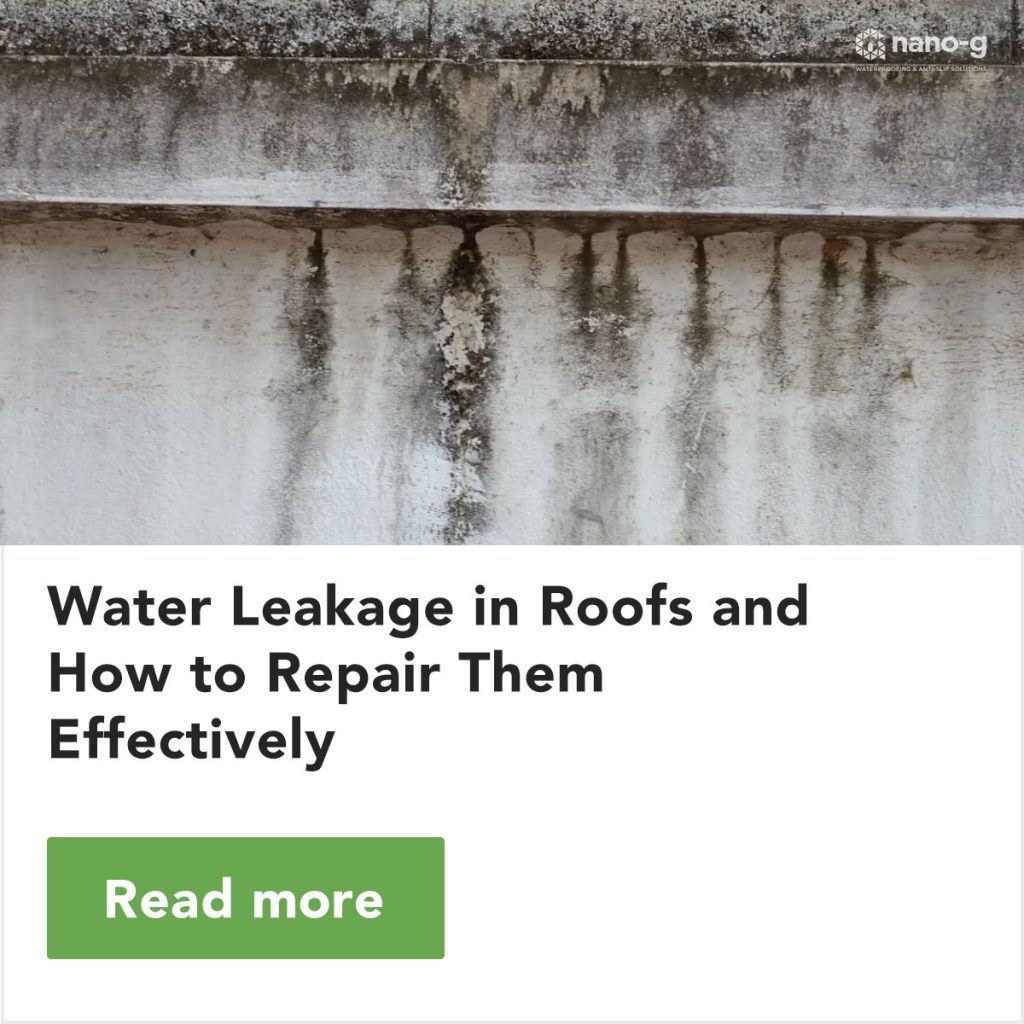
Water leakage in roofs remains one of the most persistent and costly building issues in Malaysia. For year s, roof leaks are not isolated incidents, they are a widespread industry problem affecting residential, commercial, and strata-managed properties nationwide.

A recent industry survey involving Malaysian property and facility management professionals revealed that waterproofing-related defects are estimated to account for up to 80% of major building defects, despite waterproofing representing only 2–3% of total construction cost. This imbalance highlights how critical proper waterproofing design, installation, and maintenance truly are as highlighted by this article. 

Common Causes of Roof Water Leakage in Malaysia

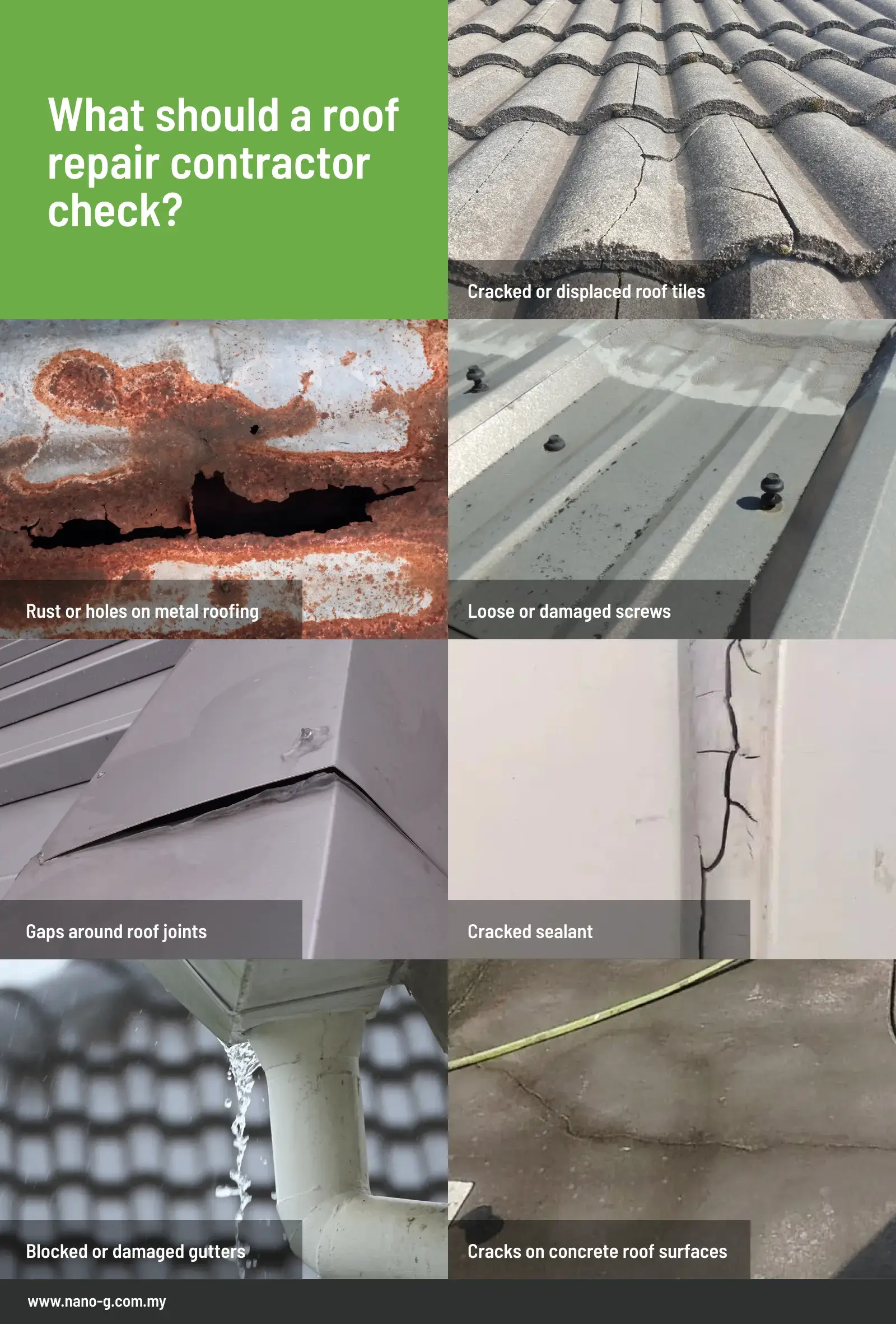
In practice, water leakage in roofs rarely occurs overnight. They develop gradually due to aging waterproofing materials, thermal movement, poor workmanship, and neglected drainage systems. Blocked gutters are another major contributor. When rainwater cannot drain properly, ponding occurs. This increases hydrostatic pressure on the roof slab, joints, and parapet walls, accelerating waterproofing failure and allowing water to seep into the building structure.

Malaysia’s climate further intensifies the issue. With average annual rainfall exceeding 2,500mm, combined with high humidity and strong UV exposure, roof systems are constantly under stress. Flat concrete roofs commonly used in terrace houses, apartments, and commercial buildings are especially vulnerable when drainage or waterproofing fails.

If left untreated, continuous moisture penetration can lead to spalling concrete, steel reinforcement corrosion, ceiling damage, mould growth, and even electrical safety risks.

How Waterproofing Repairs Roof Water Leakage

To achieve long-lasting results, roof waterproofing repairs must follow a systematic and professional process rather than surface-level patching.

1. Remove Failed Waterproofing Systems

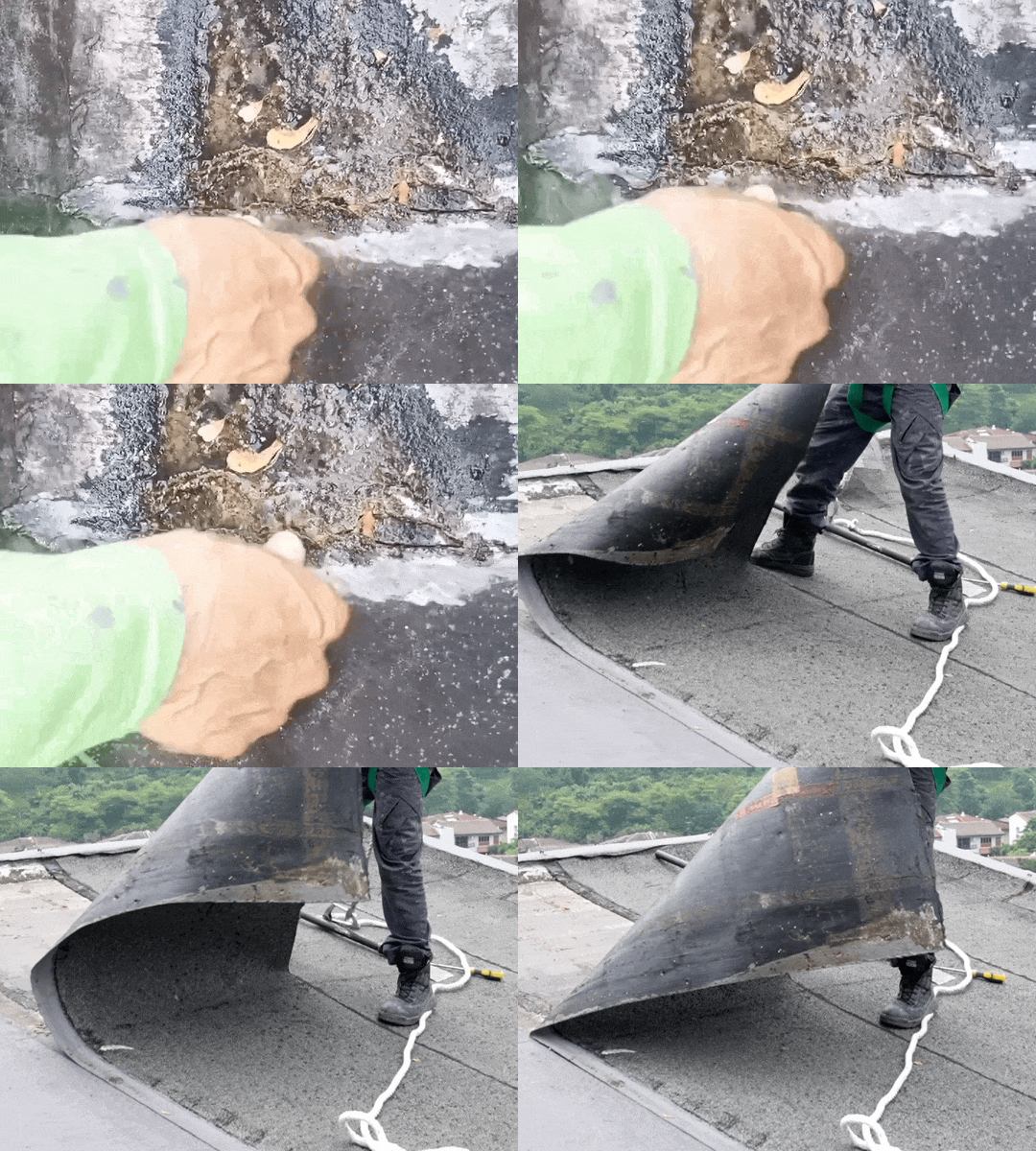
All deteriorated waterproofing layers, such as failed torch-on membranes must be completely removed. Overlaying new materials on top of damaged systems traps moisture and shortens the lifespan of the repair. Exposing the concrete slab allows for proper inspection and corrective work.

2. Locate the Leak, Repair and Seal Cracks

Leak paths are carefully traced, as water often travels beneath the slab before becoming visible indoors. All cracks and voids are repaired using appropriate fillers or repair mortars. In Malaysia, thermal expansion-related hairline cracks are especially common due to daily temperature fluctuations.

3. Clean and Prepare the Roof Surface

Thorough surface preparation is critical. Poor preparation is one of the leading reasons waterproofing systems fail prematurely. Before any waterproofing work begins, the roof surface must be free of dirt, dust, algae, old paint, oil stains, and loose particles. These contaminants prevent the waterproofing material from bonding properly to the concrete, making poor surface preparation one of the main reasons waterproofing systems fail early.

Gutters, downspouts, and drainage outlets must also be checked and cleared. Blockages are often an overlooked but critical factor in roof leakage. When gutters are filled with leaves, soil, twigs, and other debris, rainwater cannot flow freely toward the outlet and downspouts. This causes water to back up and pond on the roof surface, increasing the load on the waterproofing system and accelerating material breakdown. 

4. Apply Nano-G Waterproofing Solutions

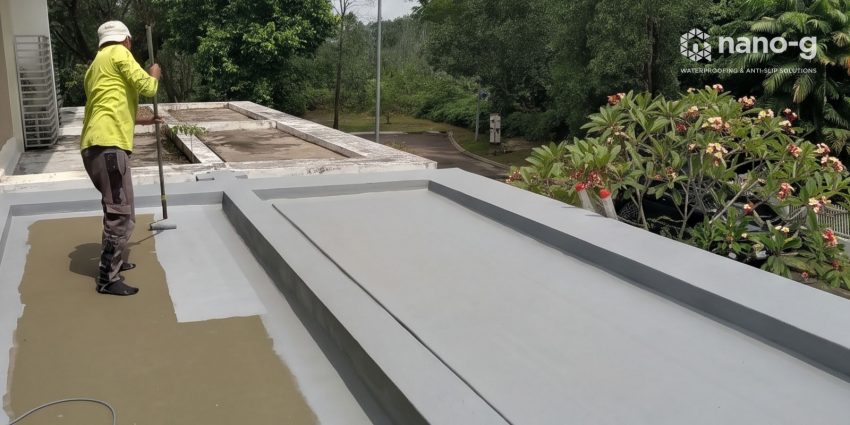
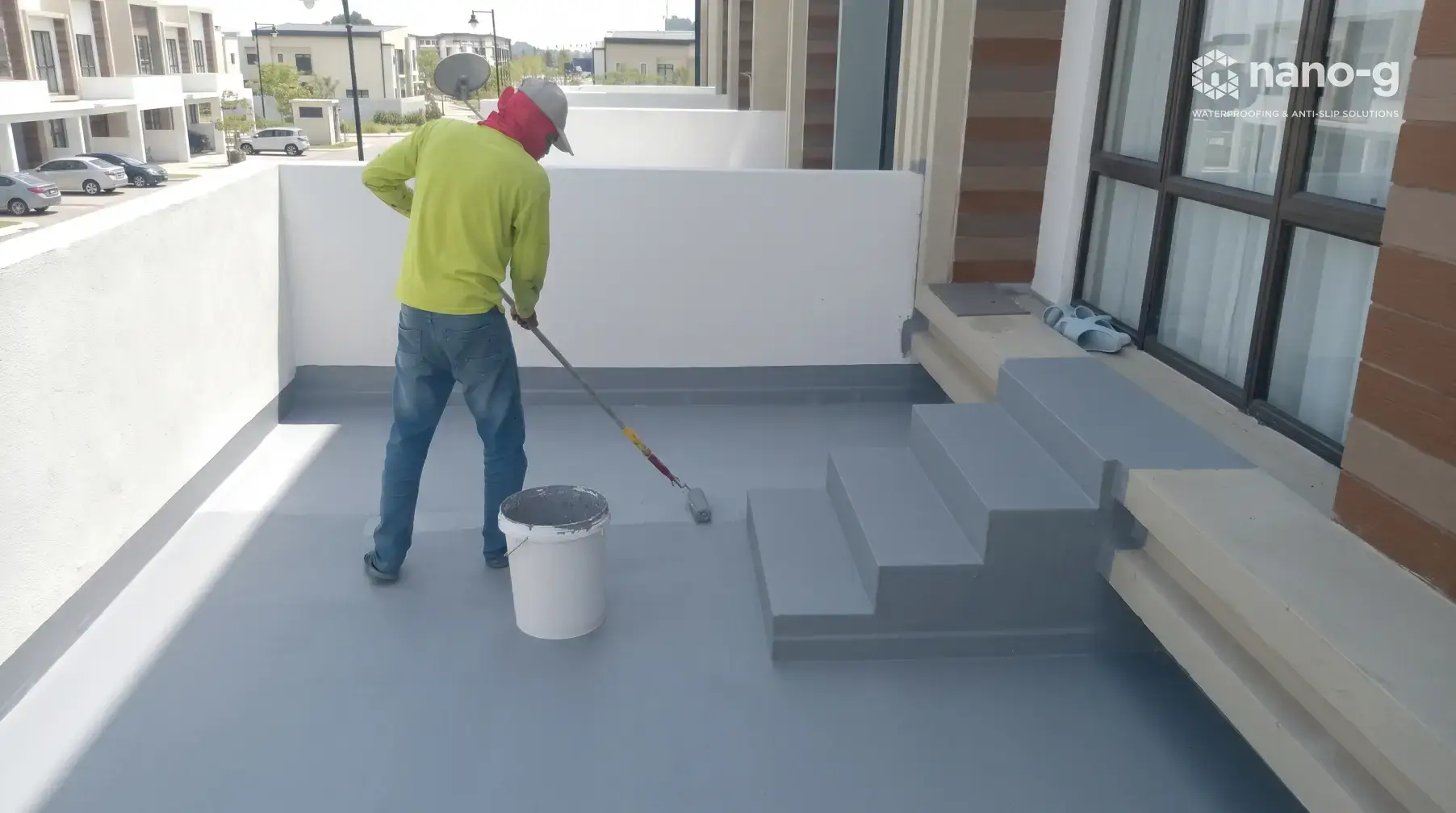
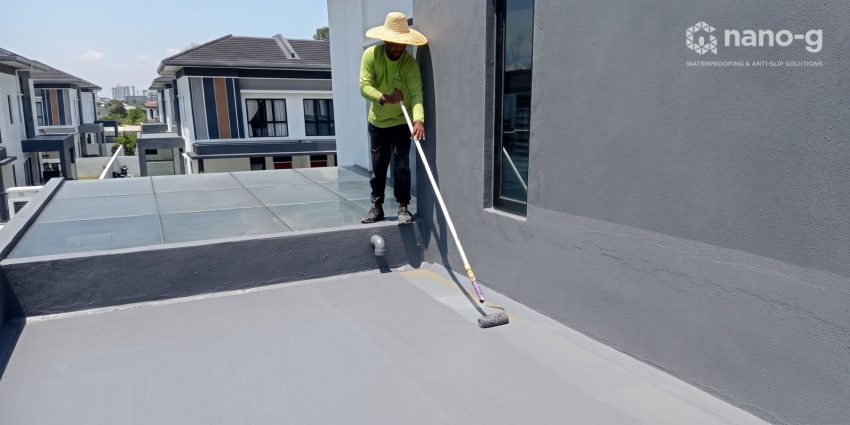
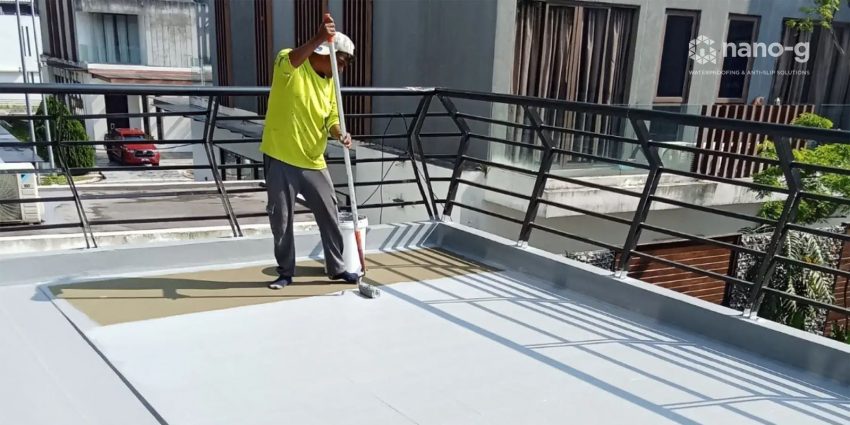
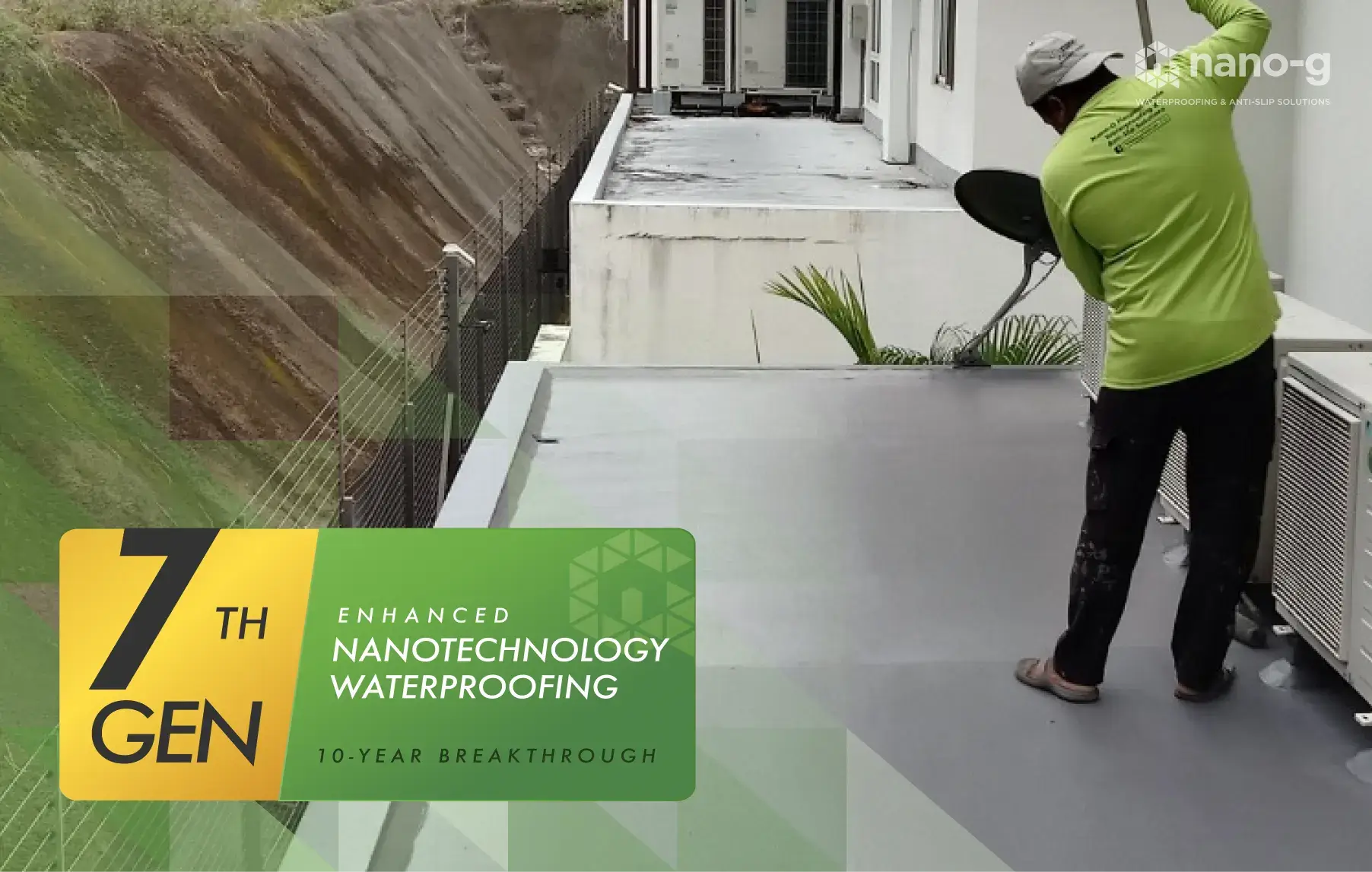
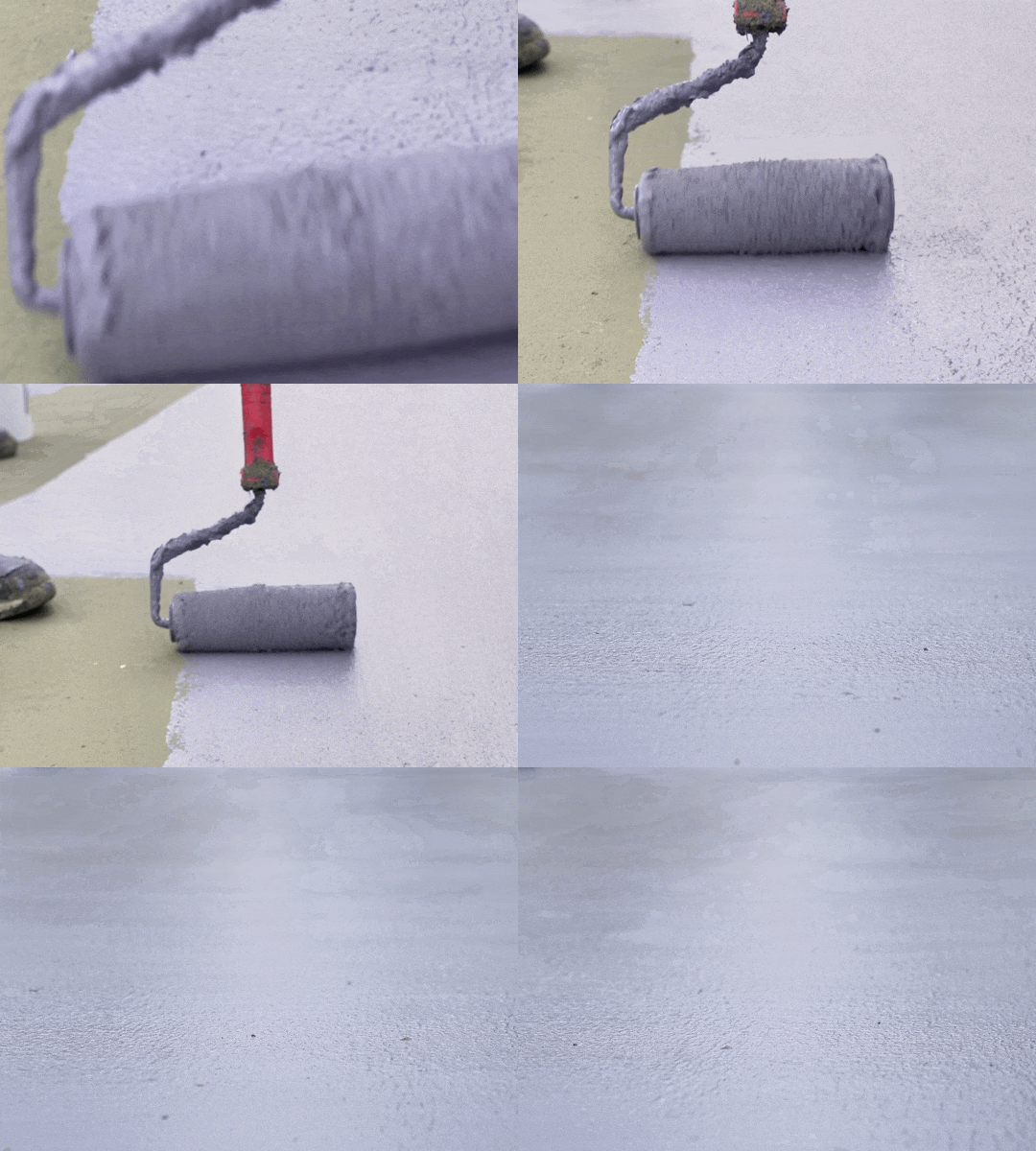
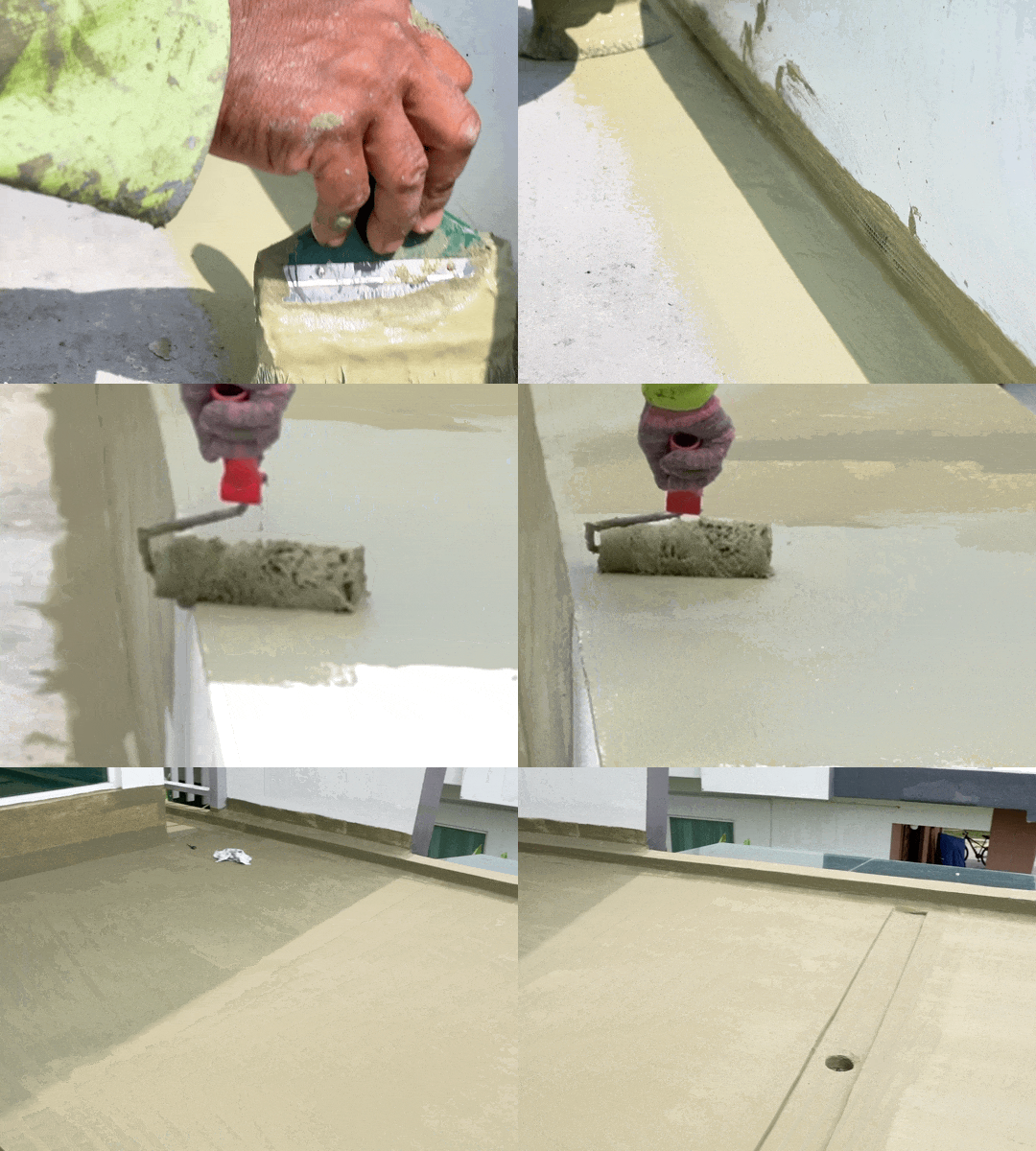
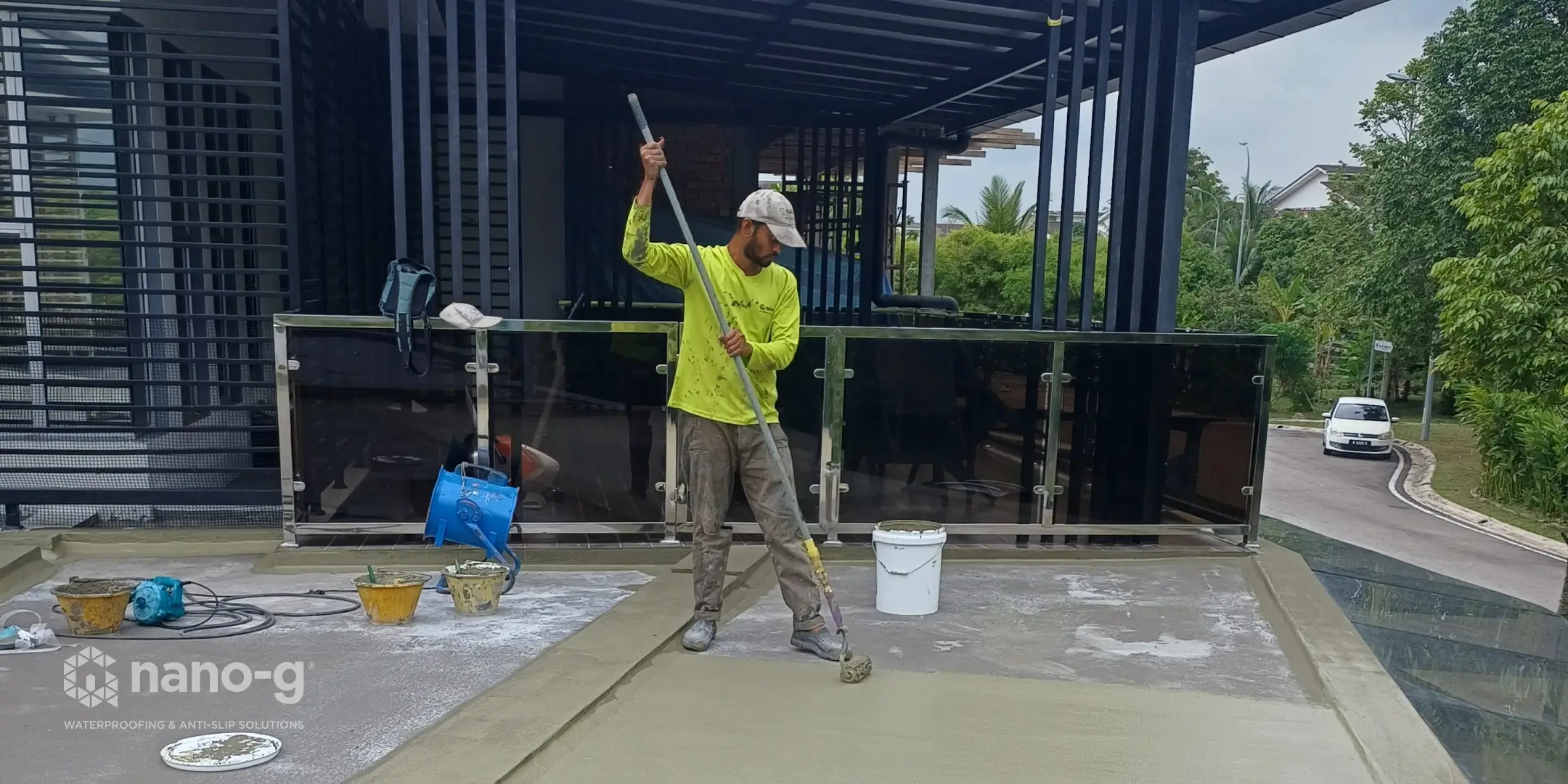
Finally, Nano-G waterproofing solutions are applied. One of the most important layers in our waterproofing system is the Nano-G hospital-grade nanotech coating. It seeps into tiny pores and capillaries that other coatings can’t reach, creating water protection from the inside out.

This makes them particularly suitable for Malaysia’s humid climate, where trapped moisture often causes traditional membranes to fail.

Roof leakage should never be treated as a minor maintenance issue. In Malaysia, water leakage in roofs is a leading contributor to building deterioration, especially when waterproofing defects account for the majority of structural failures. A structured and professional repair approach is therefore essential. Proper waterproofing not only prevents recurring leaks but also protects structural integrity, preserves property value, and reduces long-term repair costs.

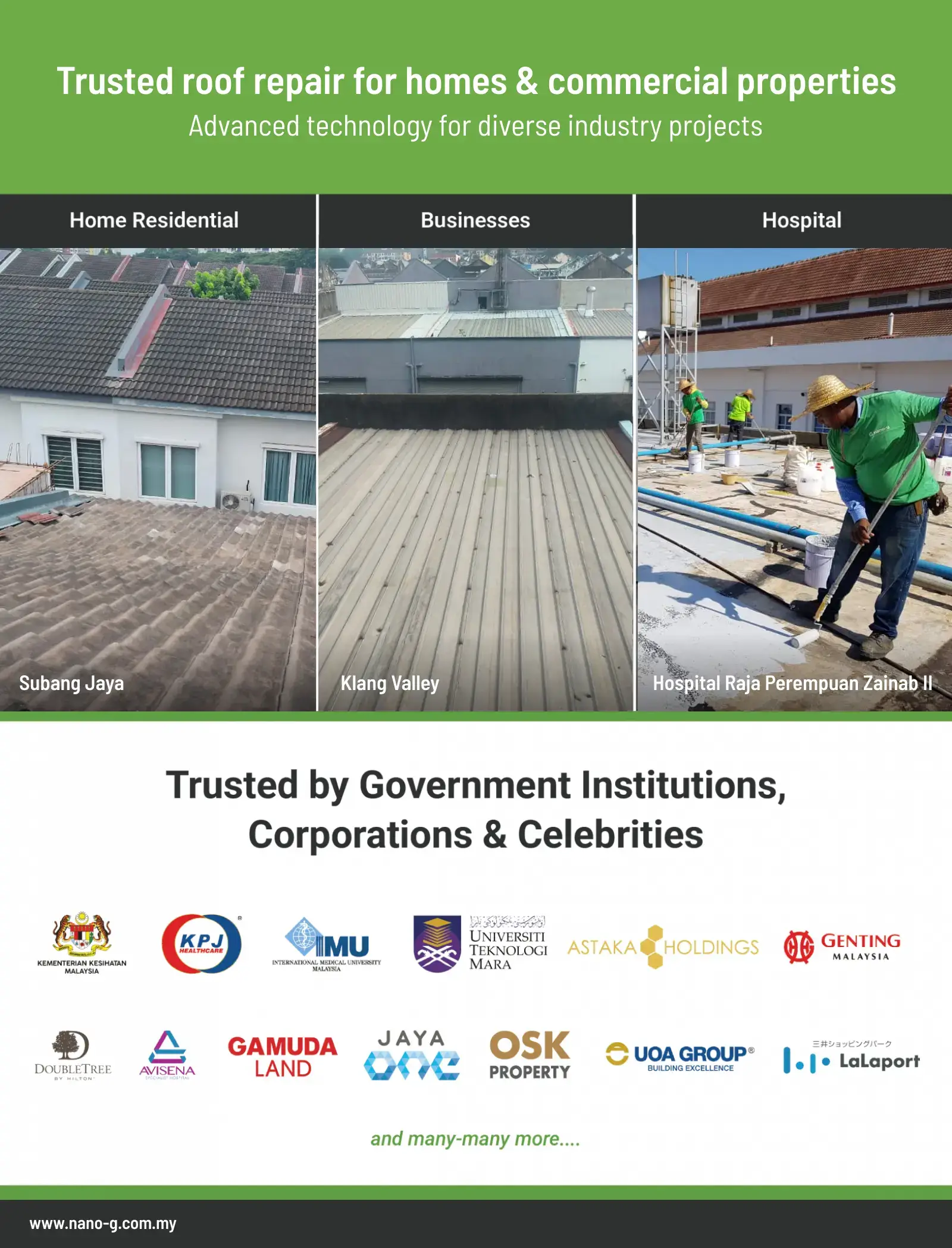
This is why many homeowners, building managers, and industry professionals rely on Nano-G as a trusted waterproofing solution. Using proven nanotechnology, Nano-G Hospital Grade Nanotechnology waterproofing coating penetrates deeply into concrete to form a durable, breathable barrier that performs well in high humidity and heavy rainfall conditions. Its track record across residential, commercial, and institutional projects conducted for Universiti PertahananNational Malaysia (UPNM), Hospital Putrajaya, and UOB Bank has made it a preferred choice for long-term roof protection. 

FAQs 

1. The leakage happens at my office or business tower rooftop. Do you only handle landed homes and condominiums?

No. We do not only work on residential properties. Nano-G also provides waterproofing and anti-slip solutions for office buildings, commercial towers, industrial facilities, and government institutions, in addition to landed homes and condominiums.

Our team has experience managing large-scale and high-rise projects, including the rooftops of business towers. We understand the challenges of commercial buildings, such as access limitations, strict safety requirements, and the need to minimise disruption to daily operations. Each site is carefully assessed so we can recommend a solution that is effective, safe, and appropriate for the building’s structure and usage.

2. What should I do immediately if I discover a leak?

First, try to stop more damage. If it’s safe, place a bucket or container under the leak to catch dripping water, and move any furniture, electronics, or valuables away from the area. If the leak is near power points, switches, or lights, don’t touch them and consider turning off the power in that area for safety.

Next, take clear photos or short videos of the leak, water stains, or any damaged surfaces and send them to us. This helps our specialist understand the problem faster. Avoid temporary fixes like taping or sealing cracks yourself, as this can trap moisture and make things worse.

3. Is a ceiling stain always a roof leak?

Not always. While ceiling stains are commonly associated with water leakage in roofs, they can also be caused by other issues such as leaking pipes, water seepage from bathrooms or balconies above, or air-conditioning drainage problems.

In some cases, water can travel along the ceiling or roof structure before showing up as a stain. This means the actual source of the leak may be some distance away from where the mark appears, making it easy to misidentify the problem.

For an accurate diagnosis, a professional inspection is recommended. An experienced waterproofing specialist can determine whether the stain is caused by a roof leak, internal plumbing, or moisture seepage, and advise on the right repair solution to prevent the issue from happening again.

4. My roof leaks intermittently. Should I choose spot repair or full waterproofing?

Intermittent leaks usually point to early waterproofing degradation, microcracks, or concealed weak points that only fail under certain weather conditions. While spot repairs may appear cost-effective initially, they often address only the visible symptom. 

A professional assessment helps determine whether the issue is isolated or part of a wider system failure. If moisture migration or multiple ingress paths are detected, full-area waterproofing provides a more reliable and longer-term solution.

Related Articles
Nano-G Make Your Property Investment Worth Your While by Waterproofing Your New Home
Nano-G Introduces Its 6th Generation Hospital-Grade Nanotechnology Waterproofing Solution

Comparison of Top 5 Waterproofing Solutions for Roof Leakage in Malaysia

A simple guide to the top 5 waterproofing solutions for roof leakage in Malaysia, designed to help you choose the right fix for roof leaks.

Key Takeaways

  • Malaysia’s hot, humid, and rainy climate makes roofs vulnerable to leaks, dampness, and mold.
  • Roof type, slope, and exposure to sun and rain affect which protection method works best.
  • Timely inspections and repairs prevent small leaks from becoming major problems.
  • Investing in a reliable solution saves money, stress, and repeated repairs in the future.

Table of Content

  1. Introduction
  2. Key Factors to Consider When Choosing Waterproofing Solutions
  3. Nano‑G Hospital-grade Nanotechnology Waterproofing
  4. Polyurethane Liquid Membrane
  5. Cementitious Waterproofing
  6. PU Injection (Polyurethane Injection)
  7. Torch‑On Membrane

Roof waterproofing solutions play a critical role in protecting buildings from long-term moisture exposure, especially when leaks are not always visible or immediate. More than a reactive fix, effective waterproofing solutions for roof leakage works as a continuous protective layer that limits water ingress, preserves the roof structures, and reduces the risk of recurring leakage, dampness, and hidden deterioration over time. This need becomes even more apparent in Malaysia’s tropical environment.

Our country’s tropical climate features humidity levels between 75% and 90% and receives over 2,500 mm of rainfall annually, meaning moisture is constantly present. This puts roofs under continuous water stress, leading to leaks, dampness, mold, and hidden moisture ingress even when it’s not raining. 

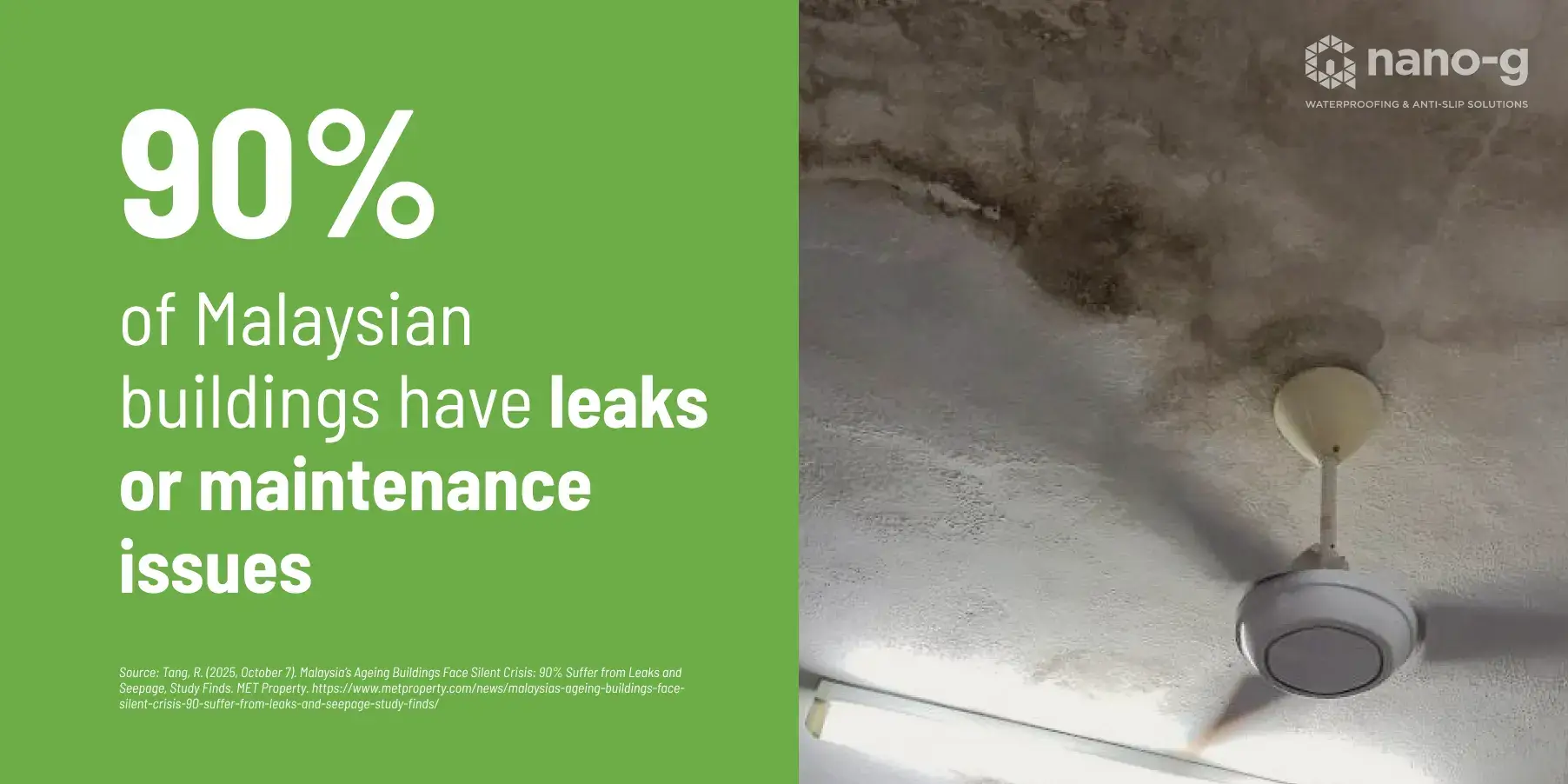
A 2025 nationwide survey found that 90% of buildings experience roof leaks due to poor drainage or water pooling, highlighting the urgent need for durable waterproofing systems. 

This article compares five widely adopted waterproofing solutions for roof leakage in Malaysia: Nano‑G Nanotechnology Waterproofing, Polyurethane Liquid Membrane, Torch‑On Membrane, PU Injection, and Cementitious Waterproofing. Choosing the right waterproofing solution is critical to ensuring durability, cost‑efficiency, and long‑term performance.

Key Factors to Consider When Choosing Waterproofing Solutions

When evaluating waterproofing options, homeowners and contractors should consider:

  • Roof Type and Slope: Flat roofs vs. roofs with slope require different solutions.
  • Exposure to Sunlight and Rainfall: Make sure it can handle strong sun and puddles without wearing out.
  • Flexibility and Crack Bridging: Important for structures subject to thermal or structural movement.
  • Longevity and Maintenance Requirements: Lifecycle costs may outweigh upfront installation cost.

1. Nano‑G Hospital-grade Nanotechnology Waterproofing

Nano-G Waterproofing uses advanced nanotechnology to protect surfaces from water damage. The solution penetrates deep into tiny pores and cracks within the surface, making it water-repellent from the inside. This creates the hydrophobic effect. It helps prevent water from seeping in while still allowing trapped moisture to escape, reducing common issues like dampness and peeling.

Unlike traditional waterproofing, Nano-G creates a seamless and breathable protective layer that allows moisture to dissipate from the concrete slab, preventing bubbling or blister issues in the future It is also resistant to ultraviolet (UV) exposure, which makes it suitable for Malaysia’s hot climate and frequent heavy rainfall. .

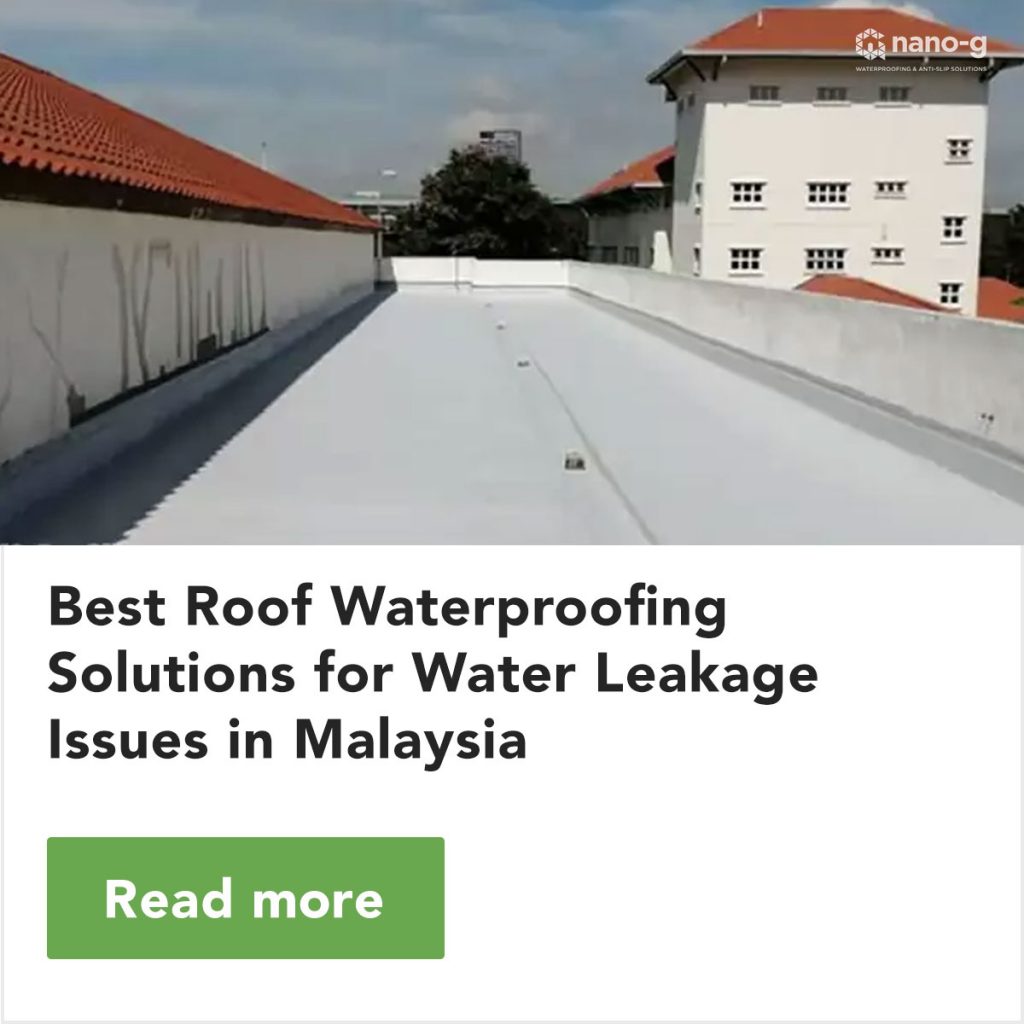
The waterproofing solution is applied in liquid form, allowing it to cover uneven areas, joints, and hard-to-reach sections more easily than sheet-based systems. This makes it one of the more effective waterproofing solutions for roof leakage, especially in complex roof structures. Because it works by penetrating the surface rather than sealing it with a rigid film, it is commonly used on roofs and other building surfaces where long-term durability and weather resistance are important. Read more on Nano-G 6th generation hospital grade nanotechnology waterproofing solution here.

2. Polyurethane Liquid Membrane

Polyurethane (PU) liquid membrane is a waterproofing solution that is applied as a liquid and dries into a single, seamless rubber-like layer. Once cured, it remains flexible and can stretch with the building, helping it bridge small cracks and cope with temperature changes without breaking. 

This makes it effective for roofs that are exposed to heavy rain or occasional standing water. The coating is usually applied in several layers and must be properly cleaned and primed beforehand, especially around drains and corners, to ensure good adhesion. 

Compared to simpler waterproofing systems, PU membranes should be inspected regularly over time. Because of their flexibility and durability, they are commonly used on commercial rooftops that experience frequent heat and movement.

3. Cementitious Waterproofing

Cementitious waterproofing is a simple approach among common waterproofing solutions for roof leakage, using cement-based coatings mixed with special additives to block water from seeping through the roof slab.Because it bonds well to concrete, it is reliable for roofs, especially on concrete roofs that are structurally stable and have minimal movement.

One of its key benefits is ease of application. It is mixed with water and applied as a thick coating, allowing faster installation and fewer application steps. This makes it a suitable option when quick repair is needed.

Cementitious waterproofing is also durable in stable conditions. When applied on roofs with minimal movement, it provides long-lasting protection against water penetration with basic maintenance. It is low-maintenance, requiring only periodic checks and simple touch-ups if cracks appear.

This system works best for non-trafficable concrete roofs, service roofs, and utility areas where flexibility is not a priority, but a strong, straightforward waterproofing layer is needed to control roof leaks effectively.

4. PU Injection (Polyurethane Injection)

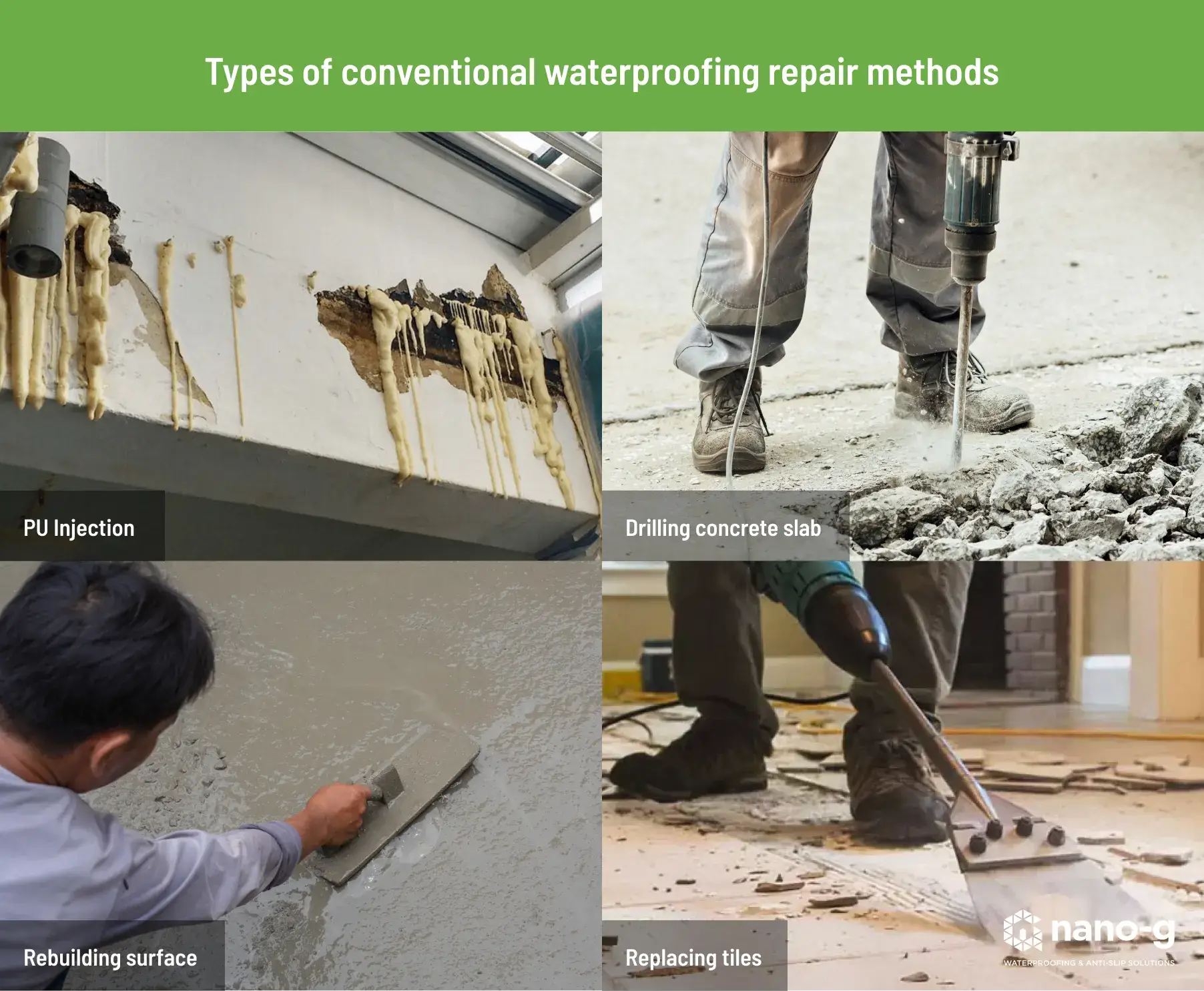
PU Injection is a repair method used to stop active leaks by pumping a special liquid polyurethane material into cracks, gaps, and joints in concrete. Because the material is very thin, it can flow deep into small cracks, where it reacts with moisture and expands, filling the gaps and blocking water from passing through. This makes it especially effective for fixing specific problem areas, such as leaking cracks, pipe penetrations, or joints, rather than waterproofing an entire roof surface.

The process requires trained technicians and specialised equipment to inject the material accurately and under controlled pressure, ensuring the cracks are fully sealed. Since only the affected areas are treated, the cost usually depends on how severe and accessible the leaks are, and it is generally more affordable. 

The main advantage is its lower cost, however, the rectification process is messy, involves drilling, and can generate dust and noise. As a result, it is not suitable for hospitals, commercial premises, or homes with elderly occupants and children.

Regular checks are recommended to make sure the repaired areas remain intact over time. PU Injection is most commonly used as a targeted repair solution alongside other waterproofing systems, particularly for concrete roofs or structures experiencing active water leakage.

5. Torch‑On Membrane

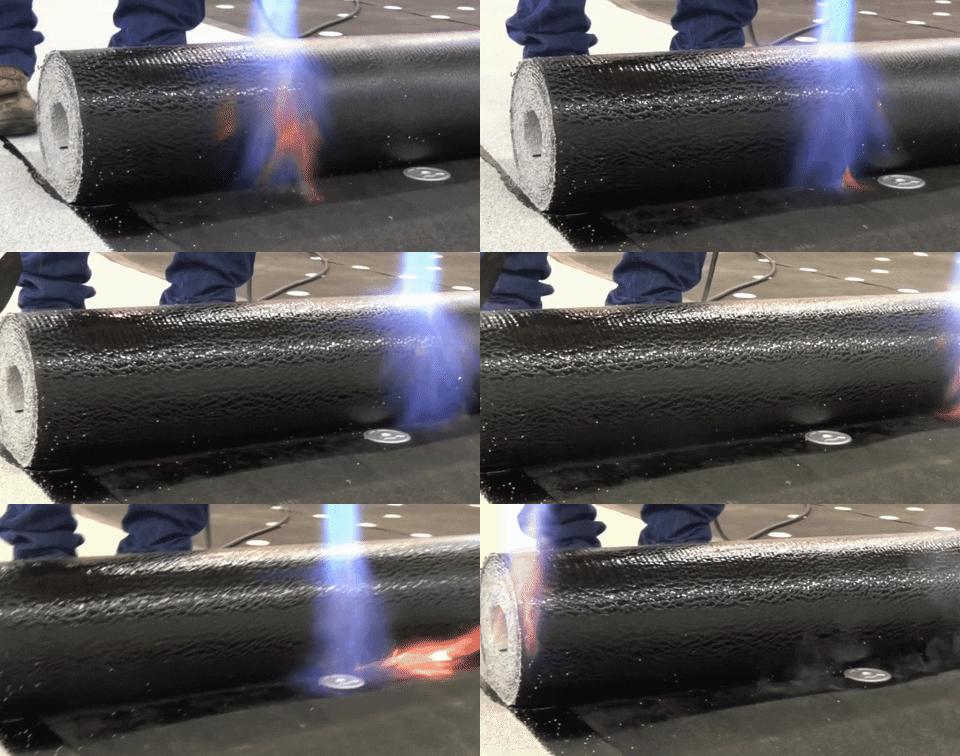
A torch-on bituminous membrane is a heat-applied waterproofing system that bonds modified asphalt sheets to a surface to form a continuous, waterproof layer with strong resistance to water ingress. Proper installation must be done by trained professionals due to the use of open flames and the importance of achieving full adhesion. 

In the industry, the two primary types of torch-on membranes are Atactic Polypropylene (APP) and Styrene Butadiene Styrene (SBS). Both are heat-sensitive, bitumen-modified materials favored globally for waterproofing flat roofs, flooring, car porches, and balconies. Routine inspections are advised to catch issues like cracks or separation, and repairs must be carefully sealed. 

Another key point to note is that while waterproofing membranes may seem effective initially, problems can develop over time. These include bubbling from trapped moisture, mould growth caused by ponding water, and water retention on roofs with poor slope and drainage. Proper installation is critical, as the technician must ensure the adhesive is fully melted and securely bonded to the surface to prevent these issues.

This type of membrane is widely used on commercial and industrial flat roofs where a seamless waterproofing solution is needed. In hot, humid climates like Malaysia, installation conditions and UV exposure can affect performance and long-term durability.

While others cast a wide net with conventional methods, Nano-G remains the dedicated specialist in genuine, Greece-imported nanotechnology waterproofing.

In the world of waterproofing, many companies in Malaysia try to be everything to everyone, but Nano‑G isn’t shy about claiming the title of specialist. We’ve honed our Greece-imported nanotechnology waterproofing to perfection, making us the go-to solution for roofs, porches, and concrete surfaces that need long-lasting protection.

With a proven track record across both homes and commercial buildings, Nano‑G has solved countless water leakage problems, and our satisfied clients are proof of our results.

Why waste time juggling multiple contractors or experimenting with trial-and-error fixes that may only patch the problem temporarily? Let Nano‑G take a look at your water stains, leaks, or roof trouble spots, and give your home the invisible, flexible shield it deserves; built to repel water, resist the sun, and stand the test of Malaysia’s heavy rains.

FAQs

1. Is waterproofing necessary even if the leak is minor?

Yes. Even small leaks should not be ignored. While they may seem minor initially, water can gradually seep into the roof structure, ceilings, and walls, leading to hidden moisture accumulation. Over time, this can weaken structural elements, cause timber rot or concrete deterioration, and create conditions for mold and mildew growth, which can affect indoor air quality and occupant health.

Additionally, untreated minor leaks tend to worsen during heavy rain or wet seasons, often resulting in more extensive damage and significantly higher repair costs. Early intervention with a proper waterproofing solution can prevent these issues, protect the building’s integrity, and reduce the likelihood of recurring leaks.

2. The building is occupied. Can waterproofing still be carried out?

Yes. Many modern waterproofing solutions for roof leakage are specifically designed to be applied with minimal disruption, making them suitable for occupied residential, commercial, and institutional buildings. These systems typically involve low-noise application methods, minimal dust generation, and little to no hacking or demolition, allowing daily activities to continue during the works.

Proper planning is essential to ensure safety and efficiency. Works can be scheduled in phases or during off-peak hours, with clear access control and safety measures in place. This approach is particularly important for offices, hospitals, schools, and commercial properties, where uninterrupted operations are a priority. When executed by an experienced team, waterproofing can be completed effectively without requiring occupants to vacate the premises.

3. Can I fix a roof leak without “hacking” or removing tiles?

Yes. With Nano-G Waterproofing Solutions, roof leaks can be repaired without the need to remove tiles or carry out major construction work. This non-invasive approach minimizes disruption to your home or building, reduces dust and debris, and avoids the time and cost associated with traditional “hacking” methods.

4. How do you find a leak without hacking?

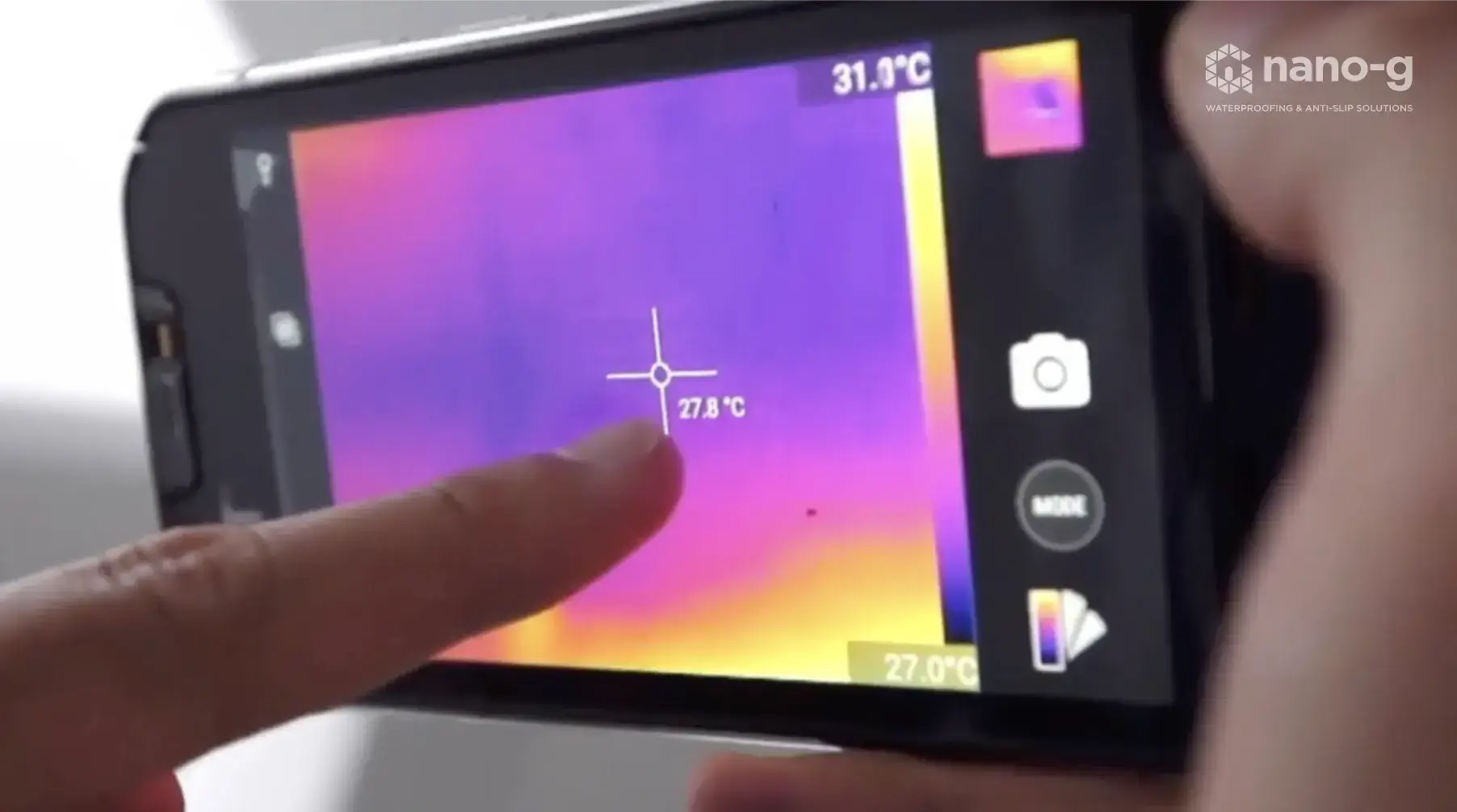
On the first inspection, our experts will conduct a thorough assessment using advanced diagnostic tools such as thermal imaging (FLIR) cameras and moisture meters. Thermal imaging allows us to detect temperature differences in the roof or ceiling that indicate hidden water ingress, even in areas where no visible leaks or stains are present. Moisture meters then provide precise readings of water content within structural elements, helping identify damp zones and potential problem areas before they worsen.

5. Once waterproofed, is my roof maintenance-free?

No solution is truly “zero” maintenance, but roofs treated with Nano-G waterproofing solutions come with warranty. If any leaks recur after our repair work, our team will return to patch them promptly.