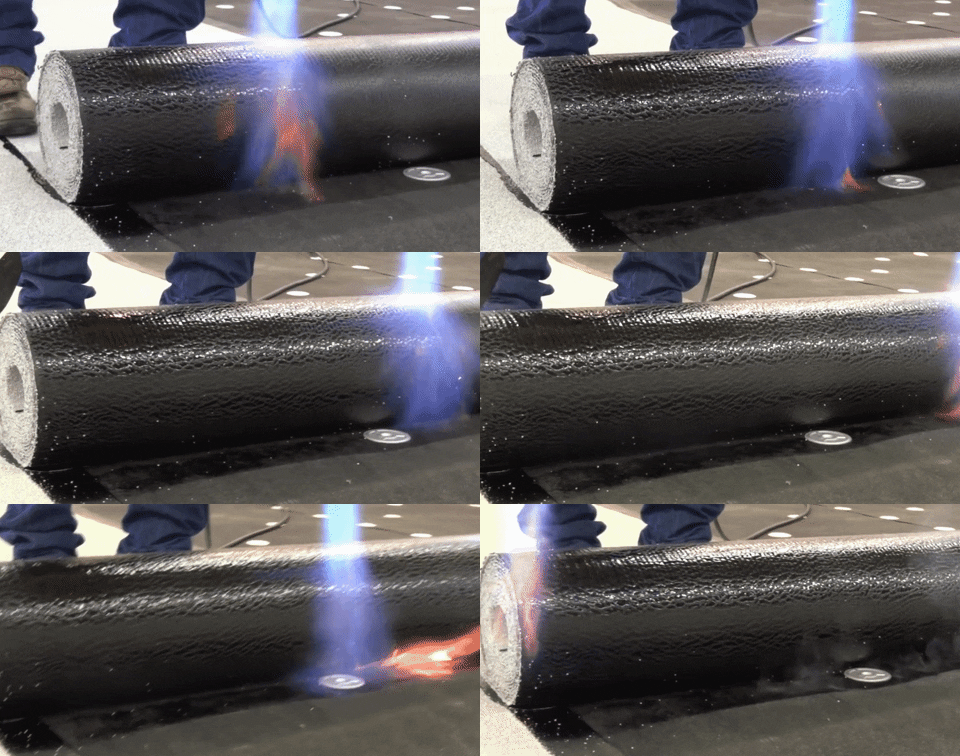


Early attention allows repairs to be carried out smoothly, before the damage spreads further.
Key Takeaways
- Roof water leakage is one of the most common and costly building issues in Malaysia, affecting homes and commercial properties.
- Poor waterproofing, aging materials, blocked gutters, and humid, rainy climate are the main contributors to roof leaks.
- Untreated leaks can cause structural damage, mould growth, corrosion, and electrical hazards, making early detection critical.
- Professional waterproofing not only stops leaks but also protects structural integrity, preserves property value, and reduces long-term repair costs.
Table of Contents
- Common Causes of Roof Water Leakage in Malaysia
- How Waterproofing Repairs Roof Water Leakage
- Remove Failed Waterproofing Systems
- Locate the Leak, Repair and Seal Cracks
- Clean and Prepare the Roof Surface
- Apply Nano-G Waterproofing Solutions
Water leakage in roofs remains one of the most persistent and costly building issues in Malaysia. For year s, roof leaks are not isolated incidents, they are a widespread industry problem affecting residential, commercial, and strata-managed properties nationwide.
A recent industry survey involving Malaysian property and facility management professionals revealed that waterproofing-related defects are estimated to account for up to 80% of major building defects, despite waterproofing representing only 2–3% of total construction cost. This imbalance highlights how critical proper waterproofing design, installation, and maintenance truly are as highlighted by this article.
Common Causes of Roof Water Leakage in Malaysia
In practice, water leakage in roofs rarely occurs overnight. They develop gradually due to aging waterproofing materials, thermal movement, poor workmanship, and neglected drainage systems. Blocked gutters are another major contributor. When rainwater cannot drain properly, ponding occurs. This increases hydrostatic pressure on the roof slab, joints, and parapet walls, accelerating waterproofing failure and allowing water to seep into the building structure.
Malaysia’s climate further intensifies the issue. With average annual rainfall exceeding 2,500mm, combined with high humidity and strong UV exposure, roof systems are constantly under stress. Flat concrete roofs commonly used in terrace houses, apartments, and commercial buildings are especially vulnerable when drainage or waterproofing fails.
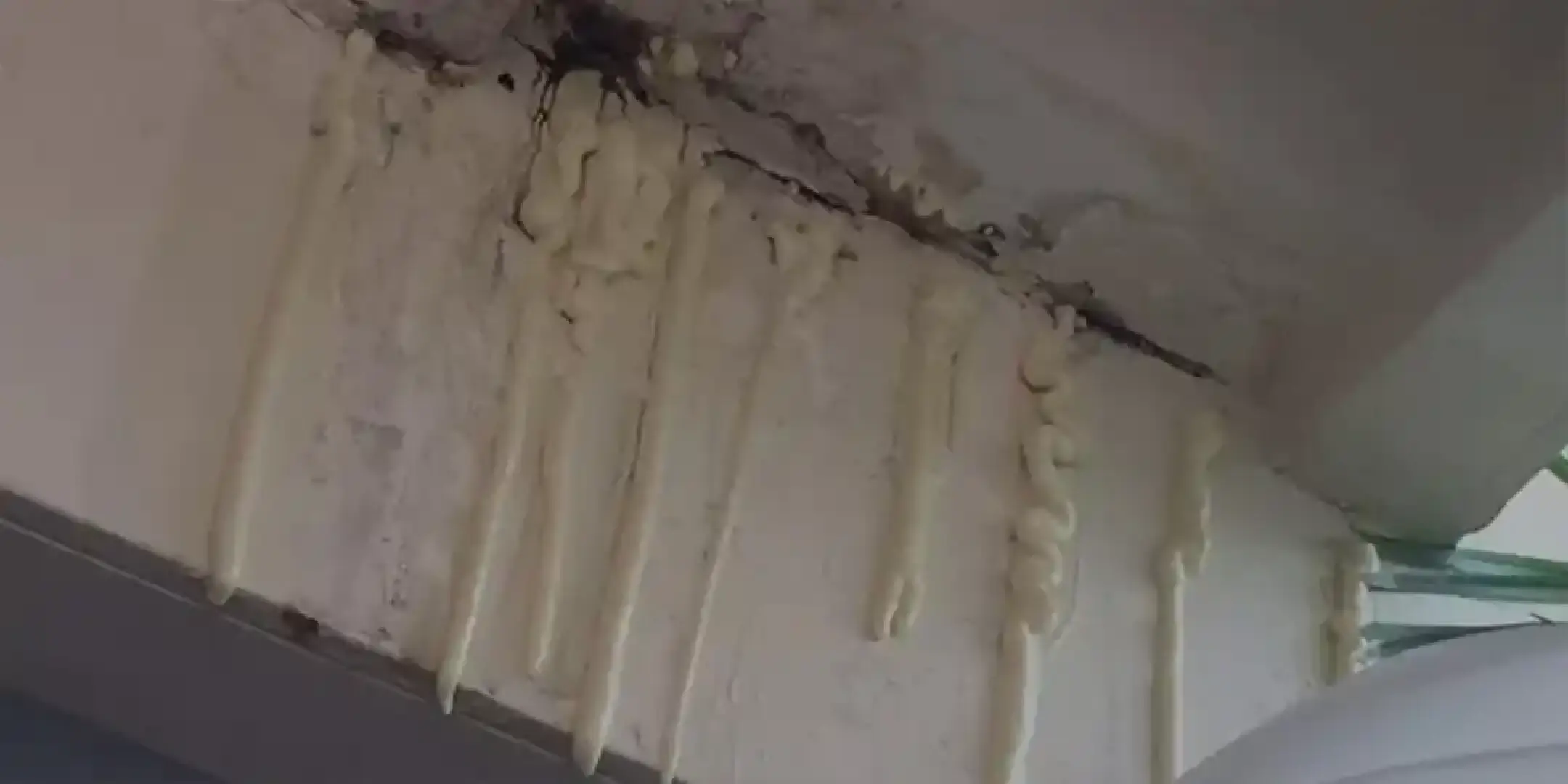
If left untreated, continuous moisture penetration can lead to spalling concrete, steel reinforcement corrosion, ceiling damage, mould growth, and even electrical safety risks.

How Waterproofing Repairs Roof Water Leakage
To achieve long-lasting results, roof waterproofing repairs must follow a systematic and professional process rather than surface-level patching.
1. Remove Failed Waterproofing Systems
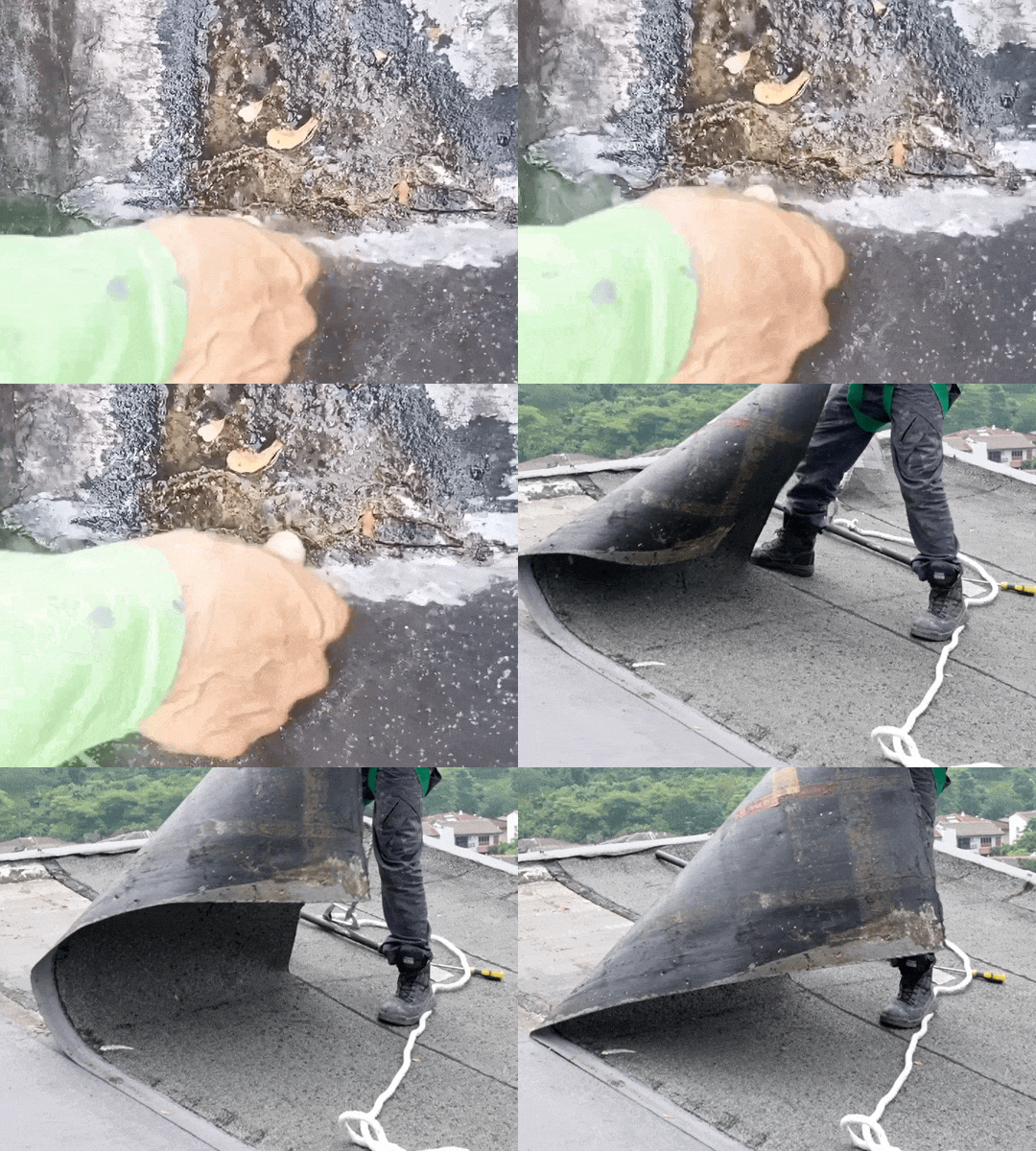
All deteriorated waterproofing layers, such as failed torch-on membranes must be completely removed. Overlaying new materials on top of damaged systems traps moisture and shortens the lifespan of the repair. Exposing the concrete slab allows for proper inspection and corrective work.
2. Locate the Leak, Repair and Seal Cracks

Leak paths are carefully traced, as water often travels beneath the slab before becoming visible indoors. All cracks and voids are repaired using appropriate fillers or repair mortars. In Malaysia, thermal expansion-related hairline cracks are especially common due to daily temperature fluctuations.
3. Clean and Prepare the Roof Surface

Thorough surface preparation is critical. Poor preparation is one of the leading reasons waterproofing systems fail prematurely. Before any waterproofing work begins, the roof surface must be free of dirt, dust, algae, old paint, oil stains, and loose particles. These contaminants prevent the waterproofing material from bonding properly to the concrete, making poor surface preparation one of the main reasons waterproofing systems fail early.
Gutters, downspouts, and drainage outlets must also be checked and cleared. Blockages are often an overlooked but critical factor in roof leakage. When gutters are filled with leaves, soil, twigs, and other debris, rainwater cannot flow freely toward the outlet and downspouts. This causes water to back up and pond on the roof surface, increasing the load on the waterproofing system and accelerating material breakdown.
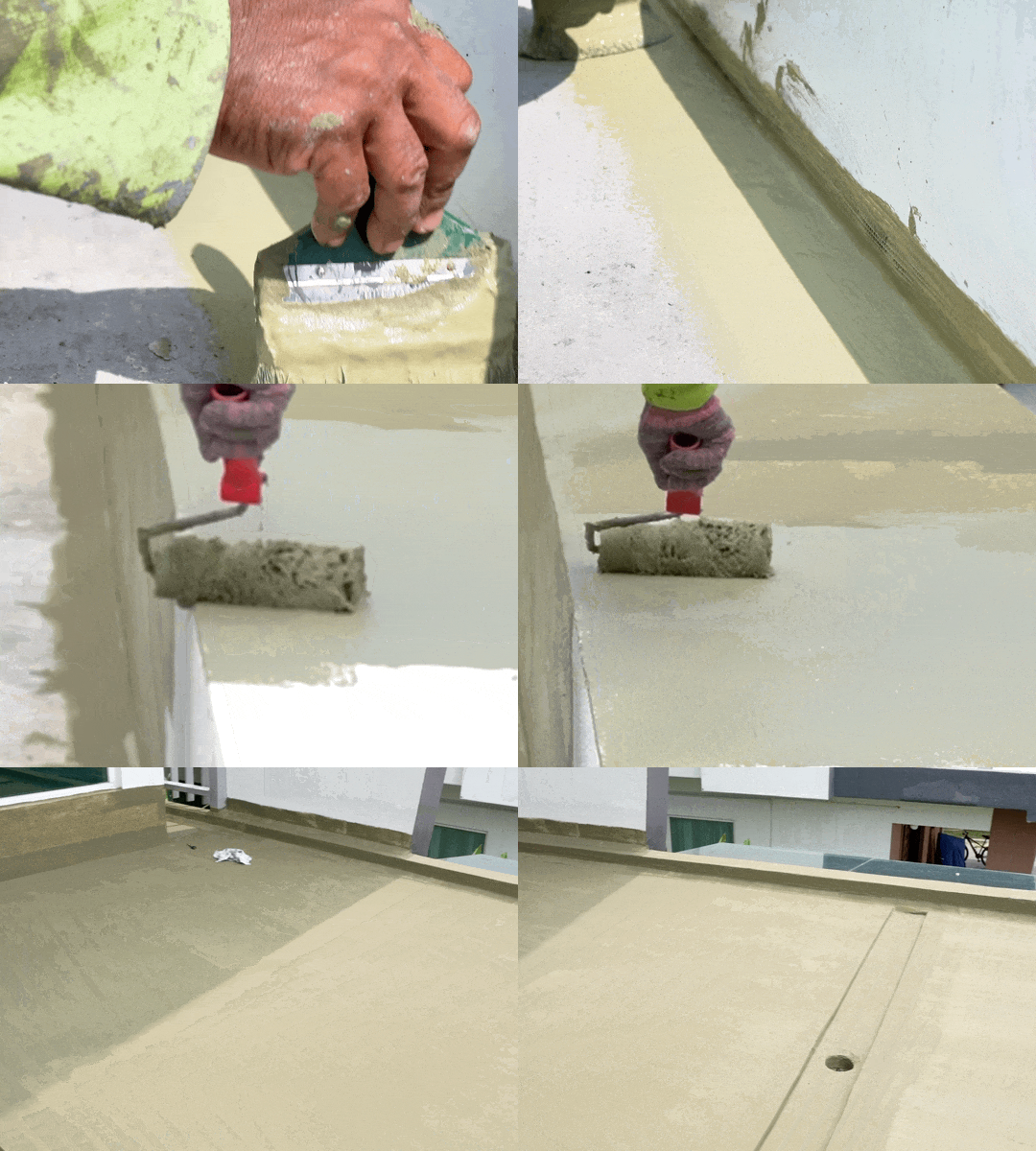
4. Apply Nano-G Waterproofing Solutions
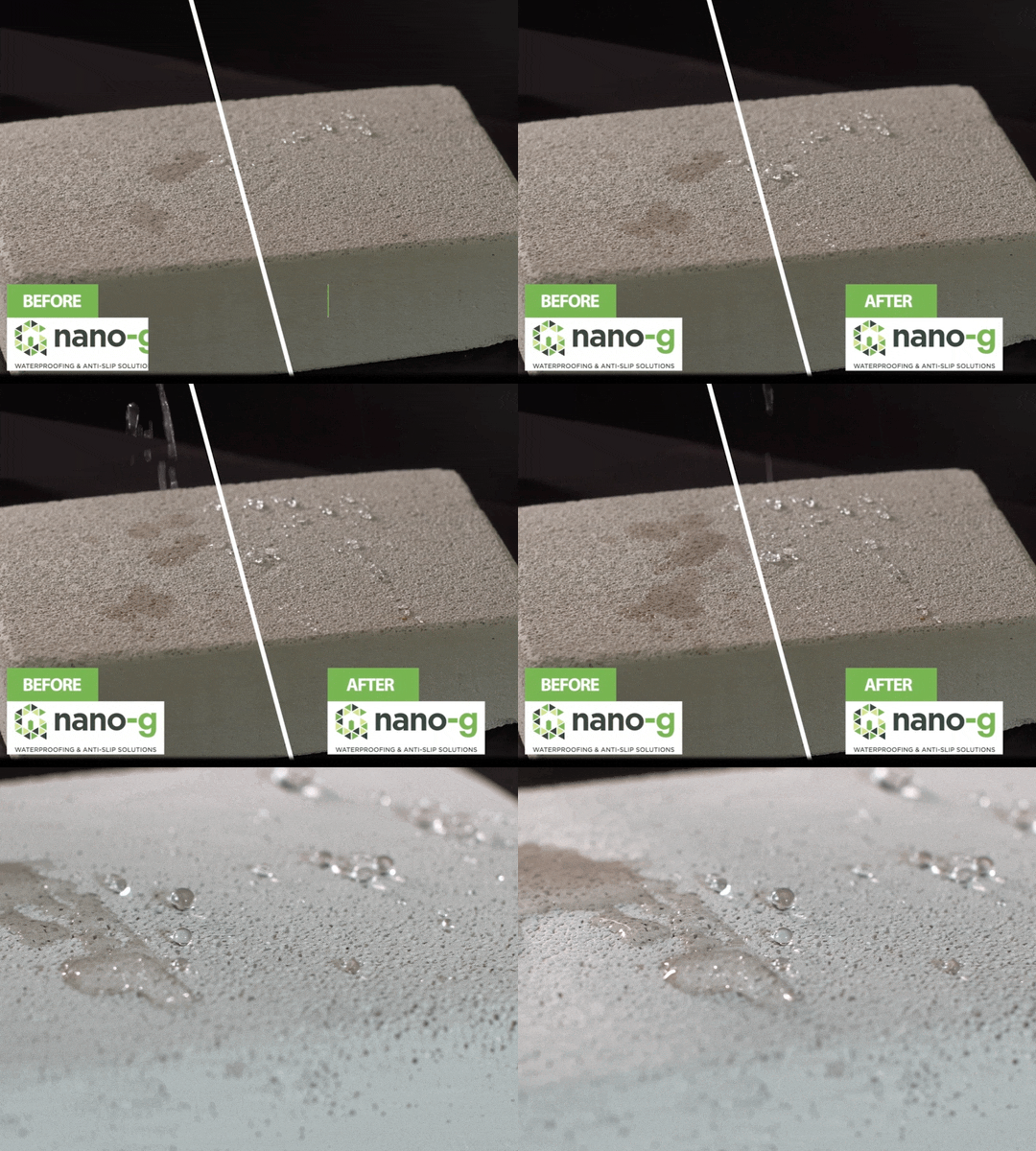
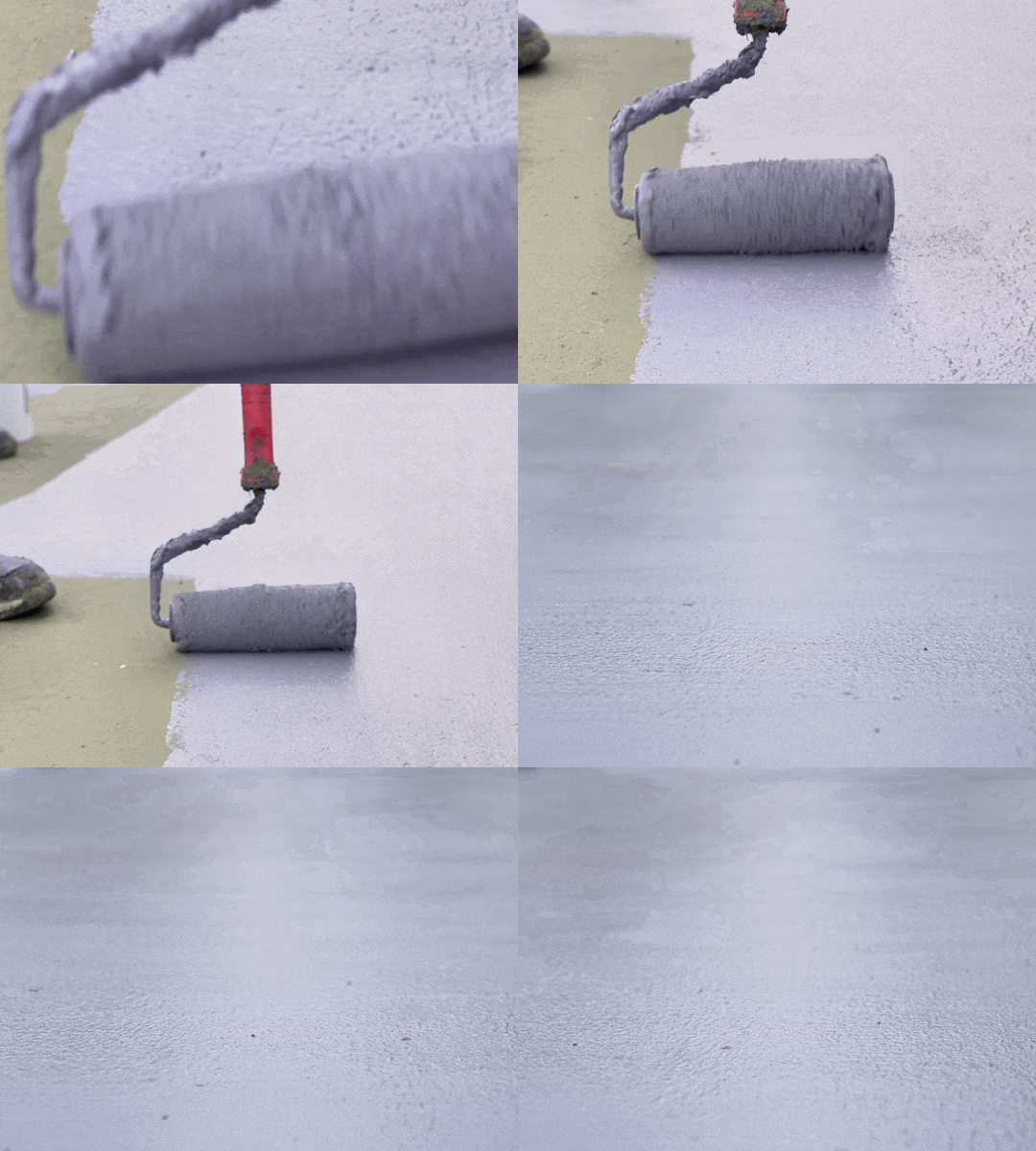
Finally, Nano-G waterproofing solutions are applied. One of the most important layers in our waterproofing system is the Nano-G hospital-grade nanotech coating. It seeps into tiny pores and capillaries that other coatings can’t reach, creating water protection from the inside out.
This makes them particularly suitable for Malaysia’s humid climate, where trapped moisture often causes traditional membranes to fail.
Roof leakage should never be treated as a minor maintenance issue. In Malaysia, water leakage in roofs is a leading contributor to building deterioration, especially when waterproofing defects account for the majority of structural failures. A structured and professional repair approach is therefore essential. Proper waterproofing not only prevents recurring leaks but also protects structural integrity, preserves property value, and reduces long-term repair costs.
This is why many homeowners, building managers, and industry professionals rely on Nano-G as a trusted waterproofing solution. Using proven nanotechnology, Nano-G Hospital Grade Nanotechnology waterproofing coating penetrates deeply into concrete to form a durable, breathable barrier that performs well in high humidity and heavy rainfall conditions. Its track record across residential, commercial, and institutional projects conducted for Universiti PertahananNational Malaysia (UPNM), Hospital Putrajaya, and UOB Bank has made it a preferred choice for long-term roof protection.
FAQs
1. The leakage happens at my office or business tower rooftop. Do you only handle landed homes and condominiums?
No. We do not only work on residential properties. Nano-G also provides waterproofing and anti-slip solutions for office buildings, commercial towers, industrial facilities, and government institutions, in addition to landed homes and condominiums.
Our team has experience managing large-scale and high-rise projects, including the rooftops of business towers. We understand the challenges of commercial buildings, such as access limitations, strict safety requirements, and the need to minimise disruption to daily operations. Each site is carefully assessed so we can recommend a solution that is effective, safe, and appropriate for the building’s structure and usage.
2. What should I do immediately if I discover a leak?
First, try to stop more damage. If it’s safe, place a bucket or container under the leak to catch dripping water, and move any furniture, electronics, or valuables away from the area. If the leak is near power points, switches, or lights, don’t touch them and consider turning off the power in that area for safety.
Next, take clear photos or short videos of the leak, water stains, or any damaged surfaces and send them to us. This helps our specialist understand the problem faster. Avoid temporary fixes like taping or sealing cracks yourself, as this can trap moisture and make things worse.
3. Is a ceiling stain always a roof leak?
Not always. While ceiling stains are commonly associated with water leakage in roofs, they can also be caused by other issues such as leaking pipes, water seepage from bathrooms or balconies above, or air-conditioning drainage problems.
In some cases, water can travel along the ceiling or roof structure before showing up as a stain. This means the actual source of the leak may be some distance away from where the mark appears, making it easy to misidentify the problem.
For an accurate diagnosis, a professional inspection is recommended. An experienced waterproofing specialist can determine whether the stain is caused by a roof leak, internal plumbing, or moisture seepage, and advise on the right repair solution to prevent the issue from happening again.
4. My roof leaks intermittently. Should I choose spot repair or full waterproofing?
Intermittent leaks usually point to early waterproofing degradation, microcracks, or concealed weak points that only fail under certain weather conditions. While spot repairs may appear cost-effective initially, they often address only the visible symptom.
A professional assessment helps determine whether the issue is isolated or part of a wider system failure. If moisture migration or multiple ingress paths are detected, full-area waterproofing provides a more reliable and longer-term solution.
Related Articles